Wondering how to actually follow a slow aging diet meal plan without spending hours in the kitchen every day? You’re not alone. “I know I should eat lentil rice, but what about the side dishes?” and “Cooking from scratch every day feels overwhelming” — these are the most common concerns from people trying to start a slow aging weekly menu.
The good news is that planning your meals one week at a time makes everything easier. According to nutrition guidelines, structuring your diet on a weekly basis simplifies grocery shopping, reduces food waste, and helps you stay consistent. (Source: Korean Nutrition Society)
Dr. Jeong Hee-won, Professor of Geriatric Medicine at Asan Medical Center in Seoul, emphasizes that breakfast is the most critical meal of the day for slow aging. He warns that blood sugar spikes caused by cereals and jam-covered toast in the morning raise fatigue levels and trigger hunger before lunch, ultimately undermining your entire day’s energy and focus. (Source: Asan Medical Center, Dr. Jeong Hee-won’s YouTube Channel)
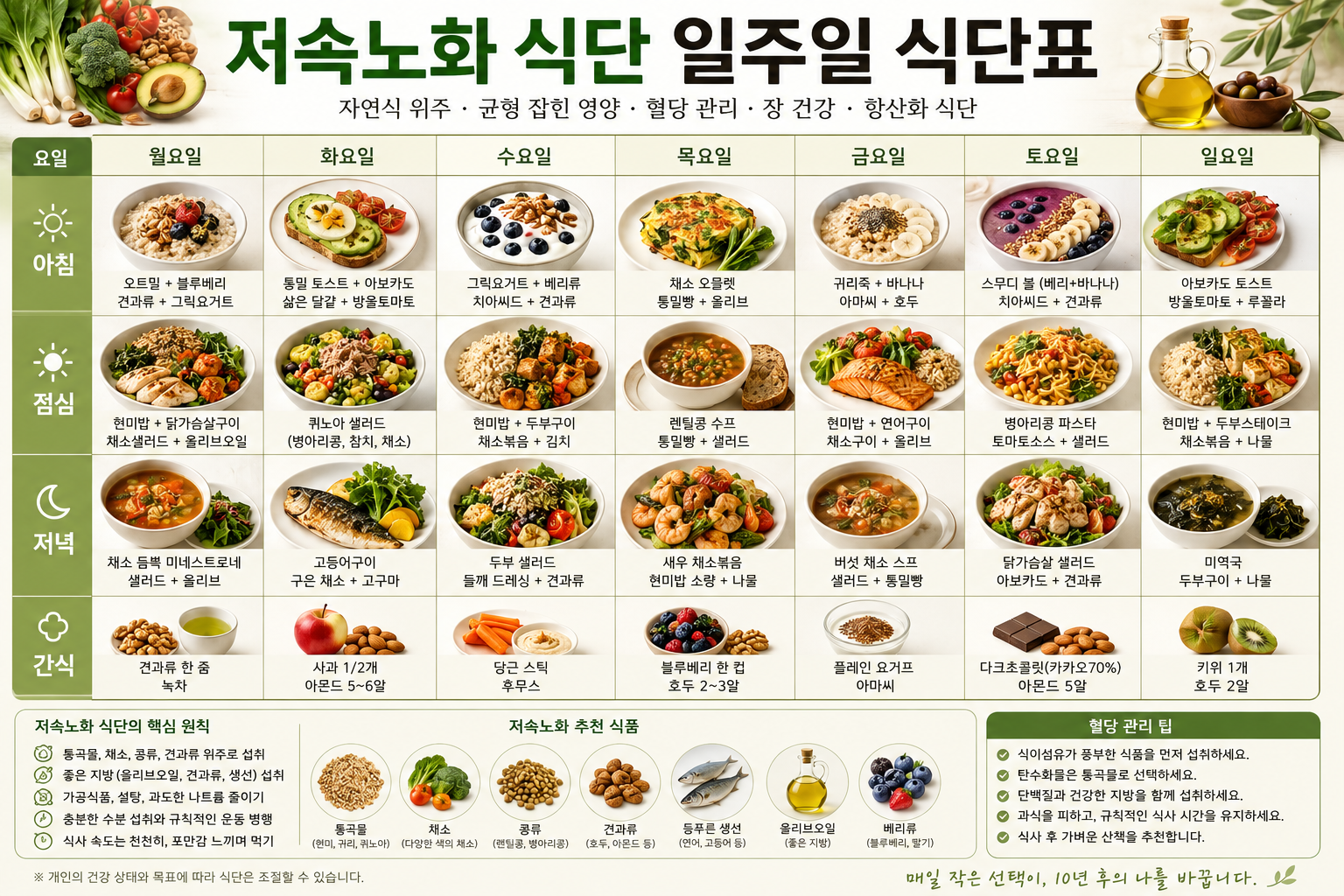
Today, we’re revealing a complete slow aging 7-day meal plan — breakfast, lunch, and dinner from Monday to Sunday — along with a weekend meal prep guide and convenience store backup options you can follow right away.
💡 Related Post: Slow Aging Diet Top 7 Ingredients|Only What You Can Buy at Your Local Supermarket
🛒 Before You Start: Key Foundations
The Golden Ratio for Slow Aging Rice
Dr. Jeong Hee-won recommends the following grain ratio for slow aging rice, which can meet the daily recommended protein intake (45–55g) for adults through rice alone. (Source: Health Kyunghyang, Dr. Jeong Hee-won Interview)
Lentils : Oats : Brown Rice : White Rice = 4 : 2 : 2 : 2
Beginners: Start with 70% white rice and 30% lentils, then gradually reduce the white rice ratio every two weeks as your palate adjusts.
💡 What is Slow Aging Rice? A Korean health trend popularized by Dr. Jeong Hee-won, slow aging rice replaces refined white rice with a blend of lentils, oats, and brown rice to lower the glycemic index, boost protein, and slow cellular aging.
Daily Vegetable Standard
The Korean Nutrition Society recommends consuming at least two servings of vegetables (excluding kimchi) per meal — approximately 140g per serving. A practical approach is to fill half your plate with vegetables at every meal. (Source: Korean Nutrition Society Dietary Guidelines)
📅 Slow Aging 7-Day Meal Plan
✅ Weekly Overview Table
| Day | Breakfast | Lunch | Dinner |
|---|---|---|---|
| Mon | Oatmeal + blueberries + nuts | Slow aging rice + braised tofu + broccoli salad + kimchi | Lentil vegetable soup + whole grain bread |
| Tue | Greek yogurt + nuts + frozen berries | Slow aging rice + grilled mackerel + spinach namul + seaweed soup | Tofu steak + kale salad + olive oil dressing |
| Wed | 2 boiled eggs + whole grain toast + cherry tomatoes | Slow aging rice + grilled chicken breast + bean sprout namul + doenjang soup | Chickpea curry + brown rice + cucumber salad |
| Thu | Oatmeal porridge + half banana + 5 walnuts | Slow aging rice + grilled salmon + stir-fried broccoli + cabbage soup | Natto + slow aging rice + 2 types of namul |
| Fri | Greek yogurt parfait (berries + chia seeds + nuts) | Slow aging rice + tofu kimchi + sigeumchi soup + namul | Salad bowl (kale + tomato + avocado + lentils + olive oil) |
| Sat | Slow aging rice + egg roll + doenjang soup + namul | Quinoa fried rice + vegetable wraps + chicken breast | Braised mackerel + slow aging rice + radish namul |
| Sun | Oatmeal + nuts + blueberries | Lentil brown rice + braised tofu + stir-fried vegetables | Korean home-cooked meal (slow aging principles maintained) |
💡 Namul is a traditional Korean side dish of seasoned vegetables — typically blanched or stir-fried greens like spinach, bean sprouts, or fernbrake, dressed with sesame oil, garlic, and soy sauce.
📋 Daily Menus with Key Tips
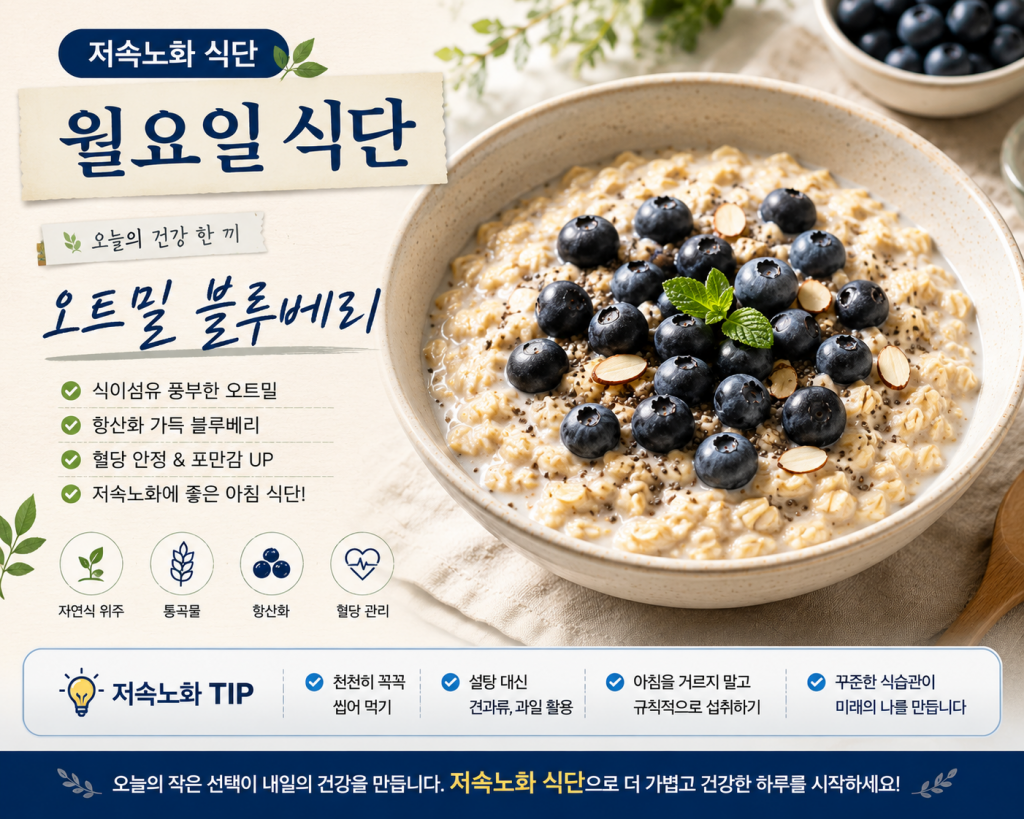
🟢 Monday – A Light Start to the Week
Breakfast: Oatmeal (30g oats) + frozen blueberries (one handful) + mixed nuts (one handful)
💡 Soak your oats overnight in water or unsweetened soy milk — breakfast is ready the moment you wake up, with zero morning prep time.
Lunch: Slow aging rice + braised tofu + blanched broccoli salad + kimchi
💡 Tofu, doenjang (fermented soybean paste), and perilla seed powder are all rich in antioxidants that help prevent cellular damage and slow the overall rate of physical aging. (Source: Samsung Welstory Nutrition Research)
Dinner: Lentil vegetable soup + 1 slice whole grain bread Simmer lentils with broccoli, carrots, and onions in broth — ready in under 20 minutes and one of the easiest slow aging meals you can make.
🟢 Tuesday – Omega-3 Day for Cardiovascular Health
Breakfast: Greek yogurt 150g + one handful mixed nuts + frozen berries
💡 Greek yogurt contains twice the protein of regular yogurt, making it ideal for a slow aging breakfast. Always choose unsweetened varieties to avoid unnecessary sugar spikes.
Lunch: Slow aging rice + grilled mackerel + spinach namul + seaweed soup
💡 Mackerel is rich in omega-3 fatty acids, which are highly effective at reducing chronic inflammation — one of the primary drivers of accelerated aging. Aim to eat oily fish at least twice a week. (Source: EatingWell, Registered Dietitian Panel)
Dinner: Tofu steak + kale salad + olive oil dressing Pan-fry tofu in olive oil until golden brown and serve with fresh greens for a protein-rich, antioxidant-packed dinner.
🟢 Wednesday – Mid-Week Protein Boost
Breakfast: 2 boiled eggs + 1 slice whole grain toast + 10 cherry tomatoes
💡 Boil 6–10 eggs on the weekend and store them in the fridge — your weekday mornings will be effortlessly sorted.
Lunch: Slow aging rice + grilled chicken breast + bean sprout namul + doenjang soup
💡 Pre-grill your chicken breast during weekend meal prep. Lunch is on the table in under five minutes on busy weekdays.
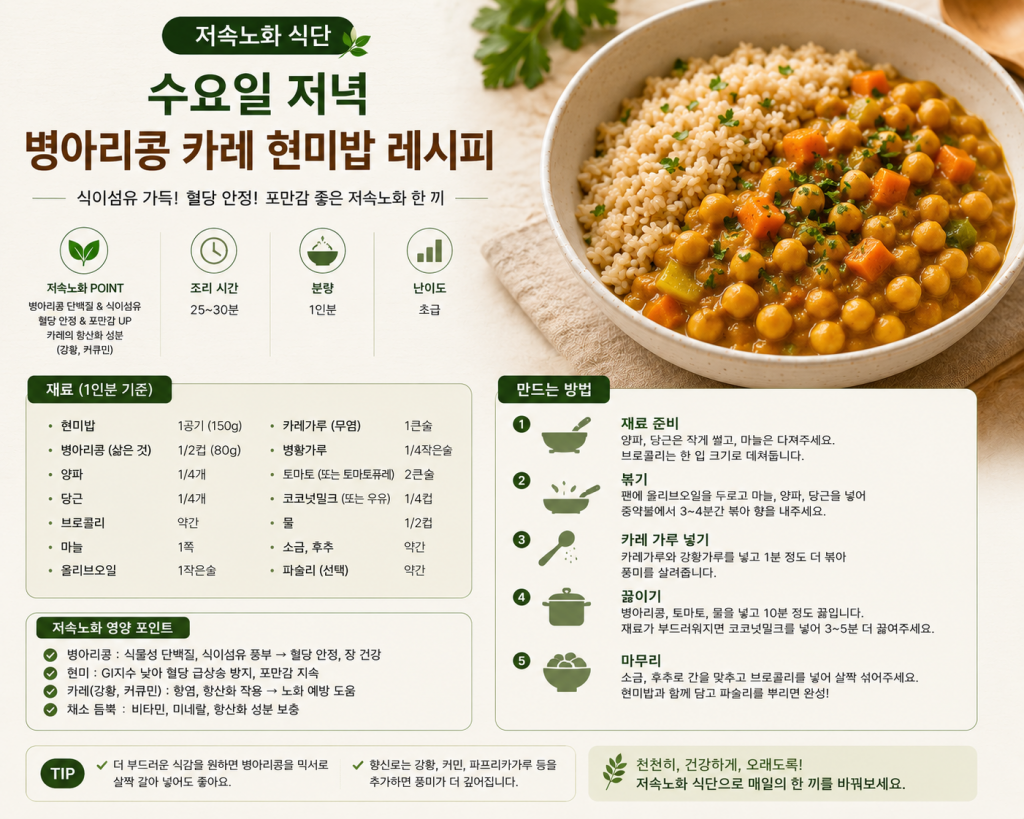
Dinner: Chickpea curry + brown rice + cucumber salad
💡 Chickpeas are rich in isoflavones — plant-based estrogens with antioxidant properties that help reduce cellular damage and slow aging. (Source: Samsung Welstory Nutrition Research) Adding them to curry is one of the tastiest ways to enjoy slow aging eating.
🟢 Thursday – Brain Health and Gut Health Together
Breakfast: Oatmeal porridge + half banana + 5 walnuts
💡 Walnuts are the richest plant-based source of omega-3 fatty acids, making them particularly beneficial for brain health and cardiovascular function.
Lunch: Slow aging rice + grilled salmon + stir-fried broccoli + cabbage soup
💡 Registered dietitians consistently rank salmon among the best lunch choices for healthy aging, citing its role in managing inflammation, supporting brain health, and preserving muscle mass. (Source: EatingWell, Registered Dietitian Panel)
Dinner: Natto (1 pack) + slow aging rice + 2 types of namul (spinach + bellflower root)
💡 What is Natto? A traditional Japanese fermented soybean dish with a strong flavor. Rich in probiotics, vitamin K2, and nattokinase, it supports gut health, bone density, and cardiovascular function. Serve over slow aging rice with soy sauce and mustard.
🟢 Friday – End the Week Light and Clean
Breakfast: Greek yogurt parfait (berries + chia seeds + nuts + unsweetened Greek yogurt)
💡 Prepare this the night before — layer ingredients in a jar and it’s ready in five minutes the next morning. Visually appealing enough to share on social media too.
Lunch: Slow aging rice + tofu kimchi stir-fry + spinach soup + 2 types of namul
💡 Friday lunch is the perfect opportunity to use up remaining fridge ingredients. A bibimbap-style bowl with leftover vegetables and a fried egg works beautifully as a slow aging meal.
Dinner: Salad bowl (kale + tomato + avocado + lentils + boiled egg + olive oil dressing)
💡 Combining lentils and olive oil dressing in a salad bowl brings together multiple core slow aging ingredients in a single, satisfying meal. End the week light, nutrient-dense, and energized. (Source: Wegive Health Magazine)
🟡 Saturday & Sunday – Meal Prep Days
Weekends are for enjoying food and preparing for the week ahead.
Saturday Breakfast: Slow aging rice + egg roll (tamagoyaki) + doenjang soup + namul — relaxed family meal Saturday Lunch: Quinoa fried rice + vegetable wraps + grilled chicken Saturday Dinner: Braised mackerel + slow aging rice + radish namul
Sunday Breakfast: Oatmeal + nuts + blueberries — keep it simple Sunday Lunch: Lentil brown rice + braised tofu + stir-fried vegetables Sunday Dinner: Korean home-cooked spread (slow aging principles: whole grain rice + 2+ vegetable sides + protein source)
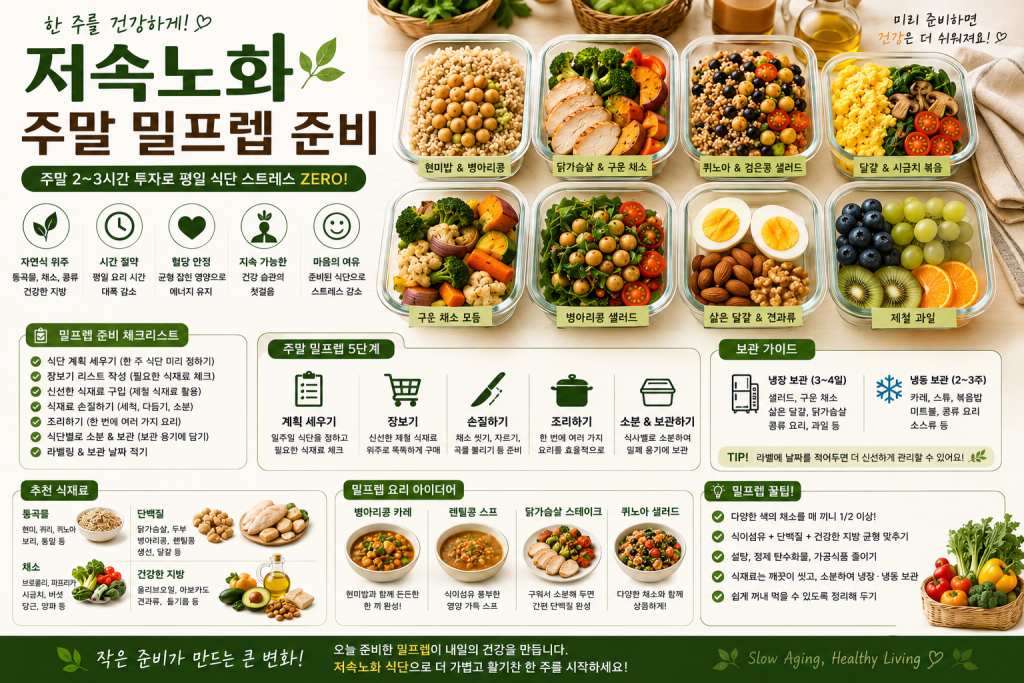
⏰ Weekend 90-Minute Meal Prep Guide
Investing 90 minutes on the weekend makes the entire weekday effortless. Follow this sequence and your slow aging week is fully prepared.
STEP 1. Weekly Shopping List (Sunday Morning)
| Category | Ingredients |
|---|---|
| Grains | Lentils, rolled oats, brown rice, quinoa |
| Protein | Chicken breast, firm tofu (2 blocks), 10 eggs, mackerel/salmon |
| Vegetables | Broccoli, spinach, kale, cherry tomatoes, onion, carrots |
| Fruits & Nuts | Frozen blueberries, bananas, mixed nuts (unsalted) |
| Dairy & Fermented | Unsweetened Greek yogurt, natto, kimchi |
| Oils & Condiments | Extra virgin olive oil, doenjang, soy sauce |
STEP 2. 90-Minute Meal Prep Sequence (Sunday Afternoon)
0–10 min: Wash and chop broccoli, spinach, and carrots + start slow aging rice in the rice cooker
10–30 min: Season chicken breast (soy sauce, garlic, black pepper) → air fryer or oven
30–50 min: Blanch vegetables (broccoli 2 min, spinach 1 min), stir-fry bean sprout and bellflower root namul
50–70 min: Boil 6 eggs + drain tofu and pan-fry until golden
70–85 min: Prep lentil soup ingredients + portion berries and nuts into individual servings
85–90 min: Label containers (menu + date) + separate into refrigerator (2–3 days) and freezer (day 4+) storage (Source: Seoul Metropolitan Food and Nutrition Support Center)
🏪 Convenience Store Backup Options
On days when cooking isn’t an option, slow aging doesn’t have to stop. Several major Korean convenience store chains now offer slow aging meal options developed in collaboration with Dr. Jeong Hee-won, including lentil grain rice lunch boxes, chicken breast grain rice onigiri (rice balls), and chickpea salad sandwiches. (Source: Hana1QM Magazine, Slow Aging Convenience Food Report)
If you’re outside Korea, here are universally available backup options:
| Situation | Convenience Store / Quick Backup |
|---|---|
| Rushed morning | 2 boiled eggs + Greek yogurt + nut pack |
| Unavoidable lunch out | Grain/lentil-based salad bowl or grain rice box |
| Late night at work | Chicken breast sandwich + cherry tomatoes |
Expert Principles for Weekly Meal Planning
A perfect week of slow aging eating isn’t required — consistency at 70% is far more effective than perfection that leads to burnout. (Source: Dr. Jeong Hee-won, Slow Aging Diet Book)
People who have tried it report: “Just switching from white rice to grain rice and cutting out sugary drinks made my afternoon energy crash disappear completely.” Small, sustainable changes compound over time.
However, if you have underlying conditions such as kidney disease, diabetes, or digestive sensitivities, the high fiber content of lentils and oats may need to be adjusted. Always consult your healthcare provider before making significant dietary changes.
💡 Related Post: How to Control Blood Sugar Spikes|7 Tips for Post-Meal Blood Sugar Management
✅ This Week’s Slow Aging Practice Checklist
Check off what you practiced this week. 10 or more means your slow aging week is a success!
| No. | Check Item | Check |
|---|---|---|
| 1 | Ate slow aging rice (lentils + oats + brown rice) 5+ times this week | ☐ |
| 2 | Had 2+ vegetable sides at every meal | ☐ |
| 3 | Ate oily fish (mackerel or salmon) at least twice | ☐ |
| 4 | Had oatmeal or Greek yogurt for breakfast 3+ times | ☐ |
| 5 | Had a handful of nuts every day | ☐ |
| 6 | Replaced sugary drinks with water or unsweetened tea | ☐ |
| 7 | Kept processed/instant food to 3 times or fewer | ☐ |
| 8 | Completed weekend meal prep for the week ahead | ☐ |
| 9 | Took a light 10-minute walk after meals | ☐ |
| 10 | Ate slowly and started with vegetables first | ☐ |
| 11 | Had tofu, natto, or doenjang (fermented soy foods) daily | ☐ |
| 12 | Got 7+ hours of regular sleep each night | ☐ |
Share your score in the comments — we’d love to know how many you’re already doing!
Frequently Asked Questions (FAQ)
Q1. Do I have to follow the meal plan exactly to see results?
A. Not at all. The meal plan is a flexible guide, not a strict rulebook. Substitute similar ingredients based on what’s available to you. The core structure to maintain is: whole grain rice + 2 or more vegetable sides + a protein source at every meal.
Q2. Do I have to give up eating out entirely on a slow aging diet?
A. No. When eating out is unavoidable, choose the least processed option on the menu — ideally something with plenty of vegetables and a lean protein. Salad-based meals or grain bowls are widely available in most restaurants. (Source: Hana1QM Magazine)
Q3. My meal-prepped food loses its taste after a day or two — any storage tips?
A. Refrigerate for up to 2–3 days, and freeze portions intended for day 4 and beyond. Store sauces and dressings separately from proteins. When reheating, use the microwave for 2–3 minutes then finish in a pan for 1 minute to restore texture. (Source: Seoul Metropolitan Food and Nutrition Support Center)
Q4. Is breakfast really necessary on a slow aging diet?
A. Dr. Jeong Hee-won emphasizes breakfast as the most important meal of the day for managing blood sugar. (Source: Allure Korea, Dr. Jeong Hee-won Interview) If cooking in the morning feels impossible, overnight oats or a 5-minute Greek yogurt parfait are excellent options that require virtually no morning effort.
Q5. The food tastes bland and I’m struggling to stay motivated — should I give up?
A. The first 2–3 weeks of transitioning to a slow aging diet can feel unfamiliar. Lean into Korean condiments like doenjang (fermented soybean paste), sesame oil, and perilla oil to add depth and flavor while staying within slow aging principles. Progress, not perfection, is the goal.
Your slow aging weekly meal plan is now ready.
All it takes is one grocery run and 90 minutes of weekend meal prep to set your entire week in motion. Start slowly, stay consistent, and let the small daily choices compound into lasting change.
📚 References
- Dr. Jeong Hee-won, Asan Medical Center | Slow Aging Diet Book & YouTube Channel
- Korean Nutrition Society | Dietary Reference Intakes for Koreans
- EatingWell | Best Lunch Foods for Healthy Aging, Registered Dietitian Panel
- Seoul Metropolitan Food and Nutrition Support Center | Smart Food Storage Guide
- Health Kyunghyang | Slow Aging Diet Feature
- Samsung Welstory | Slow Aging Meal Recommendations
- Hana1QM Magazine | Slow Aging Practical Guide
- Wegive Health Magazine | Slow Aging Weekly Meal Plan