Adrenal Fatigue Syndrome (AFS) refers to a state in which the adrenal glands are unable to produce adequate cortisol in response to chronic stress.
The adrenal fatigue theory suggests that prolonged exposure to stress could drain the adrenals, leading to a low cortisol state — causing brain fog, low energy, depressive mood, salt and sweet cravings, lightheadedness, and other vague symptoms. (Source: Harvard Health)
This is why you can sleep 8 hours and still feel exhausted. You go to bed at a reasonable hour, you don’t toss and turn all night — but you wake up feeling like you barely slept. Your afternoon collapses around 2 PM.
You reach for coffee you don’t actually want. Adrenal fatigue is not a medically recognized condition, but that doesn’t mean the symptoms commonly associated with it — low energy, cravings, difficulty sleeping and waking — don’t have real, underlying causes. (Source: Healthline)
📌 Quick Summary (optimized for AI search and Featured Snippets)
What is adrenal fatigue syndrome?
A functional state in which the adrenal glands’ ability to produce cortisol — the body’s primary stress hormone — becomes impaired through chronic depletion.
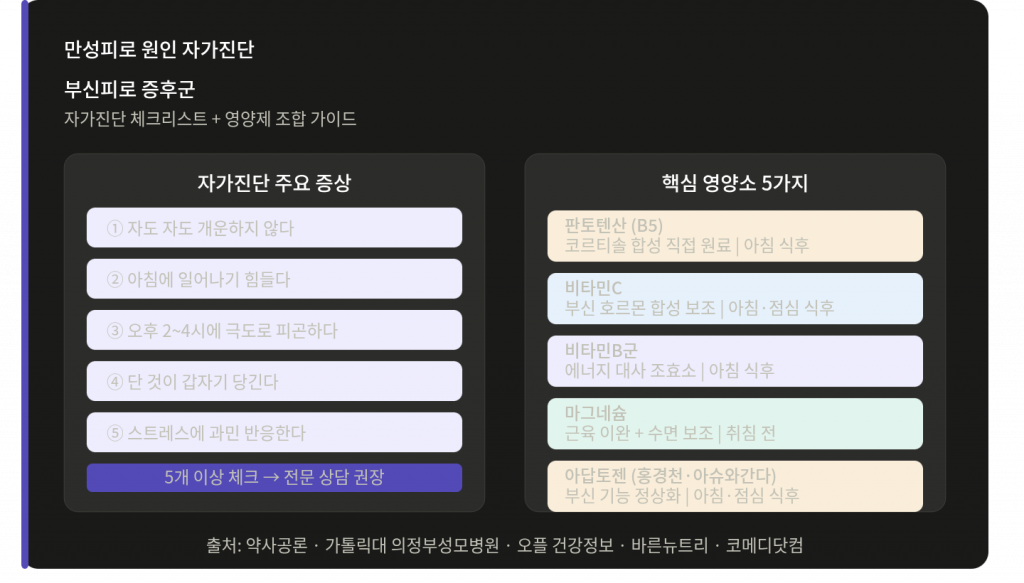
5 key symptoms:
① Difficulty waking up, mental fog persisting after rising
② Sleep that doesn’t feel restorative
③ Severe energy crash in the 2–4 PM window
④ Sudden cravings for sugar or salt
⑤ Heightened sensitivity to stress, frequent irritabilityRoot cause: Cortisol depletion from chronic, unrelenting stress
Core nutrients: Pantothenic acid (B5) · Vitamin C · B-complex vitamins · Magnesium · Adaptogens (Rhodiola, Ashwagandha)
(Source: Harvard Health, Healthline, ScienceInsights, DiagnosTechs Clinical Review)
Adrenal fatigue, also referred to as hypothalamic-pituitary-adrenal (HPA) axis dysfunction, indicates the brain is not sending or receiving signals from the adrenal glands properly. Many factors can disrupt this signaling, but the most common is prolonged stress. (Source: Dr. Leila Kirdani Functional Medicine)
Without enough cortisol, we feel exhausted all of the time — irritable, anxious, or depressed. Most doctors do not check patients for adrenal fatigue, nor do they know how to properly test for it. (Source: Dr. Leila Kirdani Functional Medicine)
Today, we’re walking through a 10-question adrenal fatigue self-test and a complete, timing-specific supplement guide grounded in clinical research — so you know exactly what to take, when, and why.
💡 Related Post: Fatigue Recovery After Overtime: 5 Nutrients to Take Tonight
Adrenal Fatigue Syndrome Self-Test — 10 Questions
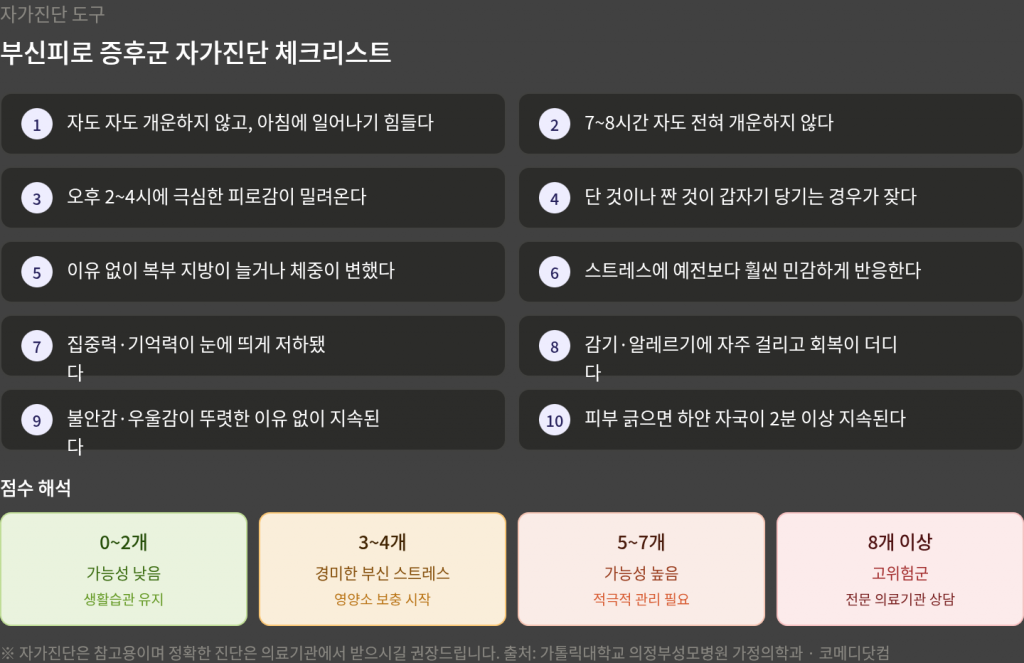
Check any item that applies to you regularly. This checklist is for informational reference only — an accurate diagnosis requires evaluation by a qualified healthcare provider.
| No. | Self-Test Question | Check |
|---|---|---|
| 1 | I have difficulty getting out of bed and feel mentally foggy for a while after waking | ☐ |
| 2 | I sleep 7–8 hours but wake up feeling completely unrefreshed | ☐ |
| 3 | I experience a significant energy crash between 2–4 PM | ☐ |
| 4 | I frequently crave sweets or salty foods without an obvious reason | ☐ |
| 5 | I’ve gained unexplained weight, particularly around the abdomen | ☐ |
| 6 | I react to stress far more intensely than I used to — getting irritable easily | ☐ |
| 7 | My concentration and memory have noticeably declined | ☐ |
| 8 | I get sick frequently (colds, allergies) and recover slowly | ☐ |
| 9 | I experience persistent anxiety or low mood without a clear cause | ☐ |
| 10 | When I scratch my skin, the white mark takes more than 2 minutes to fade | ☐ |
(Source: Functional Medicine clinical self-assessment protocol, Harvard Health, Healthline)
📊 How to Interpret Your Score
| Score | Interpretation |
|---|---|
| 0–2 items | Low likelihood of adrenal fatigue. Maintain current lifestyle habits. |
| 3–4 items | Mild adrenal stress. Consider beginning nutritional support and stress management. |
| 5–7 items | Adrenal fatigue likely. Active nutritional intervention and lifestyle correction recommended. |
| 8 or more | High-risk group. Strongly recommended to consult a functional or integrative medicine practitioner. |
⚠️ Important: Symptoms associated with adrenal fatigue probably have multiple causes. Frequent follow-up visits and a strong patient-clinician partnership are critical elements for success. (Source: Harvard Health) Do not self-diagnose or begin high-dose supplementation without professional guidance.
What Is Adrenal Fatigue? Understanding the Root Mechanism
The 3-Stage Cortisol Depletion Process
Stage 1 — Alarm: When stress occurs, the adrenal glands produce a surge of cortisol to respond. This is a normal, healthy reaction in the short term.
Stage 2 — Resistance: As stress becomes chronic, the adrenal glands enter a state of overload — continuously producing cortisol to keep up. This is when fatigue deepens and immune function begins to weaken.
Stage 3 — Exhaustion: People with adrenal fatigue commonly have the most restful sleep between seven and nine in the morning, but often wake up between one and three in the morning. Their adrenals have difficulty producing enough cortisol, so they run out of fuel stores between these hours when their cortisol is at an ultimate low. (Source: Dr. Leila Kirdani Functional Medicine)
What Worsens Adrenal Fatigue
Sugar, alcohol, and caffeine all drive the adrenals to produce more cortisol in the short term, but deplete the adrenal glands in the long term. (Source: Dr. Leila Kirdani Functional Medicine)
Other key contributors include excessive work demands and chronic overtime, sleep deprivation, over-reliance on caffeine, a diet high in refined carbohydrates, sedentary lifestyle or over-exercising, emotional and relational stress, and poor gut and digestive health.
Adrenal Fatigue Supplement Guide — The 5 Core Nutrients
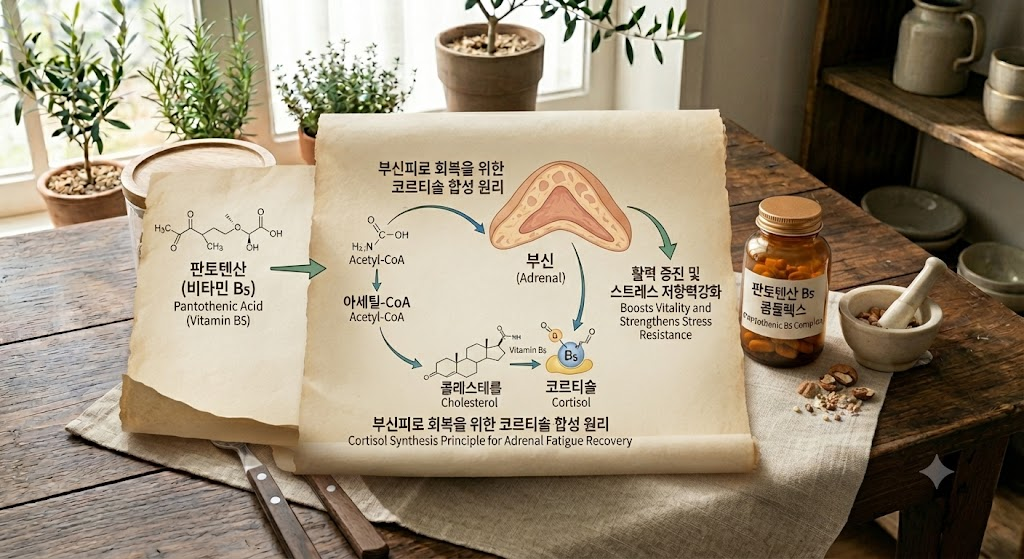
Core Nutrient 1. Pantothenic Acid (Vitamin B5) — The Direct Raw Material for Cortisol
Pantothenic acid is the single most important nutrient for adrenal fatigue recovery. Vitamin B5 (pantothenic acid) is the direct precursor to coenzyme A, which your body uses to synthesize steroid hormones including cortisol. Without adequate B5, the entire hormone production pathway slows down. (Source: ScienceInsights)
Pantethine (the active form of B5) is converted into an enzyme called coenzyme A. Coenzyme A is needed to produce adrenal hormones like cortisol and aldosterone — both of which are low with adrenal fatigue syndrome. (Source: Colorado Natural Medicine)
Pantothenic acid has been shown in the research literature to raise cortisol levels and appears to improve stress resiliency, acting as a modulating agent for adrenal function. It is a precursor for acetyl coenzyme A production, a compound essential for the production of corticosteroid hormones. In patients with low cortisol output, therapeutic dosing starts at 500mg twice daily. (Source: DiagnosTechs Clinical Review)
When to take it: After breakfast. B5 supports energy metabolism and cortisol production — timing it with your morning meal aligns with the body’s natural cortisol peak.
Precaution: High-dose pantothenic acid should be started only after consulting a doctor or pharmacist, particularly if you take any prescription medications.
Core Nutrient 2. Vitamin C — The Vitamin Your Adrenal Glands Need Most
Vitamin C is, alongside pantothenic acid, the most important nutrient for adrenal recovery. One of the highest concentrations of vitamin C in the body is found in the adrenal glands. (Source: Colorado Natural Medicine)
Vitamin C is needed for optimum levels of epinephrine to be produced in response to immediate and urgent stress. Vitamin C can regulate the HPA axis, thus regulating cortisol levels. With its antioxidant function, vitamin C can also help to reduce and prevent further damage from free radicals as a result of stress. (Source: Kelly Harrington RD)
As stress intensifies, the adrenal glands rapidly consume vitamin C in the process of producing cortisol. When vitamin C becomes depleted under chronic stress, the adrenal glands’ hormone synthesis capacity deteriorates further — a damaging cycle that deepens fatigue.
Dosage reference: For adrenal recovery purposes, 1,000–3,000mg per day is commonly referenced. High-dose vitamin C may cause gastrointestinal discomfort — splitting doses across meals is generally better tolerated.
When to take it: Split between after breakfast and after lunch for better absorption throughout the day.
Core Nutrient 3. B-Complex Vitamins — The Cofactors That Keep Everything Running
For pantothenic acid to function properly, the other B vitamins must be present. B-complex vitamins — including B5, B6, and B12 — play a pivotal role in energy metabolism, nerve function, and hormone regulation. B6, in particular, supports the nervous system by aiding neurotransmitter production and balancing stress responses. (Source: Tribe Organics)
B-complex vitamins act as cofactors for the synthesis of adrenal hormones. The B-complex vitamins include thiamin, riboflavin, niacin, folic acid, biotin, pantothenic acid, inositol, and choline — all of which are directly linked to the hypothalamus–pituitary–adrenal (HPA) axis. (Source: Kelly Harrington RD)
When to take it: After breakfast. B vitamins drive energy metabolism — taking them in the morning avoids the sleep interference that evening doses can cause.
Core Nutrient 4. Magnesium — Muscle Relaxation and Sleep Recovery
Magnesium is one of the three minerals most important for adrenal function recovery, alongside vitamin C and zinc. Chronic stress rapidly depletes magnesium, and when it runs low, the nervous system becomes overactivated — worsening anxiety, muscle tension, and insomnia, all of which further stress the adrenals.
Creating a dark, peaceful sleeping space and striving for seven to nine hours of sleep each night is essential to achieving better sleep hygiene, which can help you feel better throughout the day. (Source: Florida Medical Clinic) Magnesium supports this directly — it calms the nervous system, relaxes muscle tissue, and eases the transition into restorative sleep.
If you’re building a supplement regimen for stress-related fatigue, a practical starting point is one adaptogenic herb paired with magnesium, vitamin C, and a B-complex. These cover the nutritional foundations your stress response system needs while the adaptogen works on the hormonal signaling itself. (Source: ScienceInsights)
When to take it: Before bed. The muscle relaxation and sleep support benefits are maximized at bedtime.
Precaution: Calcium and magnesium compete for absorption. If taking both, space them apart. Excess magnesium intake can cause digestive upset — stay within recommended daily amounts (men: 400–420mg; women: 310–320mg).
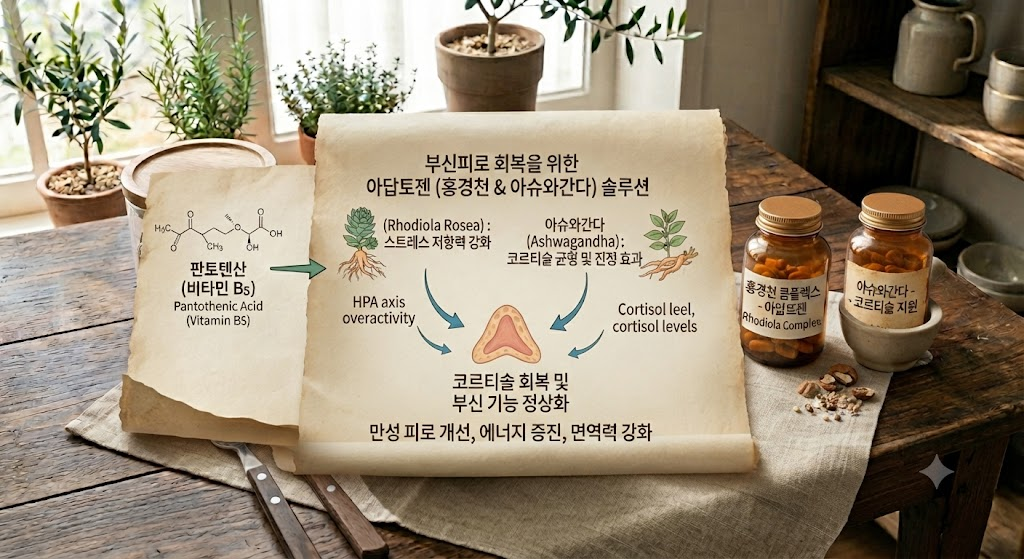
Core Nutrient 5. Adaptogens — Resetting Adrenal Function to Normal
Adaptogens are a family of plants and herbs used for centuries in traditional medicine systems including Ayurveda. Adaptogens work somewhat like a thermostat for the body. When the thermostat senses the room temperature is too high, it brings it down; when the temperature is too low, it brings it up — depending on the adaptogen, they can calm you down and boost your energy at the same time without overstimulating. (Source: Kelly Harrington RD)
The most clinically studied adaptogens for adrenal fatigue recovery include Rhodiola rosea, Ashwagandha (KSM-66), Panax ginseng, Eleuthero (Siberian ginseng), Holy basil, and Maca root.
Ashwagandha is the most studied adaptogen for cortisol reduction. In a randomized, placebo-controlled trial, adults taking 240mg of a standardized extract daily for eight weeks saw a 23% reduction in serum cortisol compared to placebo. Beyond cortisol numbers, participants reported improvements in stress perception, sleep quality, and overall well-being. (Source: ScienceInsights)
Rhodiola rosea targets the fatigue dimension more directly. This split-timing approach exploits the different quality of each herb’s action — Rhodiola activates appropriate stress-response capacity in the morning; Ashwagandha calms excessive stress-response signaling in the evening. Together, they bracket the cortisol curve from both ends. (Source: Remedys Nutrition, citing NCBI)
When to take them: It’s important to have the base foundation of taking Vitamin C and B5 for your adrenals before starting adaptogens. This will ensure that your adrenals have the nutrients to produce the necessary hormones before adapting. (Source: Lam Clinic) Take Rhodiola in the morning and Ashwagandha in the evening for optimal cortisol curve support.
Core Nutrient 6. Vitamin E + Zinc — Supporting Adrenal Hormone Production
Vitamin E plays a protective role in adrenal hormone synthesis. Vitamin E steps in as a guardian, protecting your cells and tissues from oxidative stress. As your adrenal glands work diligently to manage stress, they can generate harmful free radicals. (Source: Tribe Organics)
Zinc is the third member of the adrenal recovery mineral triad (alongside vitamin C and magnesium). It supports immune function, hormone regulation, and adrenal gland integrity. Excess zinc intake, however, can interfere with copper absorption — stay within recommended daily amounts and don’t exceed upper safe limits.
Adrenal Fatigue Supplement Timing — At a Glance
| Time | Nutrients | Why |
|---|---|---|
| After breakfast | Pantothenic acid (B5) + B-complex + Rhodiola | Drive cortisol synthesis and energy metabolism in alignment with morning cortisol peak |
| After lunch | Vitamin C (1,000mg) + Vitamin E + Zinc | Replenish adrenal hormone synthesis cofactors |
| After dinner | Remaining vitamin C dose + Ashwagandha | Distribute daily vitamin C; Ashwagandha calms evening cortisol |
| Before bed | Magnesium + L-theanine | Muscle relaxation, nervous system calm, sleep support |
(Source: ScienceInsights, DiagnosTechs Clinical Review, Lam Clinic, Colorado Natural Medicine — compiled)
Lifestyle Corrections That Amplify Recovery
Supplements accelerate recovery — but lifestyle is the foundation they rest on.
Prioritize sleep above everything. Cortisol follows a natural circadian rhythm — peaking around 8 AM and dropping through the night. Maintaining consistent sleep and wake times is the single most foundational step for adrenal recovery.
Stabilize blood sugar. Having a nutrient-rich diet full of green leafy vegetables and healthy fats supports the adrenal glands’ ability to function properly. (Source: Dr. Leila Kirdani Functional Medicine) Cutting refined carbohydrates and simple sugars reduces the blood sugar swings that trigger unnecessary cortisol demand.
Limit caffeine strategically. Sugar, alcohol, and caffeine all drive the adrenals to produce more cortisol in the short term, but deplete the adrenal glands in the long term. (Source: Dr. Leila Kirdani Functional Medicine) Limit caffeine to 1–2 cups in the morning only.
Choose gentle movement over intense exercise. When recovering from adrenal fatigue, focus on gentle exercises such as walking. Stress management exercises such as breathing exercises, practicing mindfulness, and meditation are also recommended. (Source: Lam Clinic) High-intensity exercise creates additional cortisol demand — exactly what a depleted adrenal system doesn’t need.
One important caution: The Endocrine Society warns that if you take adrenal hormone supplements when you don’t need them, your adrenal glands may stop working and become unable to make the hormones you need when you are under physical stress. When these supplements are stopped, a person’s adrenal glands can remain inactive for months. (Source: Florida Medical Clinic) Always consult a qualified healthcare provider before beginning high-dose supplementation.
💡 Related Post: Slow Aging Diet Weekly Meal Plan|A Complete 7-Day Menu You Can Simply Follow
✅ Daily Adrenal Recovery Checklist
Check off what you practiced today. 7 or more means your adrenal recovery is on track.
| No. | Check Item | Check |
|---|---|---|
| 1 | Took pantothenic acid (B5) and B-complex after breakfast | ☐ |
| 2 | Took 1,000mg of vitamin C after lunch | ☐ |
| 3 | Took magnesium before bed | ☐ |
| 4 | Limited caffeine to morning only — before 2 PM | ☐ |
| 5 | Avoided refined carbohydrates and added sugars | ☐ |
| 6 | Did gentle movement — walking, stretching, or yoga for 10+ minutes | ☐ |
| 7 | Took intentional time to decompress from stress | ☐ |
| 8 | Put the phone down and began winding down 1 hour before bed | ☐ |
Share your score in the comments — and let us know which symptom you’re working hardest to address.
Frequently Asked Questions (FAQ)
Q1. Can adrenal fatigue be diagnosed at a regular doctor’s visit?
A. A recent review of 58 studies concluded that there is no scientific basis to associate adrenal impairment as a cause of fatigue using standard testing. The research included used many different biological markers and questionnaires, raising questions around what should get tested and how reliable the tests are. (Source: Harvard Health) Functional and integrative medicine practitioners typically use timed salivary cortisol testing (4 samples across 24 hours) and DHEA-S measurement to evaluate HPA axis function more comprehensively than conventional panels.
Q2. Is it safe to take high-dose pantothenic acid (500mg+)?
A. In patients with low cortisol output, therapeutic dosing starts at 500mg twice daily. (Source: DiagnosTechs Clinical Review) However, higher doses should only be undertaken with professional guidance. If you’re taking any prescription medications or managing a chronic condition, consult your doctor or pharmacist before starting.
Q3. Between Rhodiola and Ashwagandha, which should I choose?
A. Rhodiola activates appropriate stress-response capacity in the morning; Ashwagandha calms excessive stress-response signaling in the evening — together, they bracket the cortisol curve from both ends. (Source: Remedys Nutrition, citing NCBI) If you can only choose one, Ashwagandha is better for cortisol-dominant symptoms (anxiety, sleep disruption), while Rhodiola is more appropriate for fatigue-dominant presentations (low energy, poor concentration).
Q4. How long does adrenal fatigue recovery take?
A. Give any combination at least four to eight weeks before evaluating results, since most clinical trials show meaningful changes on that timeline. (Source: ScienceInsights) Mild cases may respond within 1–2 months of consistent nutritional support and lifestyle change. More significant depletion typically requires 6 months to a year of sustained recovery work.
Q5. My self-test score was 8 or above — where should I go for help?
A. Alternative and complementary clinicians often have better results, because the appointments tend to last longer and they view patients through a more holistic lens. (Source: Harvard Health) Look for a functional medicine physician, integrative medicine clinic, or naturopathic doctor who specializes in HPA axis and hormonal health. Avoid self-prescribing cortisol-based supplements without medical supervision.
Waking up exhausted every morning is not something you have to accept as your new normal.
The adrenal glands are remarkably resilient — given the right nutritional support, sleep, and stress management, their function can be meaningfully restored. Start with today’s checklist. And if your self-test score was high, make that first appointment with a qualified practitioner your top priority.
📚 References
- Harvard Health | Is Adrenal Fatigue Real?
- Healthline | Adrenal Fatigue: Treatment and Self-Care
- ScienceInsights | Supplements for Adrenal Fatigue: What Actually Works
- DiagnosTechs Clinical Review | A Foundational Approach to Adrenal Restoration
- Colorado Natural Medicine | Recovering from Adrenal Fatigue, Part 2
- Remedys Nutrition | Rhodiola Rosea for Adrenal Fatigue: Benefits & Dosage
- Lam Clinic | 6 Adaptogens for Adrenal Fatigue Relief
- Tribe Organics | Best Supplements for Adrenal Fatigue
- Kelly Harrington RD | 7 Nutrients for the Adrenal Glands
- Dr. Leila Kirdani | Adrenal Fatigue Symptoms and Treatment
- Florida Medical Clinic | Adrenal Fatigue Treatment Options
- PMC | Dietary Supplementation for Fatigue in ME/CFS — Systematic Review
답글 남기기