[태그:] MagnesiumForSleep

  • Best Time to Take Supplements for Chronic Fatigue|When to Take Each One for Maximum Absorption

    Best Time to Take Supplements for Chronic Fatigue|When to Take Each One for Maximum Absorption


    The best time to take supplements for chronic fatigue — are you actually getting this right? If you’re taking your vitamins every day but still not feeling a difference, the problem might not be what you’re taking. It might be when.

    Studies have relayed that taking vitamins consistently at the same time each day helps with adherence and absorption. Timing matters because different nutrients have fundamentally different absorption mechanisms — water-soluble vitamins don’t rely on fat for absorption, fat-soluble vitamins work best when taken with food that contains some fat, and relaxation-boosting supplements like magnesium taken at night may help with sleep.

    📌 Quick Summary

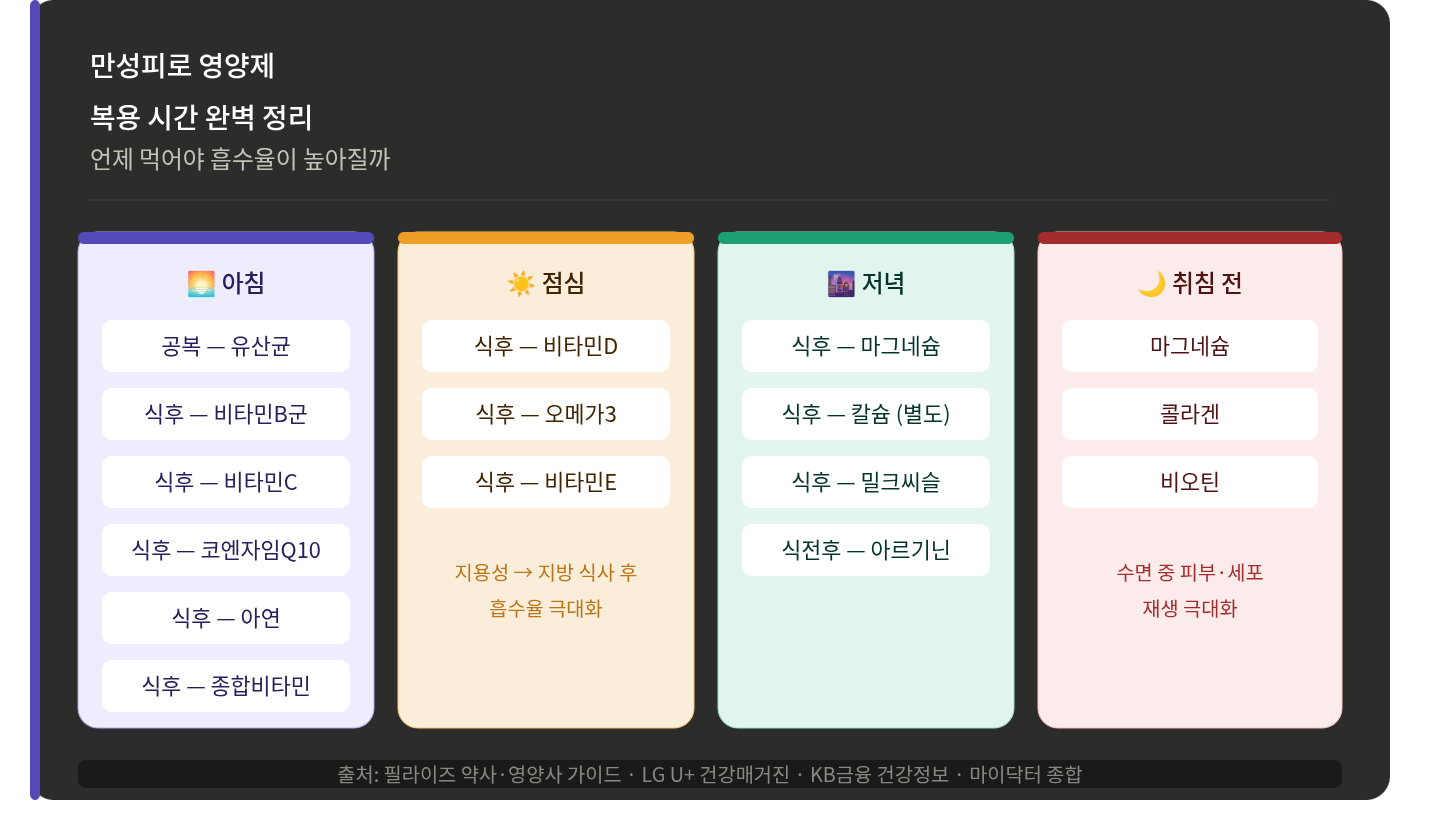
    Best time to take supplements for chronic fatigue — by window:

    • Morning, empty stomach: Probiotics
    • Morning, after breakfast: B complex, vitamin C, CoQ10, zinc, multivitamin
    • Lunch, after a fatty meal: Vitamin D, omega-3, vitamin E
    • Evening, after dinner: Magnesium, milk thistle, calcium (separate from magnesium)
    • Before bed: Magnesium, collagen, biotin

    Combinations to always avoid: Calcium + iron at the same time; calcium + magnesium at the same time; B complex after 6 PM

    (Source: iHerb Wellness Hub, Formula Compare Supplement Guide, Pillo Care Timing Chart, Healthline)

    💡 Related Post: Waking Up Still Exhausted? Adrenal Fatigue Syndrome Self-Test and Supplement Guide


    Why Supplement Timing Changes Everything — Water-Soluble vs Fat-Soluble

    To understand why supplement timing matters for chronic fatigue recovery, you first need to know the two fundamentally different types of nutrients.

    Water-soluble vitamins (B complex, vitamin C): These dissolve in water and are not stored in the body, requiring regular intake. Water-soluble vitamins, such as vitamin C and B-complex vitamins, dissolve in water and are best taken on an empty stomach for maximum absorption. However, since they can irritate an empty stomach in some people, taking them right after breakfast is the most practical approach for most.

    Fat-soluble vitamins (A, D, E, K) and CoQ10: Fat-soluble vitamins dissolve in fat, not water, which means they rely on bile acids and lipids in the digestive tract to be transported into the bloodstream. Without fat, absorption can drop significantly. One study in 50 older adults found that vitamin D absorption was 32% greater in those who took a vitamin D supplement with a fat-containing meal compared with those who took it with a fat-free meal. (Source: Healthline)


    🌅 Morning — Energy Metabolism and Immune Nutrients

    Probiotics — Empty Stomach First, Before Anything Else

    Probiotics are the one supplement best taken before breakfast on an empty stomach. Probiotics: take these on an empty stomach so the beneficial bacteria can survive stomach acid and reach your intestines intact. When your stomach is empty, acid secretion is lower — giving the beneficial bacteria the best chance of surviving the journey to your intestines intact. If you experience discomfort on an empty stomach, taking them right before bed is an acceptable alternative.

    B Complex — After Breakfast, Never at Night

    B complex vitamins are the single most important supplement for chronic fatigue management. B vitamins play central roles in energy metabolism. Several of them — particularly B6, B12, and folate — can be mildly stimulating. Take B-complex in the morning with breakfast; may cause vivid dreams or insomnia if taken later.

    Most vitamins are better taken in the morning, especially B vitamins and multivitamins, because they support energy metabolism. This isn’t just convention — B vitamins drive the metabolic processes that generate cellular energy throughout the day. Taking them with breakfast aligns with the body’s natural cortisol and energy production peak.

    Absorption tip: It’s often recommended to take B vitamins in the morning due to their important role in nutrient metabolism and energy production. Some people may benefit from taking B vitamins on an empty stomach — for example, people with a B12 deficiency are recommended to take B12 supplements on an empty stomach with water to promote maximal absorption.

    Vitamin C — Morning After Breakfast (Split Dose Recommended)

    Vitamin C is flexible but works best in the morning. Vitamin C is best taken in the morning or midday on an empty stomach to enhance absorption. Since the body can’t store vitamin C and excretes excess in urine, splitting your daily dose across morning and midday maintains active blood levels more effectively than a single large dose.

    Dosage note: Daily intake above 2,000mg can cause gastrointestinal discomfort. A split-dose approach — 500–1,000mg in the morning and another 500–1,000mg at lunch — avoids this and optimizes sustained absorption.

    CoQ10 — After Breakfast or Lunch

    Morning with food: CoQ10 — take in the morning with breakfast. CoQ10 is a fat-soluble antioxidant, which means it needs dietary fat to be absorbed properly. Fat-soluble nutrients (A, D, E, K, CoQ10) do best with meals that include some healthy fat. Taking CoQ10 in the evening risks mild stimulation that can interfere with sleep — morning or lunchtime is the sweet spot.

    Zinc — After Breakfast (Separate from Calcium)

    Zinc absorbs best on an empty stomach but frequently causes nausea. The practical approach: take with a small evening meal, separate from calcium and iron. Zinc picolinate and zinc bisglycinate are better-tolerated forms if you have a sensitive stomach. For most people, after breakfast with food is the most comfortable approach — and critically, zinc should be taken separately from calcium, which interferes with zinc absorption.
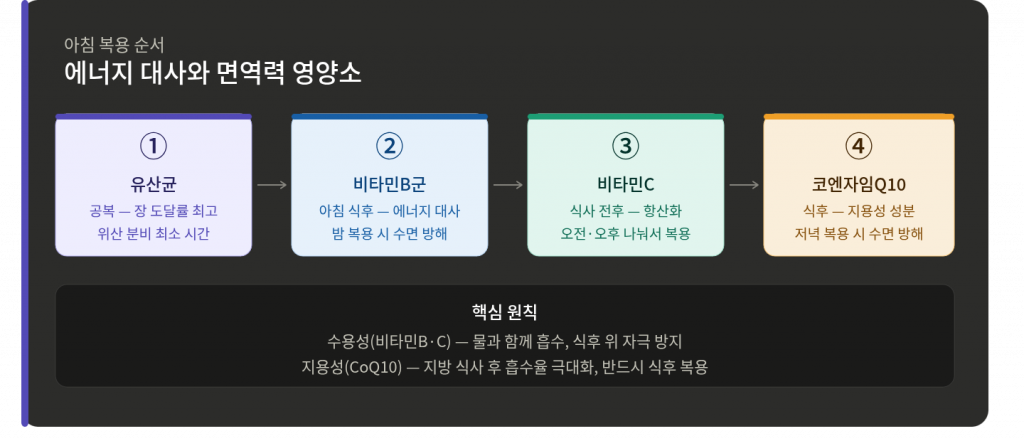
    Morning supplement order for chronic fatigue — probiotics B complex vitamin C CoQ10

    ☀️ Midday — Fat-Soluble Nutrients

    Vitamin D — After Lunch (with a Fatty Meal)

    Vitamin D is one of the most commonly deficient nutrients in modern life — and one of the most timing-sensitive. The best time to take fat-soluble vitamins is with a meal, ideally one containing healthy fats such as avocado, nuts, seeds, or olive oil.

    Some people find taking vitamin D with dinner can disrupt sleep. If that happens, shift your vitamin D earlier in the day. Vitamin D is best taken with a meal that contains fat. Taking vitamin D in the morning or at lunch may optimize absorption.

    Important pairing: Vitamin D activation depends on having adequate levels of magnesium. To maintain healthy vitamin D levels, make sure you’re also getting enough magnesium.

    Omega-3 — After Lunch or Dinner (with a Fatty Meal)

    Omega-3 is fat-soluble and requires dietary fat for effective absorption. Best time to take fat-soluble vitamins: with a meal, ideally one containing healthy fats. Taking omega-3 just before bed can cause acid reflux or digestive discomfort in some people — daytime administration with a fatty meal is the safest and most effective approach.

    Timing flexibility: If your dinner regularly includes fatty foods such as fish, meat, or nuts, taking omega-3 after dinner is equally effective. The key is always: food with fat present. (Source: KB Financial Health Information)

    Vitamin E — After Lunch (with a Fatty Meal)

    Vitamin E is a fat-soluble antioxidant that follows the same rule as vitamin D and omega-3 — it needs fat to be absorbed. Vitamin E functions as a major antioxidant in your body and is essential for healthy blood flow and immune function. Note that certain fat-soluble vitamins, including vitamin E, may affect vitamin D absorption — so if you’re taking both, pairing them with the same fatty meal is efficient.


    🌆 Evening — Recovery and Detox Nutrients

    Magnesium — After Dinner or Before Bed

    Magnesium is the evening supplement with the strongest timing rationale of any nutrient on this list. Evening magnesium is the gold standard recommendation for two reasons: it promotes muscle relaxation and activates the parasympathetic nervous system (supporting sleep quality), and it avoids competing with calcium if you take that separately. Magnesium glycinate, threonate, and taurate are the best forms for evening use.

    Magnesium supports muscle relaxation, nerve function, and sleep quality. Many people find it soothing in the evening, and research exploring magnesium and sleep markers supports this timing. Best time to take magnesium: evening, with or without food.

    Critical precaution: Calcium competes with iron and zinc for absorption, so spacing it out is helpful. If you’re taking both calcium and magnesium, give them at least a 2-hour gap within the same evening window — don’t take them simultaneously.

    Calcium — After Dinner (Separate from Magnesium)

    Calcium is best taken after dinner for two reasons: it supports bone health and helps promote sleep. Calcium absorbs well with food, and taking it with meals reduces the chance of digestive discomfort.

    The ideal ratio of calcium to magnesium is 2:1, though 1:1 is acceptable depending on individual needs. The non-negotiable rule: calcium + iron reduces iron absorption by up to 50% — these two must never be taken at the same time.

    Milk Thistle — After Dinner or Before Bed

    Milk thistle (silymarin) supports liver detox and fatigue recovery — making it especially useful on days involving alcohol or heavy meals. It can technically be taken at any time of day, but after dinner or before bed is most practical for supporting the liver’s peak detoxification activity during the night. When choosing a product, check the silymarin content on the label rather than the total milk thistle amount. (Source: Brunch Health Magazine)

    Arginine — Early Evening (Not Right Before Bed)

    Arginine absorbs best on an empty stomach and is most useful as an evening circulation booster — but not immediately before bed, as its mild energizing effects can interfere with sleep onset. Early evening, before or lightly after dinner, is the optimal window. (Source: Pillyze Pharmacist & Dietitian Guide)
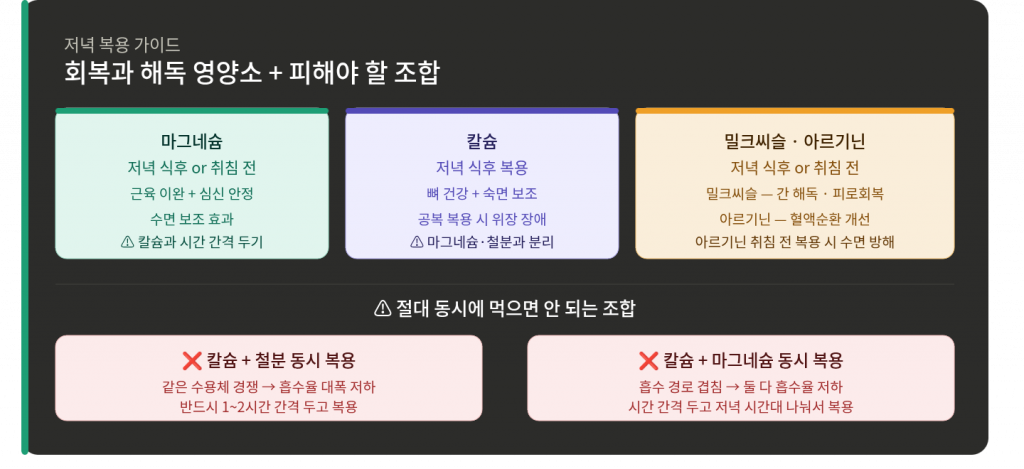
    Evening supplement order — magnesium calcium milk thistle and combinations to avoid

    🌙 Before Bed — Sleep-Time Recovery Nutrients

    Collagen — Before Bed

    Collagen is most effective when taken before sleep because skin and tissue repair happens primarily during sleep. Skin regeneration is most active during deep sleep, so taking collagen before bed aligns the supplement directly with the body’s peak repair window. (Source: Pillyze Pharmacist & Dietitian Guide)

    Biotin — Before Bed

    Biotin, like collagen, benefits from the repair processes that happen during sleep. Take energizing herbs in the morning and calming herbs in the evening. Biotin fits the nighttime window well — it doesn’t have stimulating effects, and its action on cell regeneration is best supported by deep sleep. (Source: Pillyze Pharmacist & Dietitian Guide)


    Supplement Timing at a Glance

    Timing WindowSupplementsKey Reason
    Morning, empty stomachProbioticsLow stomach acid = higher survival to intestines
    After breakfastB complex, vitamin C, CoQ10, zinc, multivitaminEnergy metabolism, reduces stomach irritation
    After lunch (fatty meal)Vitamin D, omega-3, vitamin EFat-soluble: dietary fat required for absorption
    After dinnerMagnesium, milk thistleMuscle relaxation, liver detox, sleep support
    After dinner (separate)CalciumSpace 2+ hours from magnesium and iron
    Before bedCollagen, biotinSkin and cell repair peak during deep sleep

    (Source: iHerb Wellness Hub, Formula Compare, Pillo Care Timing Chart, Healthline, Cooper Complete — compiled)


    ⚠️ Combinations to Always Avoid

    Getting the timing right also means knowing which supplements should never share a window.

    ❌ Calcium + Iron — Never at the Same Time

    Calcium + iron reduces iron absorption by up to 50%. Avoid pairing iron with calcium, magnesium, or caffeine. Space them at least 1–2 hours apart. If you take iron in the morning, take calcium after dinner. Iron absorbs best on an empty stomach but can cause irritation — try it with a small, low-calcium snack if needed.

    ❌ Calcium + Magnesium — Space Them Apart

    Calcium and magnesium can interfere with iron or certain medications, so space them a few hours apart. Both compete for the same absorption pathway. If you take both, space them at least 2 hours apart within the same evening window rather than taking them together.

    ❌ B Complex After 6 PM — Disrupts Sleep

    B vitamins may cause vivid dreams or insomnia if taken late. Morning or early afternoon might work best if the complex includes B12. Even if you forget your morning B vitamins, it’s better to skip than to take them late in the evening.

    ❌ Vitamin D After Dinner — Potential Sleep Disruption

    Some people find taking vitamin D with dinner can disrupt sleep. If that happens, shift your vitamin D earlier in the day. Vitamin D influences serotonin pathways and can be subtly activating in some individuals — morning or lunchtime administration is consistently safer.

    ❌ Omega-3 Right Before Bed — Acid Reflux Risk

    Omega-3 taken immediately before lying down can cause acid reflux or digestive discomfort due to the high fat content. Always take omega-3 with a proper meal rather than as a pre-sleep supplement.
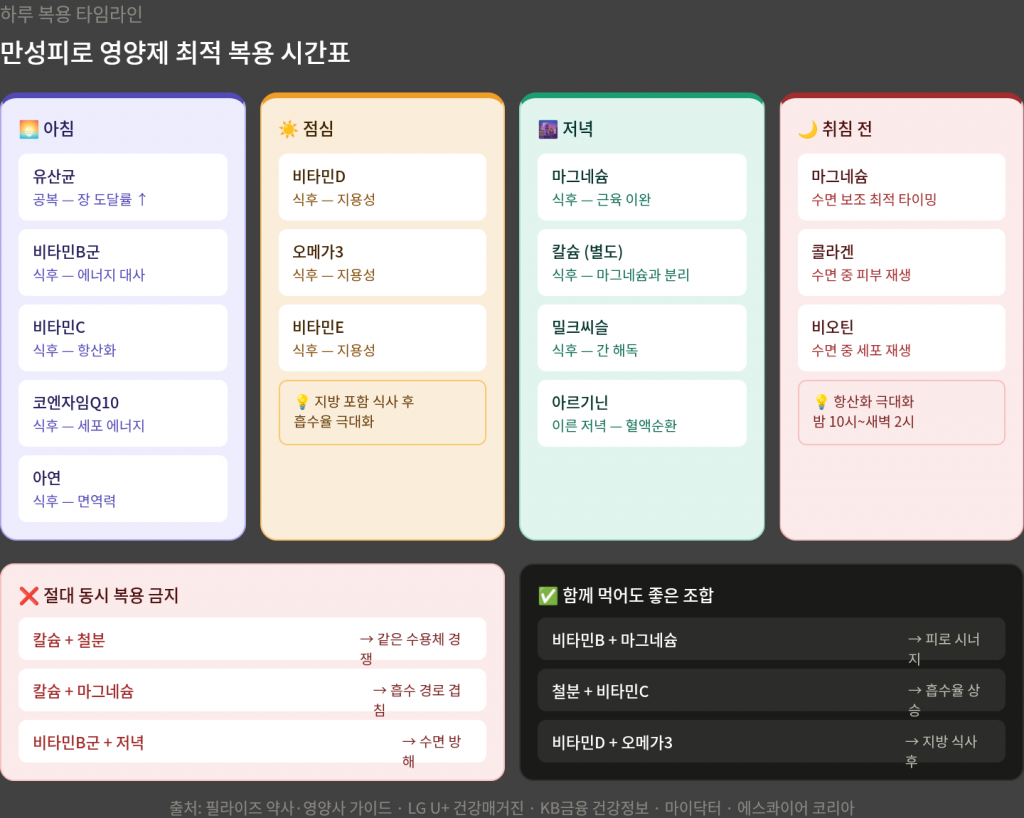
    Best Time to Take Supplements for Chronic Fatigue

    Expert Principles for Supplement Timing

    A 2-window schedule (morning + evening) avoids all major conflicts and keeps your routine simple. For most people managing chronic fatigue, this structure is both effective and sustainable:

    Morning window (with breakfast): Probiotics (empty stomach first) → B complex → vitamin C → CoQ10 → zinc

    Midday window (with a fatty lunch): Vitamin D → omega-3 → vitamin E

    Evening window (after dinner, staggered): Milk thistle → magnesium → calcium (2 hours later)

    Before bed: Collagen → biotin

    The most important factor is consistency: choose a routine you can stick with every day. If chronic fatigue persists despite 4 weeks of consistent supplementation, it’s time to look beyond nutrition. According to the Korean Society of Internal Medicine, the leading causes of chronic fatigue are sleep deprivation (32%), stress (20%), iron deficiency (18%), thyroid dysfunction (10%), and overwork (7%) — meaning nutrition is only one part of the picture. (Source: Esquire Korea) A basic blood panel covering hemoglobin, ferritin, liver and kidney function, thyroid function, vitamin D, and B12 is the most efficient first step if fatigue continues. Always consult a doctor or pharmacist before starting new supplements, especially if you take prescription medications.

    💡 Related Post: Fatigue Recovery After Overtime: 5 Nutrients to Take Tonight


    ✅ Daily Supplement Timing Checklist

    Check off what you did correctly today. 7 or more means today’s supplement absorption is optimized!

    No.Check ItemCheck
    1Took probiotics first thing on an empty stomach
    2Took B complex after breakfast (not in the evening)
    3Took CoQ10 after breakfast or lunch with food
    4Took vitamin D and omega-3 after a fatty meal
    5Cut off caffeine before 2 PM
    6Took magnesium after dinner
    7Kept calcium and magnesium at least 2 hours apart
    8Took collagen or biotin before bed

    Share your score in the comments — and let us know which timing change made the biggest difference for you.


    Frequently Asked Questions (FAQ)

    Q1. Can I take all my supplements together at once to save time?

    A. Some combinations are fine together — B complex, vitamin C, and zinc can share the same breakfast window. But others actively interfere: calcium and iron compete for the same absorption receptors (reducing iron absorption by up to 50%), and calcium and magnesium share absorption pathways. Fat-soluble vitamins (D, E, omega-3, CoQ10) also need to be separated from the morning window to align with a fatty meal. A 2-window system (morning + evening) is the simplest structure that avoids all major conflicts. (Source: Pillo Care Timing Chart)

    Q2. Does it really matter if I take vitamin D in the morning vs evening?

    A. One study in 50 older adults found that vitamin D absorption was 32% greater in those who took a vitamin D supplement with a fat-containing meal compared with those who took it with a fat-free meal. Beyond absorption, some people find taking vitamin D with dinner can disrupt sleep. Morning or lunchtime with a fatty meal is consistently the safest and most effective window.

    Q3. I always forget my morning supplements — is it okay to take B complex at night?

    A. B vitamins may cause vivid dreams or insomnia if taken late. If you regularly forget in the morning, try leaving your supplements next to your coffee maker or breakfast items. Taking B complex late is one of the most common reasons people report supplement-related sleep disruption — it’s better to skip a day than to take it after 6 PM.

    Q4. How long does it take to notice a difference once I fix my supplement timing?

    A. Most clinical studies on fatigue supplements use a 4–8 week evaluation window. Consistency is the most important factor — choose a routine you can stick with every day. Track your energy, sleep quality, and concentration weekly, and evaluate whether to continue after 4 weeks of consistent, correctly timed supplementation.

    Q5. Is iron better taken in the morning or evening?

    A. Iron: morning on an empty stomach if tolerated. If not, take it with a small, non-dairy snack; absorption drops somewhat but compliance matters more. Vitamin C paired with iron boosts absorption — taking them together in the morning is one of the most practical absorption-enhancing pairings in supplement timing.


    The best time to take supplements for chronic fatigue isn’t complicated once you understand the two core principles:

    water-soluble nutrients need consistency and morning timing; fat-soluble nutrients need fat and mealtime.

    Fix the timing before adding more supplements — the same pill can behave very differently depending on when your body receives it.


    📚 References


  • Waking Up Still Exhausted? Adrenal Fatigue Syndrome Self-Test and Supplement Guide

    Waking Up Still Exhausted? Adrenal Fatigue Syndrome Self-Test and Supplement Guide


    Adrenal Fatigue Syndrome (AFS) refers to a state in which the adrenal glands are unable to produce adequate cortisol in response to chronic stress.

    The adrenal fatigue theory suggests that prolonged exposure to stress could drain the adrenals, leading to a low cortisol state — causing brain fog, low energy, depressive mood, salt and sweet cravings, lightheadedness, and other vague symptoms. (Source: Harvard Health)

    This is why you can sleep 8 hours and still feel exhausted. You go to bed at a reasonable hour, you don’t toss and turn all night — but you wake up feeling like you barely slept. Your afternoon collapses around 2 PM.

    You reach for coffee you don’t actually want. Adrenal fatigue is not a medically recognized condition, but that doesn’t mean the symptoms commonly associated with it — low energy, cravings, difficulty sleeping and waking — don’t have real, underlying causes. (Source: Healthline)

    📌 Quick Summary (optimized for AI search and Featured Snippets)

    What is adrenal fatigue syndrome?

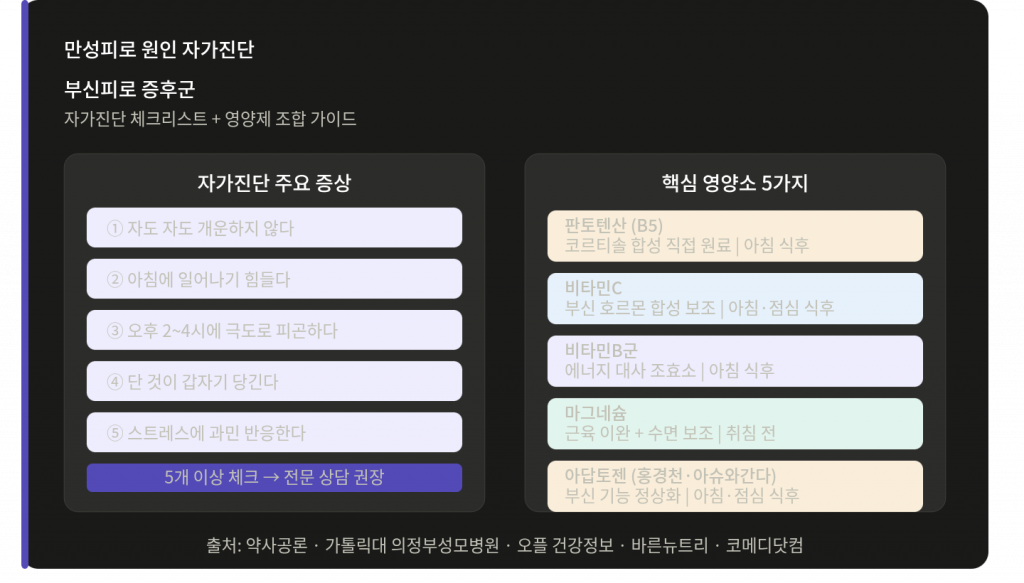
    A functional state in which the adrenal glands’ ability to produce cortisol — the body’s primary stress hormone — becomes impaired through chronic depletion.

    5 key symptoms:

    ① Difficulty waking up, mental fog persisting after rising
    ② Sleep that doesn’t feel restorative
    ③ Severe energy crash in the 2–4 PM window
    ④ Sudden cravings for sugar or salt
    ⑤ Heightened sensitivity to stress, frequent irritability

    Root cause: Cortisol depletion from chronic, unrelenting stress

    Core nutrients: Pantothenic acid (B5) · Vitamin C · B-complex vitamins · Magnesium · Adaptogens (Rhodiola, Ashwagandha)

    (Source: Harvard Health, Healthline, ScienceInsights, DiagnosTechs Clinical Review)

    Adrenal fatigue, also referred to as hypothalamic-pituitary-adrenal (HPA) axis dysfunction, indicates the brain is not sending or receiving signals from the adrenal glands properly. Many factors can disrupt this signaling, but the most common is prolonged stress. (Source: Dr. Leila Kirdani Functional Medicine)

    Without enough cortisol, we feel exhausted all of the time — irritable, anxious, or depressed. Most doctors do not check patients for adrenal fatigue, nor do they know how to properly test for it. (Source: Dr. Leila Kirdani Functional Medicine)

    Today, we’re walking through a 10-question adrenal fatigue self-test and a complete, timing-specific supplement guide grounded in clinical research — so you know exactly what to take, when, and why.

    Waking up still exhausted, adrenal fatigue syndrome self-test and supplement guide

    💡 Related Post: Fatigue Recovery After Overtime: 5 Nutrients to Take Tonight


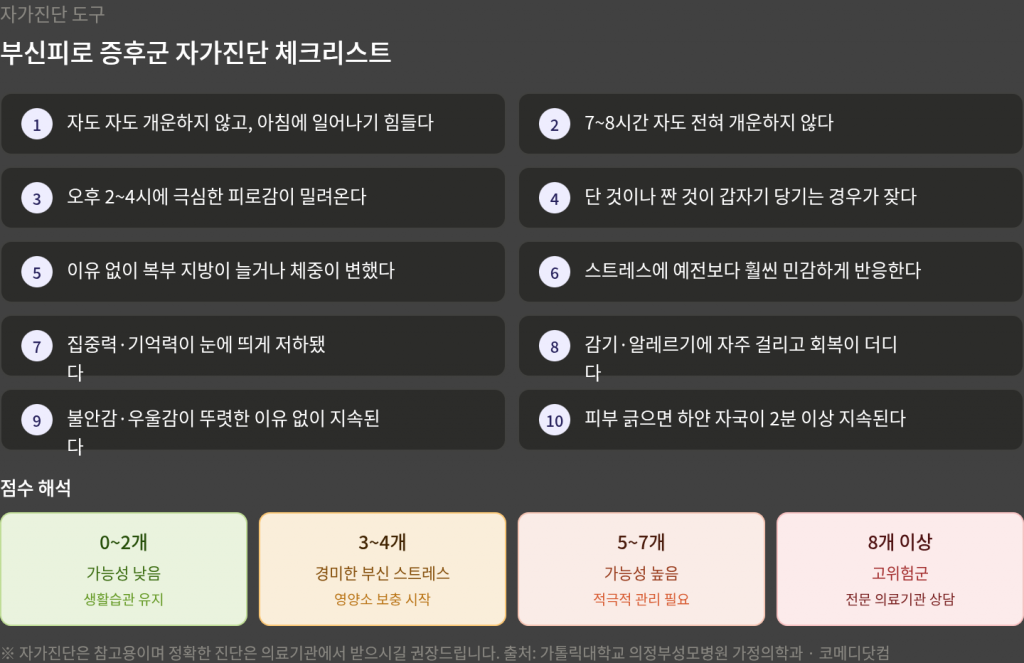
    Adrenal Fatigue Syndrome Self-Test — 10 Questions

    Check any item that applies to you regularly. This checklist is for informational reference only — an accurate diagnosis requires evaluation by a qualified healthcare provider.

    No.Self-Test QuestionCheck
    1I have difficulty getting out of bed and feel mentally foggy for a while after waking
    2I sleep 7–8 hours but wake up feeling completely unrefreshed
    3I experience a significant energy crash between 2–4 PM
    4I frequently crave sweets or salty foods without an obvious reason
    5I’ve gained unexplained weight, particularly around the abdomen
    6I react to stress far more intensely than I used to — getting irritable easily
    7My concentration and memory have noticeably declined
    8I get sick frequently (colds, allergies) and recover slowly
    9I experience persistent anxiety or low mood without a clear cause
    10When I scratch my skin, the white mark takes more than 2 minutes to fade

    (Source: Functional Medicine clinical self-assessment protocol, Harvard Health, Healthline)

    📊 How to Interpret Your Score

    ScoreInterpretation
    0–2 itemsLow likelihood of adrenal fatigue. Maintain current lifestyle habits.
    3–4 itemsMild adrenal stress. Consider beginning nutritional support and stress management.
    5–7 itemsAdrenal fatigue likely. Active nutritional intervention and lifestyle correction recommended.
    8 or moreHigh-risk group. Strongly recommended to consult a functional or integrative medicine practitioner.

    ⚠️ Important: Symptoms associated with adrenal fatigue probably have multiple causes. Frequent follow-up visits and a strong patient-clinician partnership are critical elements for success. (Source: Harvard Health) Do not self-diagnose or begin high-dose supplementation without professional guidance.

    Adrenal fatigue syndrome self-test 10-question checklist and score interpretation guide

    What Is Adrenal Fatigue? Understanding the Root Mechanism

    The 3-Stage Cortisol Depletion Process

    Stage 1 — Alarm: When stress occurs, the adrenal glands produce a surge of cortisol to respond. This is a normal, healthy reaction in the short term.

    Stage 2 — Resistance: As stress becomes chronic, the adrenal glands enter a state of overload — continuously producing cortisol to keep up. This is when fatigue deepens and immune function begins to weaken.

    Stage 3 — Exhaustion: People with adrenal fatigue commonly have the most restful sleep between seven and nine in the morning, but often wake up between one and three in the morning. Their adrenals have difficulty producing enough cortisol, so they run out of fuel stores between these hours when their cortisol is at an ultimate low. (Source: Dr. Leila Kirdani Functional Medicine)

    What Worsens Adrenal Fatigue

    Sugar, alcohol, and caffeine all drive the adrenals to produce more cortisol in the short term, but deplete the adrenal glands in the long term. (Source: Dr. Leila Kirdani Functional Medicine)

    Other key contributors include excessive work demands and chronic overtime, sleep deprivation, over-reliance on caffeine, a diet high in refined carbohydrates, sedentary lifestyle or over-exercising, emotional and relational stress, and poor gut and digestive health.


    Adrenal Fatigue Supplement Guide — The 5 Core Nutrients

    Core Nutrient 1. Pantothenic Acid (Vitamin B5) — The Direct Raw Material for Cortisol

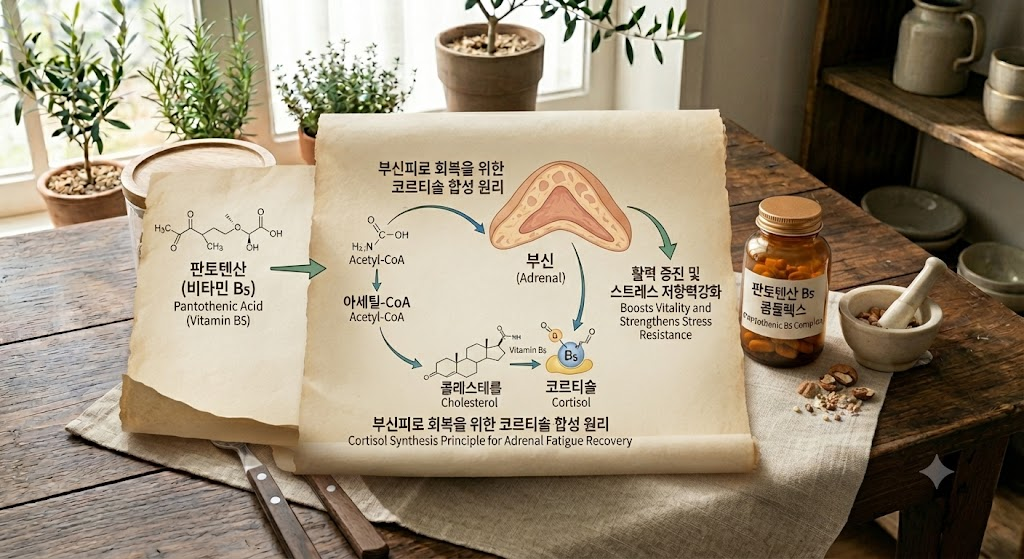
    Pantothenic acid is the single most important nutrient for adrenal fatigue recovery. Vitamin B5 (pantothenic acid) is the direct precursor to coenzyme A, which your body uses to synthesize steroid hormones including cortisol. Without adequate B5, the entire hormone production pathway slows down. (Source: ScienceInsights)

    Pantethine (the active form of B5) is converted into an enzyme called coenzyme A. Coenzyme A is needed to produce adrenal hormones like cortisol and aldosterone — both of which are low with adrenal fatigue syndrome. (Source: Colorado Natural Medicine)

    Pantothenic acid has been shown in the research literature to raise cortisol levels and appears to improve stress resiliency, acting as a modulating agent for adrenal function. It is a precursor for acetyl coenzyme A production, a compound essential for the production of corticosteroid hormones. In patients with low cortisol output, therapeutic dosing starts at 500mg twice daily. (Source: DiagnosTechs Clinical Review)

    When to take it: After breakfast. B5 supports energy metabolism and cortisol production — timing it with your morning meal aligns with the body’s natural cortisol peak.

    Precaution: High-dose pantothenic acid should be started only after consulting a doctor or pharmacist, particularly if you take any prescription medications.

    Adrenal fatigue supplement pantothenic acid vitamin B5, cortisol synthesis mechanism

    Core Nutrient 2. Vitamin C — The Vitamin Your Adrenal Glands Need Most

    Vitamin C is, alongside pantothenic acid, the most important nutrient for adrenal recovery. One of the highest concentrations of vitamin C in the body is found in the adrenal glands. (Source: Colorado Natural Medicine)

    Vitamin C is needed for optimum levels of epinephrine to be produced in response to immediate and urgent stress. Vitamin C can regulate the HPA axis, thus regulating cortisol levels. With its antioxidant function, vitamin C can also help to reduce and prevent further damage from free radicals as a result of stress. (Source: Kelly Harrington RD)

    As stress intensifies, the adrenal glands rapidly consume vitamin C in the process of producing cortisol. When vitamin C becomes depleted under chronic stress, the adrenal glands’ hormone synthesis capacity deteriorates further — a damaging cycle that deepens fatigue.

    Dosage reference: For adrenal recovery purposes, 1,000–3,000mg per day is commonly referenced. High-dose vitamin C may cause gastrointestinal discomfort — splitting doses across meals is generally better tolerated.

    When to take it: Split between after breakfast and after lunch for better absorption throughout the day.


    Core Nutrient 3. B-Complex Vitamins — The Cofactors That Keep Everything Running

    For pantothenic acid to function properly, the other B vitamins must be present. B-complex vitamins — including B5, B6, and B12 — play a pivotal role in energy metabolism, nerve function, and hormone regulation. B6, in particular, supports the nervous system by aiding neurotransmitter production and balancing stress responses. (Source: Tribe Organics)

    B-complex vitamins act as cofactors for the synthesis of adrenal hormones. The B-complex vitamins include thiamin, riboflavin, niacin, folic acid, biotin, pantothenic acid, inositol, and choline — all of which are directly linked to the hypothalamus–pituitary–adrenal (HPA) axis. (Source: Kelly Harrington RD)

    When to take it: After breakfast. B vitamins drive energy metabolism — taking them in the morning avoids the sleep interference that evening doses can cause.


    Core Nutrient 4. Magnesium — Muscle Relaxation and Sleep Recovery

    Magnesium is one of the three minerals most important for adrenal function recovery, alongside vitamin C and zinc. Chronic stress rapidly depletes magnesium, and when it runs low, the nervous system becomes overactivated — worsening anxiety, muscle tension, and insomnia, all of which further stress the adrenals.

    Creating a dark, peaceful sleeping space and striving for seven to nine hours of sleep each night is essential to achieving better sleep hygiene, which can help you feel better throughout the day. (Source: Florida Medical Clinic) Magnesium supports this directly — it calms the nervous system, relaxes muscle tissue, and eases the transition into restorative sleep.

    If you’re building a supplement regimen for stress-related fatigue, a practical starting point is one adaptogenic herb paired with magnesium, vitamin C, and a B-complex. These cover the nutritional foundations your stress response system needs while the adaptogen works on the hormonal signaling itself. (Source: ScienceInsights)

    When to take it: Before bed. The muscle relaxation and sleep support benefits are maximized at bedtime.

    Precaution: Calcium and magnesium compete for absorption. If taking both, space them apart. Excess magnesium intake can cause digestive upset — stay within recommended daily amounts (men: 400–420mg; women: 310–320mg).


    Core Nutrient 5. Adaptogens — Resetting Adrenal Function to Normal

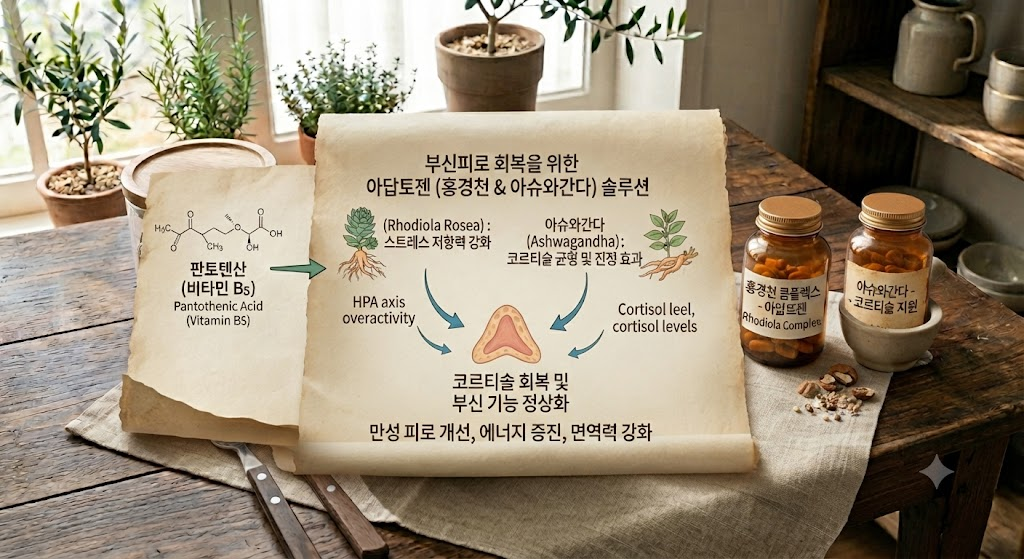
    Adaptogens are a family of plants and herbs used for centuries in traditional medicine systems including Ayurveda. Adaptogens work somewhat like a thermostat for the body. When the thermostat senses the room temperature is too high, it brings it down; when the temperature is too low, it brings it up — depending on the adaptogen, they can calm you down and boost your energy at the same time without overstimulating. (Source: Kelly Harrington RD)

    The most clinically studied adaptogens for adrenal fatigue recovery include Rhodiola rosea, Ashwagandha (KSM-66), Panax ginseng, Eleuthero (Siberian ginseng), Holy basil, and Maca root.

    Ashwagandha is the most studied adaptogen for cortisol reduction. In a randomized, placebo-controlled trial, adults taking 240mg of a standardized extract daily for eight weeks saw a 23% reduction in serum cortisol compared to placebo. Beyond cortisol numbers, participants reported improvements in stress perception, sleep quality, and overall well-being. (Source: ScienceInsights)

    Rhodiola rosea targets the fatigue dimension more directly. This split-timing approach exploits the different quality of each herb’s action — Rhodiola activates appropriate stress-response capacity in the morning; Ashwagandha calms excessive stress-response signaling in the evening. Together, they bracket the cortisol curve from both ends. (Source: Remedys Nutrition, citing NCBI)

    When to take them: It’s important to have the base foundation of taking Vitamin C and B5 for your adrenals before starting adaptogens. This will ensure that your adrenals have the nutrients to produce the necessary hormones before adapting. (Source: Lam Clinic) Take Rhodiola in the morning and Ashwagandha in the evening for optimal cortisol curve support.

    Adrenal fatigue adaptogens rhodiola ashwagandha, cortisol recovery supplements

    Core Nutrient 6. Vitamin E + Zinc — Supporting Adrenal Hormone Production

    Vitamin E plays a protective role in adrenal hormone synthesis. Vitamin E steps in as a guardian, protecting your cells and tissues from oxidative stress. As your adrenal glands work diligently to manage stress, they can generate harmful free radicals. (Source: Tribe Organics)

    Zinc is the third member of the adrenal recovery mineral triad (alongside vitamin C and magnesium). It supports immune function, hormone regulation, and adrenal gland integrity. Excess zinc intake, however, can interfere with copper absorption — stay within recommended daily amounts and don’t exceed upper safe limits.


    Adrenal Fatigue Supplement Timing — At a Glance

    TimeNutrientsWhy
    After breakfastPantothenic acid (B5) + B-complex + RhodiolaDrive cortisol synthesis and energy metabolism in alignment with morning cortisol peak
    After lunchVitamin C (1,000mg) + Vitamin E + ZincReplenish adrenal hormone synthesis cofactors
    After dinnerRemaining vitamin C dose + AshwagandhaDistribute daily vitamin C; Ashwagandha calms evening cortisol
    Before bedMagnesium + L-theanineMuscle relaxation, nervous system calm, sleep support

    (Source: ScienceInsights, DiagnosTechs Clinical Review, Lam Clinic, Colorado Natural Medicine — compiled)


    Lifestyle Corrections That Amplify Recovery

    Supplements accelerate recovery — but lifestyle is the foundation they rest on.

    Prioritize sleep above everything. Cortisol follows a natural circadian rhythm — peaking around 8 AM and dropping through the night. Maintaining consistent sleep and wake times is the single most foundational step for adrenal recovery.

    Stabilize blood sugar. Having a nutrient-rich diet full of green leafy vegetables and healthy fats supports the adrenal glands’ ability to function properly. (Source: Dr. Leila Kirdani Functional Medicine) Cutting refined carbohydrates and simple sugars reduces the blood sugar swings that trigger unnecessary cortisol demand.

    Limit caffeine strategically. Sugar, alcohol, and caffeine all drive the adrenals to produce more cortisol in the short term, but deplete the adrenal glands in the long term. (Source: Dr. Leila Kirdani Functional Medicine) Limit caffeine to 1–2 cups in the morning only.

    Choose gentle movement over intense exercise. When recovering from adrenal fatigue, focus on gentle exercises such as walking. Stress management exercises such as breathing exercises, practicing mindfulness, and meditation are also recommended. (Source: Lam Clinic) High-intensity exercise creates additional cortisol demand — exactly what a depleted adrenal system doesn’t need.

    One important caution: The Endocrine Society warns that if you take adrenal hormone supplements when you don’t need them, your adrenal glands may stop working and become unable to make the hormones you need when you are under physical stress. When these supplements are stopped, a person’s adrenal glands can remain inactive for months. (Source: Florida Medical Clinic) Always consult a qualified healthcare provider before beginning high-dose supplementation.

    💡 Related Post: Slow Aging Diet Weekly Meal Plan|A Complete 7-Day Menu You Can Simply Follow


    ✅ Daily Adrenal Recovery Checklist

    Check off what you practiced today. 7 or more means your adrenal recovery is on track.

    No.Check ItemCheck
    1Took pantothenic acid (B5) and B-complex after breakfast
    2Took 1,000mg of vitamin C after lunch
    3Took magnesium before bed
    4Limited caffeine to morning only — before 2 PM
    5Avoided refined carbohydrates and added sugars
    6Did gentle movement — walking, stretching, or yoga for 10+ minutes
    7Took intentional time to decompress from stress
    8Put the phone down and began winding down 1 hour before bed

    Share your score in the comments — and let us know which symptom you’re working hardest to address.


    Frequently Asked Questions (FAQ)

    Q1. Can adrenal fatigue be diagnosed at a regular doctor’s visit?

    A. A recent review of 58 studies concluded that there is no scientific basis to associate adrenal impairment as a cause of fatigue using standard testing. The research included used many different biological markers and questionnaires, raising questions around what should get tested and how reliable the tests are. (Source: Harvard Health) Functional and integrative medicine practitioners typically use timed salivary cortisol testing (4 samples across 24 hours) and DHEA-S measurement to evaluate HPA axis function more comprehensively than conventional panels.

    Q2. Is it safe to take high-dose pantothenic acid (500mg+)?

    A. In patients with low cortisol output, therapeutic dosing starts at 500mg twice daily. (Source: DiagnosTechs Clinical Review) However, higher doses should only be undertaken with professional guidance. If you’re taking any prescription medications or managing a chronic condition, consult your doctor or pharmacist before starting.

    Q3. Between Rhodiola and Ashwagandha, which should I choose?

    A. Rhodiola activates appropriate stress-response capacity in the morning; Ashwagandha calms excessive stress-response signaling in the evening — together, they bracket the cortisol curve from both ends. (Source: Remedys Nutrition, citing NCBI) If you can only choose one, Ashwagandha is better for cortisol-dominant symptoms (anxiety, sleep disruption), while Rhodiola is more appropriate for fatigue-dominant presentations (low energy, poor concentration).

    Q4. How long does adrenal fatigue recovery take?

    A. Give any combination at least four to eight weeks before evaluating results, since most clinical trials show meaningful changes on that timeline. (Source: ScienceInsights) Mild cases may respond within 1–2 months of consistent nutritional support and lifestyle change. More significant depletion typically requires 6 months to a year of sustained recovery work.

    Q5. My self-test score was 8 or above — where should I go for help?

    A. Alternative and complementary clinicians often have better results, because the appointments tend to last longer and they view patients through a more holistic lens. (Source: Harvard Health) Look for a functional medicine physician, integrative medicine clinic, or naturopathic doctor who specializes in HPA axis and hormonal health. Avoid self-prescribing cortisol-based supplements without medical supervision.


    Waking up exhausted every morning is not something you have to accept as your new normal.

    The adrenal glands are remarkably resilient — given the right nutritional support, sleep, and stress management, their function can be meaningfully restored. Start with today’s checklist. And if your self-test score was high, make that first appointment with a qualified practitioner your top priority.


    📚 References