Have you known how to take care of your gut health but found it difficult to put into practice? If you experience bloating, frequent constipation, or unexplained fatigue, these could be warning signs from your gut.
Today, gut microbes have been found to influence health to a degree comparable to genes; as bacteria make up over 70% of our total flora, our bodies are affected by the products secreted by these bacteria. Morenature
The most well-known method for maintaining gut health is consuming probiotics . However, to properly reap the benefits of probiotics, there is something else that must be taken alongside them: **dietary fiber (prebiotics)**, which serves as food for beneficial bacteria.
Professor Theresa Fung of the Department of Nutrition at the Harvard School of Public Health emphasizes, “Probiotics and prebiotics, these two dietary components, are increasingly being recognized as essential for gut and overall health. ”Taetae2029
Today, I will summarize the key aspects of taking care of gut health — probiotics dosage and dietary fiber utilization guides —all at once, along with scientific evidence.
💡 Recommended Reading: How to Choose Immunity Supplements Properly | Vitamin D, C, Zinc, and Probiotics Guide
What are Probiotics? Why Are They Important for Gut Health?
The World Health Organization (WHO) defines probiotics as live microorganisms that provide health benefits to the host when consumed in adequate amounts. Simply put, they are live bacteria that play a beneficial role in the intestines—that is, what we commonly call ‘lactic acid bacteria’.
When the balance of gut microorganisms is disrupted, you may experience digestive problems, weakened immunity, mood swings, or an increased risk of infection. Probiotics compete with harmful bacteria for nutrients, produce protective substances, and support the health of the intestinal mucosa.
Furthermore, probiotics promote digestive function by maintaining the balance of beneficial bacteria, helping to alleviate digestive issues such as constipation or diarrhea; as the gut environment becomes healthier, immunity is naturally strengthened.
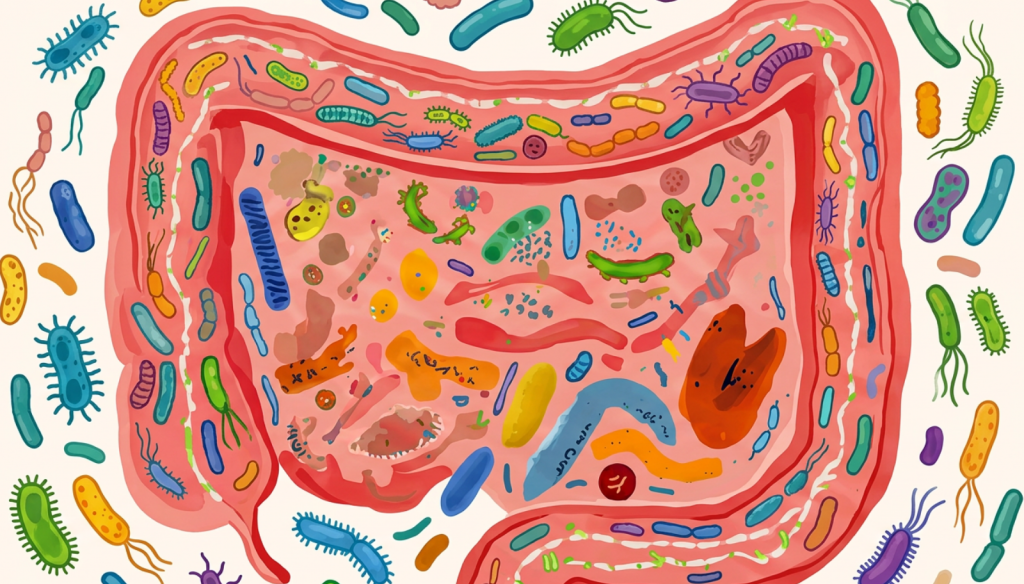
What is dietary fiber? The ‘food’ for probiotics
Prebiotics are indigestible components that promote the growth of beneficial bacteria in the gut. They serve as a nutrient source for probiotics, helping to improve the intestinal environment. Simply put, dietary fiber is the food for lactic acid bacteria. No matter how much lactic acid bacteria you consume, they cannot establish themselves in the intestines without food.
Professor Fung of the Harvard School of Public Health emphasizes that “beneficial bacteria like fiber,” explaining that when fiber enters the digestive system, enzymes in the gut microbiome break it down to produce short-chain fatty acids, which change the intestinal pH and reduce some harmful microorganisms.
How to Choose Probiotics Properly
① Check the strain
Each strain has different effects. Lactobacillus rhamnosus helps boost immunity, Lactobacillus helveticus helps improve mood, and Bifidobacterium helps relieve abdominal bloating. Therefore, it is important to choose a product containing strains that match your specific symptom goals, rather than simply one with a high CFU count.
② CFU content standard
While many Lactobacillus and Bifidobacterium studies for adults use 1 to 10 billion CFU per day, a higher CFU does not automatically mean it is better. If you are taking it for the first time, it is recommended to start with a low dosage and adjust it while monitoring your body’s reaction.
③ Check the health functional food certification mark
According to the Korea Consumer Agency, probiotics are defined as health functional foods that aid in the proliferation of beneficial bacteria, inhibition of harmful bacteria, and bowel movements. We recommend that you必ず verify whether products sold domestically have been certified as health functional foods by the Ministry of Food and Drug Safety.
How to take probiotics correctly
① Timing of administration
Probiotics are most effective when taken once a day on an empty stomach in the morning. Taking them at a time when stomach acid secretion is low allows more beneficial bacteria to reach the intestines.
② Caution when taking with antibiotics
If you are taking antibiotics, it is important to leave an interval of at least two hours between taking the antibiotics and probiotics. This is because beneficial bacteria can be killed by the antibiotics if taken at the same time.
③ Consume with dietary fiber
Consuming prebiotics (dietary fiber) together with probiotics enhances their effectiveness. The key is to ensure you include foods rich in dietary fiber, such as vegetables, whole grains, and legumes, even while taking probiotic supplements.
④ Consistency is key
The efficacy of probiotics varies depending on the strain, and the effects are usually temporary if not consumed regularly. It is much more important to establish it as a consistent lifestyle habit rather than taking it intensively for a short period.

Top 5 Foods Rich in Dietary Fiber
For gut health, consuming dietary fiber through food is just as important as taking probiotic supplements.
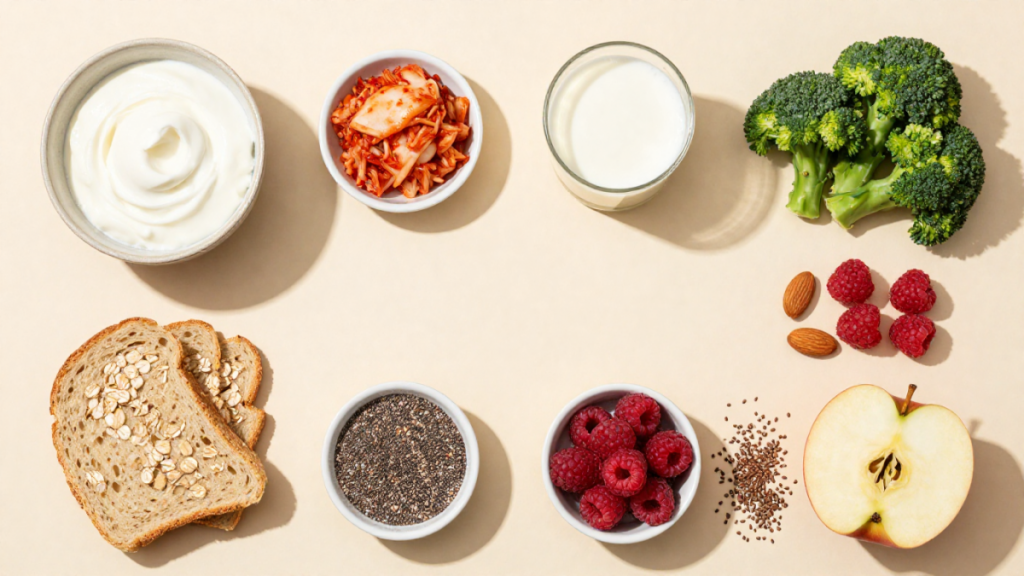
Representative foods containing prebiotics include beans and whole grains, while vegetables and fruits also contain healthy fiber. In particular, the following five are representative foods that allow you to obtain both dietary fiber and prebiotics simultaneously.
| Food | Characteristic |
|---|---|
| Kimchi and soybean paste | Traditional Korean fermented food supplies beneficial bacteria and prebiotics simultaneously |
| Whole grains (brown rice, oats) | Rich in soluble and insoluble dietary fiber, promotes intestinal peristalsis |
| Legumes (lentils, chickpeas) | Rich in prebiotic oligosaccharides, serves as food for beneficial bacteria |
| Vegetables (broccoli, onion, garlic) | Protects the intestinal mucosa with dietary fiber + antioxidants |
| Fruits (apples and bananas) | Activating beneficial gut bacteria with pectin and fluorinated starch |
Consuming fiber-rich vegetables, grains such as roasted beans and brown rice, protein, low-salt traditional Korean fermented foods, and probiotics together serves to lay the foundation for a balanced gut microbiome.
Gut Health: Things to Take Care Of Besides Food
Gut health is not just a matter of diet. Studies have shown that sleep deprivation reduces gut microbial diversity, so it is important to maintain 7 to 8 hours of regular sleep per day, and chronic stress directly and adversely affects the gut environment through the gut-brain axis.
In addition, it is helpful to use antibiotics only when absolutely necessary and to manage your diet and lifestyle rhythm by reducing refined sugars and excessively unbalanced eating habits in your daily life.
There are also points to be aware of. Probiotics should not be the first choice if intestinal symptoms are accompanied by bleeding, fever, unintended weight loss, anemia, persistent vomiting, severe pain, or nocturnal diarrhea; in such cases, we recommend seeking an accurate diagnosis from a medical institution immediately.
💡 Recommended Reading: 7 Ways to Manage Stress | Relief Methods You Can Put into Action Immediately in Daily Life
✅ Today’s Gut Health Checklist
Check off the items you practiced today. If you checked 6 or more, your gut is healthy today!
| Number | Check items | Check |
|---|---|---|
| 1 | I took probiotics on an empty stomach in the morning. | ☐ |
| 2 | I ate dietary fiber foods such as vegetables, beans, and whole grains. | ☐ |
| 3 | Fermented foods such as kimchi, doenjang, and yogurt were served alongside. | ☐ |
| 4 | I drank more than 6 glasses (1.2L) of water. | ☐ |
| 5 | Reduced excessive intake of sugar and processed foods. | ☐ |
| 6 | I ate at regular times. | ☐ |
| 7 | I helped with bowel movements through light exercise or walks. | ☐ |
| 8 | I took time to consciously relieve stress. | ☐ |
Feel free to share today’s score in the comments. Gut health is built by the accumulation of daily habits!
Frequently Asked Questions (FAQ)
Q1. Do I need to take probiotics every day, or is it sufficient to take them only when symptoms appear?
A. Since the effects of probiotics may temporarily diminish if not taken regularly, consistent daily intake is recommended. However, for long-term use, we advise consulting a professional regarding the method of administration and dosage.
Q2. Can I get enough probiotics from kimchi or yogurt?
A. Natural consumption through fermented foods is an excellent method. If you maintain a balance through the intake of fermented foods and dietary fiber, you may not need supplements. However, if your diet is unbalanced or you experience persistent intestinal problems, taking nutritional supplements in conjunction may be helpful.
Q3. Is it normal to feel bloated when I first start taking probiotics?
A. Gas, abdominal distension, and loose stools may occur during the first 3 to 7 days, but this is a normal reaction. If symptoms are severe or accompanied by fever or severe pain, please stop taking the supplements and consult a specialist.
Q4. Are there any side effects from consuming too much dietary fiber?
A. It is generally recommended to consume 3,000 to 8,000 mg of prebiotics (such as oligosaccharides), and excessive intake may cause bloating. Those who usually consume little dietary fiber should start with small amounts and gradually increase their intake.
Q5. Is it safe for children or pregnant women to take probiotics?
A. Since suitable strains and dosages may vary depending on age and health condition, we strongly recommend consulting with a pediatrician or OB/GYN before consumption.
Gut health is not built overnight.
The most realistic and effective way to take care of gut health is to consistently practice taking probiotics and dietary fiber together, building upon the foundation of regular meals, sleep, and stress management.