The best time to take supplements for chronic fatigue — are you actually getting this right? If you’re taking your vitamins every day but still not feeling a difference, the problem might not be what you’re taking. It might be when.
Studies have relayed that taking vitamins consistently at the same time each day helps with adherence and absorption. Timing matters because different nutrients have fundamentally different absorption mechanisms — water-soluble vitamins don’t rely on fat for absorption, fat-soluble vitamins work best when taken with food that contains some fat, and relaxation-boosting supplements like magnesium taken at night may help with sleep.
📌 Quick Summary
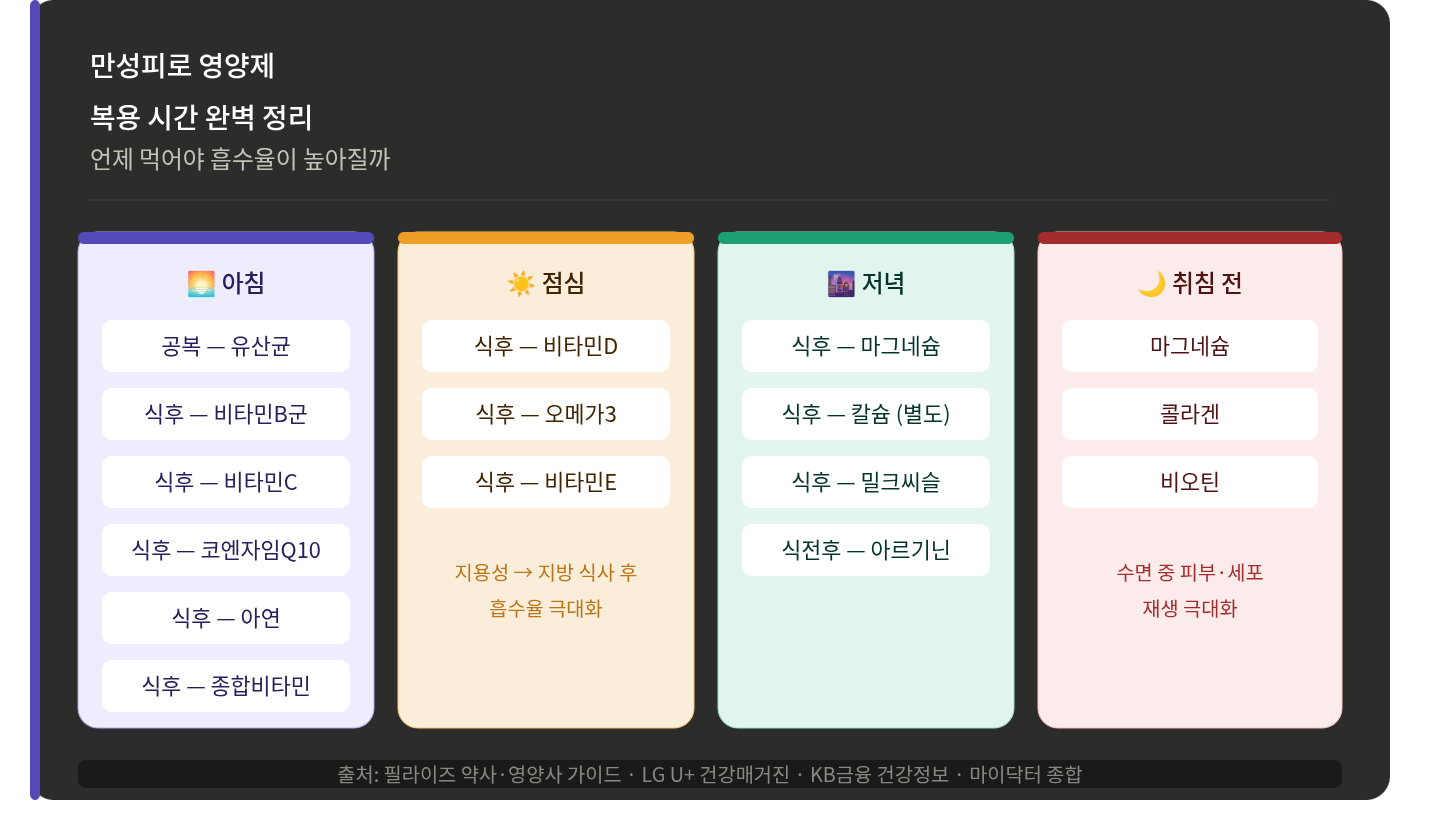
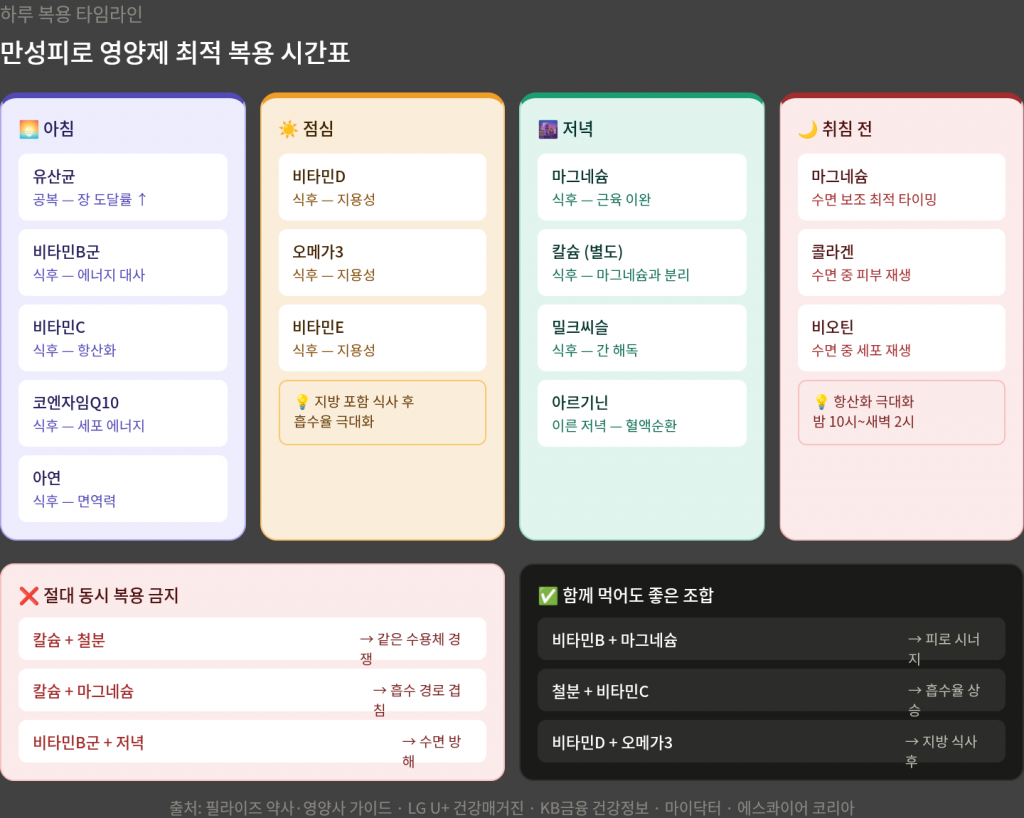
Best time to take supplements for chronic fatigue — by window:
- Morning, empty stomach: Probiotics
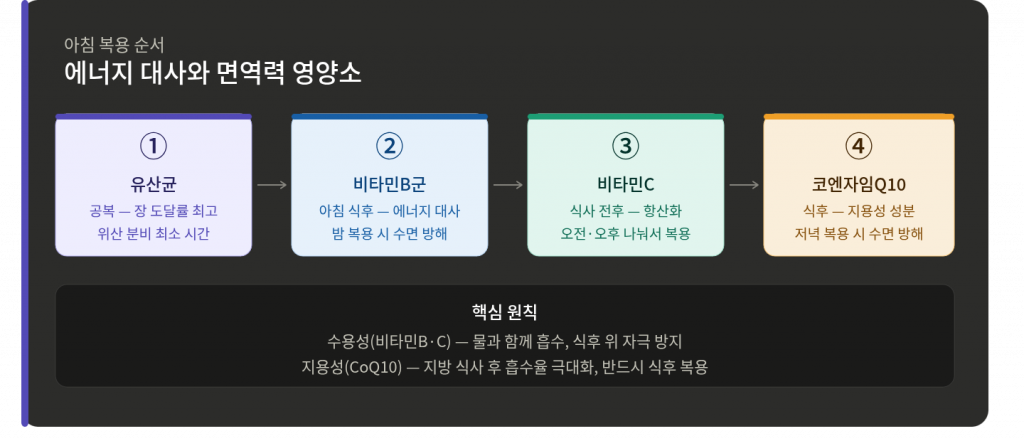
- Morning, after breakfast: B complex, vitamin C, CoQ10, zinc, multivitamin
- Lunch, after a fatty meal: Vitamin D, omega-3, vitamin E
- Evening, after dinner: Magnesium, milk thistle, calcium (separate from magnesium)
- Before bed: Magnesium, collagen, biotin
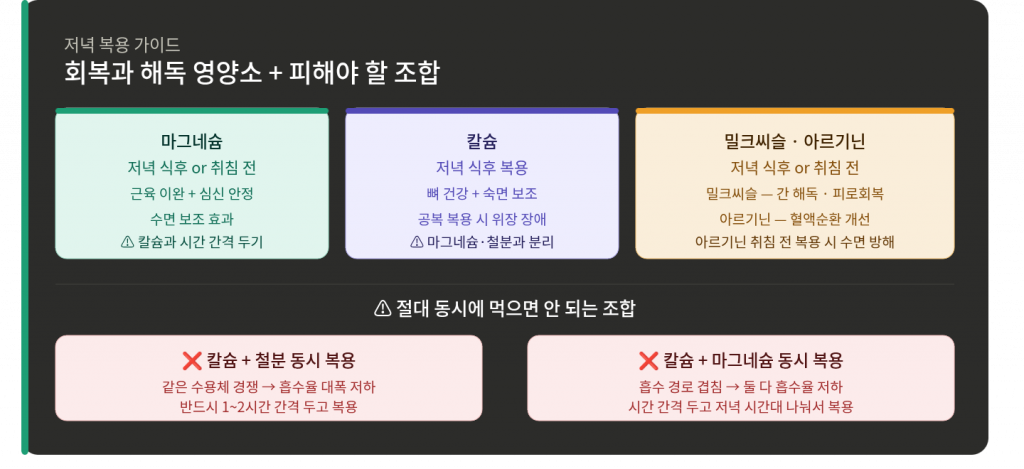
Combinations to always avoid: Calcium + iron at the same time; calcium + magnesium at the same time; B complex after 6 PM
(Source: iHerb Wellness Hub, Formula Compare Supplement Guide, Pillo Care Timing Chart, Healthline)
💡 Related Post: Waking Up Still Exhausted? Adrenal Fatigue Syndrome Self-Test and Supplement Guide
Why Supplement Timing Changes Everything — Water-Soluble vs Fat-Soluble
To understand why supplement timing matters for chronic fatigue recovery, you first need to know the two fundamentally different types of nutrients.
Water-soluble vitamins (B complex, vitamin C): These dissolve in water and are not stored in the body, requiring regular intake. Water-soluble vitamins, such as vitamin C and B-complex vitamins, dissolve in water and are best taken on an empty stomach for maximum absorption. However, since they can irritate an empty stomach in some people, taking them right after breakfast is the most practical approach for most.
Fat-soluble vitamins (A, D, E, K) and CoQ10: Fat-soluble vitamins dissolve in fat, not water, which means they rely on bile acids and lipids in the digestive tract to be transported into the bloodstream. Without fat, absorption can drop significantly. One study in 50 older adults found that vitamin D absorption was 32% greater in those who took a vitamin D supplement with a fat-containing meal compared with those who took it with a fat-free meal. (Source: Healthline)
🌅 Morning — Energy Metabolism and Immune Nutrients
Probiotics — Empty Stomach First, Before Anything Else
Probiotics are the one supplement best taken before breakfast on an empty stomach. Probiotics: take these on an empty stomach so the beneficial bacteria can survive stomach acid and reach your intestines intact. When your stomach is empty, acid secretion is lower — giving the beneficial bacteria the best chance of surviving the journey to your intestines intact. If you experience discomfort on an empty stomach, taking them right before bed is an acceptable alternative.
B Complex — After Breakfast, Never at Night
B complex vitamins are the single most important supplement for chronic fatigue management. B vitamins play central roles in energy metabolism. Several of them — particularly B6, B12, and folate — can be mildly stimulating. Take B-complex in the morning with breakfast; may cause vivid dreams or insomnia if taken later.
Most vitamins are better taken in the morning, especially B vitamins and multivitamins, because they support energy metabolism. This isn’t just convention — B vitamins drive the metabolic processes that generate cellular energy throughout the day. Taking them with breakfast aligns with the body’s natural cortisol and energy production peak.
Absorption tip: It’s often recommended to take B vitamins in the morning due to their important role in nutrient metabolism and energy production. Some people may benefit from taking B vitamins on an empty stomach — for example, people with a B12 deficiency are recommended to take B12 supplements on an empty stomach with water to promote maximal absorption.
Vitamin C — Morning After Breakfast (Split Dose Recommended)
Vitamin C is flexible but works best in the morning. Vitamin C is best taken in the morning or midday on an empty stomach to enhance absorption. Since the body can’t store vitamin C and excretes excess in urine, splitting your daily dose across morning and midday maintains active blood levels more effectively than a single large dose.
Dosage note: Daily intake above 2,000mg can cause gastrointestinal discomfort. A split-dose approach — 500–1,000mg in the morning and another 500–1,000mg at lunch — avoids this and optimizes sustained absorption.
CoQ10 — After Breakfast or Lunch
Morning with food: CoQ10 — take in the morning with breakfast. CoQ10 is a fat-soluble antioxidant, which means it needs dietary fat to be absorbed properly. Fat-soluble nutrients (A, D, E, K, CoQ10) do best with meals that include some healthy fat. Taking CoQ10 in the evening risks mild stimulation that can interfere with sleep — morning or lunchtime is the sweet spot.
Zinc — After Breakfast (Separate from Calcium)
Zinc absorbs best on an empty stomach but frequently causes nausea. The practical approach: take with a small evening meal, separate from calcium and iron. Zinc picolinate and zinc bisglycinate are better-tolerated forms if you have a sensitive stomach. For most people, after breakfast with food is the most comfortable approach — and critically, zinc should be taken separately from calcium, which interferes with zinc absorption.
☀️ Midday — Fat-Soluble Nutrients
Vitamin D — After Lunch (with a Fatty Meal)
Vitamin D is one of the most commonly deficient nutrients in modern life — and one of the most timing-sensitive. The best time to take fat-soluble vitamins is with a meal, ideally one containing healthy fats such as avocado, nuts, seeds, or olive oil.
Some people find taking vitamin D with dinner can disrupt sleep. If that happens, shift your vitamin D earlier in the day. Vitamin D is best taken with a meal that contains fat. Taking vitamin D in the morning or at lunch may optimize absorption.
Important pairing: Vitamin D activation depends on having adequate levels of magnesium. To maintain healthy vitamin D levels, make sure you’re also getting enough magnesium.
Omega-3 — After Lunch or Dinner (with a Fatty Meal)
Omega-3 is fat-soluble and requires dietary fat for effective absorption. Best time to take fat-soluble vitamins: with a meal, ideally one containing healthy fats. Taking omega-3 just before bed can cause acid reflux or digestive discomfort in some people — daytime administration with a fatty meal is the safest and most effective approach.
Timing flexibility: If your dinner regularly includes fatty foods such as fish, meat, or nuts, taking omega-3 after dinner is equally effective. The key is always: food with fat present. (Source: KB Financial Health Information)
Vitamin E — After Lunch (with a Fatty Meal)
Vitamin E is a fat-soluble antioxidant that follows the same rule as vitamin D and omega-3 — it needs fat to be absorbed. Vitamin E functions as a major antioxidant in your body and is essential for healthy blood flow and immune function. Note that certain fat-soluble vitamins, including vitamin E, may affect vitamin D absorption — so if you’re taking both, pairing them with the same fatty meal is efficient.
🌆 Evening — Recovery and Detox Nutrients
Magnesium — After Dinner or Before Bed
Magnesium is the evening supplement with the strongest timing rationale of any nutrient on this list. Evening magnesium is the gold standard recommendation for two reasons: it promotes muscle relaxation and activates the parasympathetic nervous system (supporting sleep quality), and it avoids competing with calcium if you take that separately. Magnesium glycinate, threonate, and taurate are the best forms for evening use.
Magnesium supports muscle relaxation, nerve function, and sleep quality. Many people find it soothing in the evening, and research exploring magnesium and sleep markers supports this timing. Best time to take magnesium: evening, with or without food.
Critical precaution: Calcium competes with iron and zinc for absorption, so spacing it out is helpful. If you’re taking both calcium and magnesium, give them at least a 2-hour gap within the same evening window — don’t take them simultaneously.
Calcium — After Dinner (Separate from Magnesium)
Calcium is best taken after dinner for two reasons: it supports bone health and helps promote sleep. Calcium absorbs well with food, and taking it with meals reduces the chance of digestive discomfort.
The ideal ratio of calcium to magnesium is 2:1, though 1:1 is acceptable depending on individual needs. The non-negotiable rule: calcium + iron reduces iron absorption by up to 50% — these two must never be taken at the same time.
Milk Thistle — After Dinner or Before Bed
Milk thistle (silymarin) supports liver detox and fatigue recovery — making it especially useful on days involving alcohol or heavy meals. It can technically be taken at any time of day, but after dinner or before bed is most practical for supporting the liver’s peak detoxification activity during the night. When choosing a product, check the silymarin content on the label rather than the total milk thistle amount. (Source: Brunch Health Magazine)
Arginine — Early Evening (Not Right Before Bed)
Arginine absorbs best on an empty stomach and is most useful as an evening circulation booster — but not immediately before bed, as its mild energizing effects can interfere with sleep onset. Early evening, before or lightly after dinner, is the optimal window. (Source: Pillyze Pharmacist & Dietitian Guide)
🌙 Before Bed — Sleep-Time Recovery Nutrients
Collagen — Before Bed
Collagen is most effective when taken before sleep because skin and tissue repair happens primarily during sleep. Skin regeneration is most active during deep sleep, so taking collagen before bed aligns the supplement directly with the body’s peak repair window. (Source: Pillyze Pharmacist & Dietitian Guide)
Biotin — Before Bed
Biotin, like collagen, benefits from the repair processes that happen during sleep. Take energizing herbs in the morning and calming herbs in the evening. Biotin fits the nighttime window well — it doesn’t have stimulating effects, and its action on cell regeneration is best supported by deep sleep. (Source: Pillyze Pharmacist & Dietitian Guide)
Supplement Timing at a Glance
| Timing Window | Supplements | Key Reason |
|---|---|---|
| Morning, empty stomach | Probiotics | Low stomach acid = higher survival to intestines |
| After breakfast | B complex, vitamin C, CoQ10, zinc, multivitamin | Energy metabolism, reduces stomach irritation |
| After lunch (fatty meal) | Vitamin D, omega-3, vitamin E | Fat-soluble: dietary fat required for absorption |
| After dinner | Magnesium, milk thistle | Muscle relaxation, liver detox, sleep support |
| After dinner (separate) | Calcium | Space 2+ hours from magnesium and iron |
| Before bed | Collagen, biotin | Skin and cell repair peak during deep sleep |
(Source: iHerb Wellness Hub, Formula Compare, Pillo Care Timing Chart, Healthline, Cooper Complete — compiled)
⚠️ Combinations to Always Avoid
Getting the timing right also means knowing which supplements should never share a window.
❌ Calcium + Iron — Never at the Same Time
Calcium + iron reduces iron absorption by up to 50%. Avoid pairing iron with calcium, magnesium, or caffeine. Space them at least 1–2 hours apart. If you take iron in the morning, take calcium after dinner. Iron absorbs best on an empty stomach but can cause irritation — try it with a small, low-calcium snack if needed.
❌ Calcium + Magnesium — Space Them Apart
Calcium and magnesium can interfere with iron or certain medications, so space them a few hours apart. Both compete for the same absorption pathway. If you take both, space them at least 2 hours apart within the same evening window rather than taking them together.
❌ B Complex After 6 PM — Disrupts Sleep
B vitamins may cause vivid dreams or insomnia if taken late. Morning or early afternoon might work best if the complex includes B12. Even if you forget your morning B vitamins, it’s better to skip than to take them late in the evening.
❌ Vitamin D After Dinner — Potential Sleep Disruption
Some people find taking vitamin D with dinner can disrupt sleep. If that happens, shift your vitamin D earlier in the day. Vitamin D influences serotonin pathways and can be subtly activating in some individuals — morning or lunchtime administration is consistently safer.
❌ Omega-3 Right Before Bed — Acid Reflux Risk
Omega-3 taken immediately before lying down can cause acid reflux or digestive discomfort due to the high fat content. Always take omega-3 with a proper meal rather than as a pre-sleep supplement.
Expert Principles for Supplement Timing
A 2-window schedule (morning + evening) avoids all major conflicts and keeps your routine simple. For most people managing chronic fatigue, this structure is both effective and sustainable:
Morning window (with breakfast): Probiotics (empty stomach first) → B complex → vitamin C → CoQ10 → zinc
Midday window (with a fatty lunch): Vitamin D → omega-3 → vitamin E
Evening window (after dinner, staggered): Milk thistle → magnesium → calcium (2 hours later)
Before bed: Collagen → biotin
The most important factor is consistency: choose a routine you can stick with every day. If chronic fatigue persists despite 4 weeks of consistent supplementation, it’s time to look beyond nutrition. According to the Korean Society of Internal Medicine, the leading causes of chronic fatigue are sleep deprivation (32%), stress (20%), iron deficiency (18%), thyroid dysfunction (10%), and overwork (7%) — meaning nutrition is only one part of the picture. (Source: Esquire Korea) A basic blood panel covering hemoglobin, ferritin, liver and kidney function, thyroid function, vitamin D, and B12 is the most efficient first step if fatigue continues. Always consult a doctor or pharmacist before starting new supplements, especially if you take prescription medications.
💡 Related Post: Fatigue Recovery After Overtime: 5 Nutrients to Take Tonight
✅ Daily Supplement Timing Checklist
Check off what you did correctly today. 7 or more means today’s supplement absorption is optimized!
| No. | Check Item | Check |
|---|---|---|
| 1 | Took probiotics first thing on an empty stomach | ☐ |
| 2 | Took B complex after breakfast (not in the evening) | ☐ |
| 3 | Took CoQ10 after breakfast or lunch with food | ☐ |
| 4 | Took vitamin D and omega-3 after a fatty meal | ☐ |
| 5 | Cut off caffeine before 2 PM | ☐ |
| 6 | Took magnesium after dinner | ☐ |
| 7 | Kept calcium and magnesium at least 2 hours apart | ☐ |
| 8 | Took collagen or biotin before bed | ☐ |
Share your score in the comments — and let us know which timing change made the biggest difference for you.
Frequently Asked Questions (FAQ)
Q1. Can I take all my supplements together at once to save time?
A. Some combinations are fine together — B complex, vitamin C, and zinc can share the same breakfast window. But others actively interfere: calcium and iron compete for the same absorption receptors (reducing iron absorption by up to 50%), and calcium and magnesium share absorption pathways. Fat-soluble vitamins (D, E, omega-3, CoQ10) also need to be separated from the morning window to align with a fatty meal. A 2-window system (morning + evening) is the simplest structure that avoids all major conflicts. (Source: Pillo Care Timing Chart)
Q2. Does it really matter if I take vitamin D in the morning vs evening?
A. One study in 50 older adults found that vitamin D absorption was 32% greater in those who took a vitamin D supplement with a fat-containing meal compared with those who took it with a fat-free meal. Beyond absorption, some people find taking vitamin D with dinner can disrupt sleep. Morning or lunchtime with a fatty meal is consistently the safest and most effective window.
Q3. I always forget my morning supplements — is it okay to take B complex at night?
A. B vitamins may cause vivid dreams or insomnia if taken late. If you regularly forget in the morning, try leaving your supplements next to your coffee maker or breakfast items. Taking B complex late is one of the most common reasons people report supplement-related sleep disruption — it’s better to skip a day than to take it after 6 PM.
Q4. How long does it take to notice a difference once I fix my supplement timing?
A. Most clinical studies on fatigue supplements use a 4–8 week evaluation window. Consistency is the most important factor — choose a routine you can stick with every day. Track your energy, sleep quality, and concentration weekly, and evaluate whether to continue after 4 weeks of consistent, correctly timed supplementation.
Q5. Is iron better taken in the morning or evening?
A. Iron: morning on an empty stomach if tolerated. If not, take it with a small, non-dairy snack; absorption drops somewhat but compliance matters more. Vitamin C paired with iron boosts absorption — taking them together in the morning is one of the most practical absorption-enhancing pairings in supplement timing.
The best time to take supplements for chronic fatigue isn’t complicated once you understand the two core principles:
water-soluble nutrients need consistency and morning timing; fat-soluble nutrients need fat and mealtime.
Fix the timing before adding more supplements — the same pill can behave very differently depending on when your body receives it.
📚 References
- iHerb Wellness Hub | The Best Time to Take Vitamins and Supplements
- Calm Blog | What Science Says Are the Best Times to Take Your Vitamins
- Dr. Axe | When Is the Best Time to Take Vitamins, Minerals and Other Supplements?
- Formula Compare | When to Take Supplements 2026: Complete Timing Guide
- Healthline | When Is the Best Time to Take Vitamins?
- Pillo Care | Supplement Timing Chart: 18 Vitamins, 6 Conflicts to Avoid
- Cooper Complete | Best Time to Take Supplements for Absorption
- Pillyze Pharmacist & Dietitian Guide | Complete Supplement Timing Guide
- Esquire Korea | Supplement Routine for Managing Chronic Fatigue
답글 남기기