[태그:] SlowAgingMealPrep

  • Slow Aging Diet: Honest 3-Month Review by a 30s Office Worker|How My Weight, Fatigue, and Blood Sugar Changed

    Slow Aging Diet: Honest 3-Month Review by a 30s Office Worker|How My Weight, Fatigue, and Blood Sugar Changed


    Have you ever searched for slow aging diet reviews, found nothing but flawless success stories, and quietly closed the tab thinking “there’s no way I could do that”? This post is written for you.

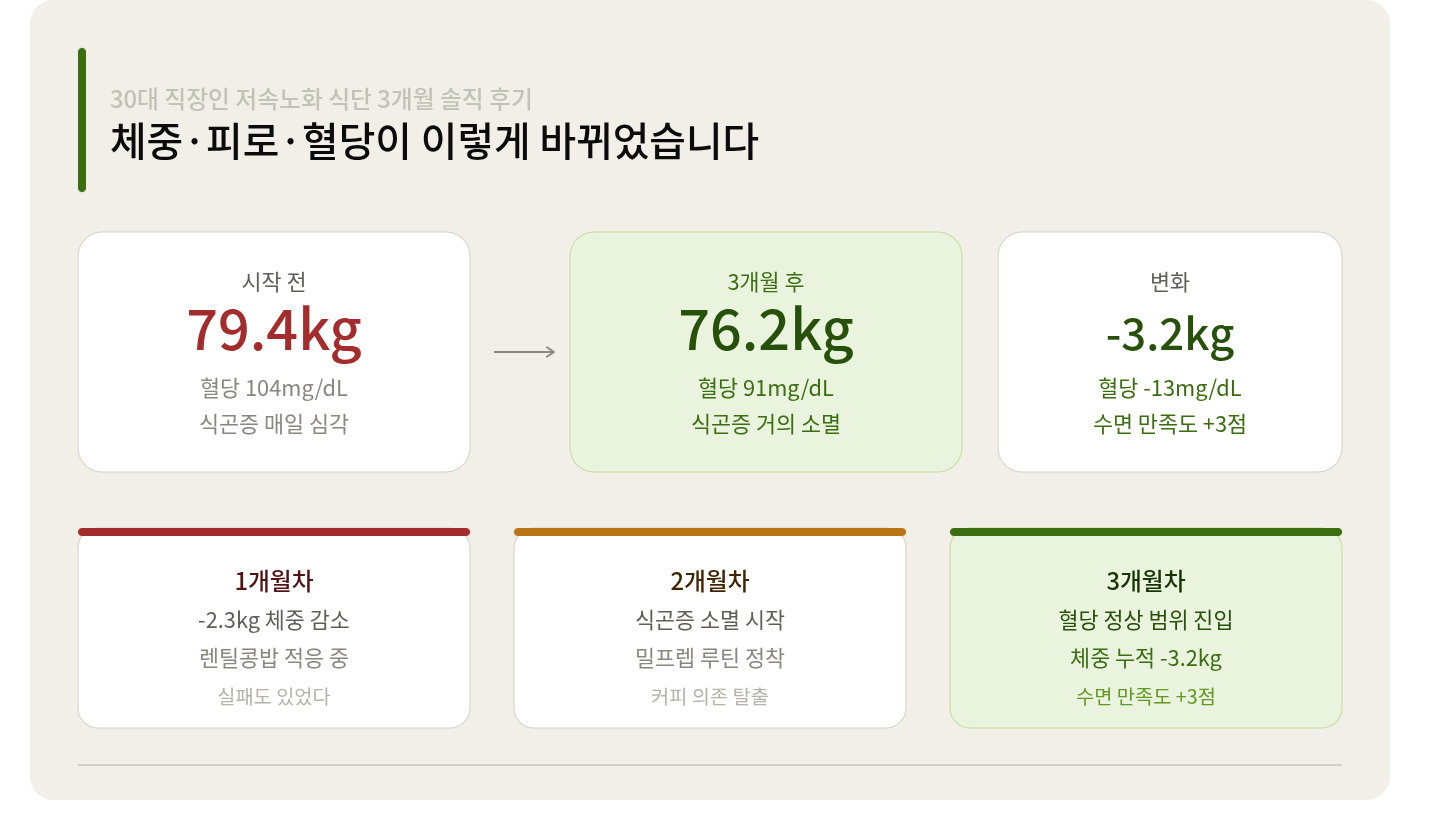
    I’m a 37-year-old office worker based in Seoul. Overtime at least three nights a week is just the baseline, and after-work dinners are a regular part of the job. At my last health checkup, my fasting blood glucose was flagging at 104mg/dL — right at the borderline.

    Every afternoon around 2 PM, I’d hit a wall of post-lunch drowsiness so severe that I couldn’t get through the afternoon without coffee. My weight had crept up 8kg since I first joined the workforce. Every morning in front of the mirror, I’d think: “When did this happen?”

    The reason I started a slow aging diet as a 30-something office worker wasn’t dramatic. It was one sentence from Dr. Jeong Hee-won, Professor of Geriatric Medicine at Asan Medical Center, that stuck with me: “Today’s people in their 30s and 40s may age faster than their parents’ generation.” (Source: KB Financial Health Information, Dr. Jeong Hee-won Seminar)

    That landed. So I made a decision: just 3 months, done properly.

    Today I’m sharing an honest slow aging diet 3-month review — including the moments I failed. Here are the real numbers showing how my weight, fatigue, and blood sugar actually changed.

    💡 Related Post: What Is the Slow Aging Diet?|From Concept to Practical Implementation


    My Starting Point — An Honest Record

    MetricBefore (Month 0)
    Weight79.4kg (BMI 25.9 at 175cm)
    Fasting blood glucose104mg/dL (above normal range)
    Post-lunch energy crashSevere drowsiness daily, 2–3 PM
    Fatigue on wakingUnrefreshed most mornings (5+ days/week)
    Coffee dependency3–4 cups per day
    Sleep satisfaction4 out of 10

    My doctor had looked at my checkup results and told me my eating habits needed to change. But I had no idea where to actually start. The reason I chose the slow aging diet came down to one thing: I didn’t have to starve. Rather than counting calories or completely cutting out specific foods, the approach was about swapping intelligently — and that felt realistic for my life.


    Month 1 — Excitement and Frustration at the Same Time

    What I changed

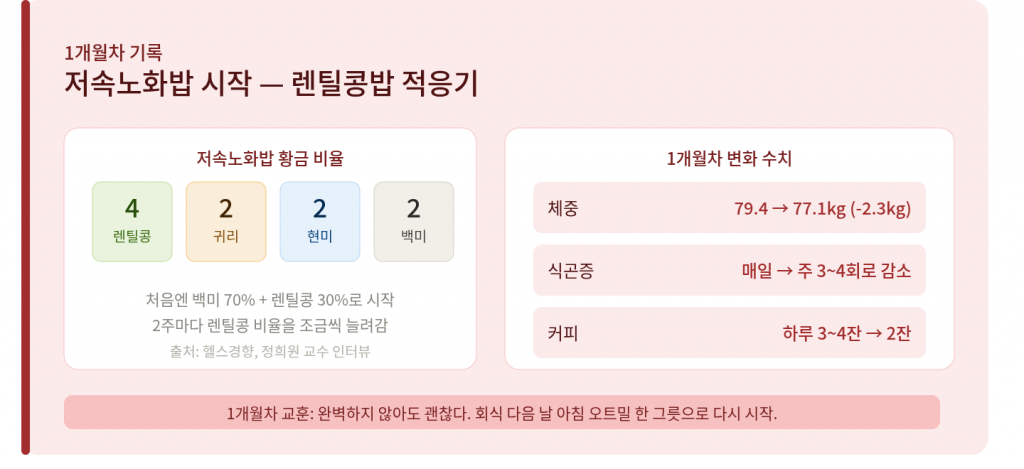
    The first shift in the slow aging diet was changing the rice itself. I started cooking rice using Dr. Jeong Hee-won’s recommended grain ratio: lentils : oats : brown rice : white rice = 4 : 2 : 2 : 2. (Source: Health Kyunghyang, Dr. Jeong Hee-won Interview) In the first two weeks, I genuinely struggled with the smell and the denser texture of lentil rice. Honestly? I wanted to quit at least three times.

    I also cut out sugary drinks and fruit juice, replacing them with water and unsweetened green tea. Carbonated drinks, fruit juices, cereals, white bread, and white rice all spike blood sugar sharply, triggering insulin secretion and sending energy toward fat storage and the liver rather than muscle — one of the main drivers of accelerated aging. (Source: KB Financial Health Information)

    Month 1 failure log

    Two after-work dinners. One late-night fried chicken after overtime. Three cups of instant noodles from the convenience store. It was far from perfect.

    At one dinner, sitting across from colleagues eating pork belly and soju, I felt the familiar thought: “This week is ruined.” And looking back, that feeling of defeat did more damage than the actual food. Once I “broke,” I’d slip into “well, today’s gone anyway” thinking and abandon the next meal too.

    Month 1 lesson: Imperfection is fine. Coming back to an oatmeal breakfast the morning after a dinner out is more than enough to get back on track.

    Month 1 results

    MetricAfter Month 1Change
    Weight77.1kg-2.3kg
    Post-lunch crashDown to 3–4 times/weekImproving
    CoffeeAverage 2 cups/day-1 cup

    A word of caution on that early weight drop: cutting simple carbohydrates causes glycogen to break down within 1–2 weeks, which reduces water retention and often shows a 3–4kg drop on the scale.

    Research comparing different dietary patterns at the 3-month mark found that participants who most consistently cut refined grains achieved and maintained the greatest reductions in added sugars and refined carbohydrates. Some of that initial drop was water weight — I knew that going in.
    Slow aging diet month 1, lentil oat brown rice slow aging rice recipe

    Month 2 — When Things Actually Started to Change

    The first real shift — the energy crash disappeared

    Quietly, at the start of week 4 of month 2, something changed. I was in a 2 PM meeting and suddenly realized: “Wait. I’m not falling asleep.” I assumed it was a coincidence. But the next day was the same. And the day after that.

    When blood sugar spikes are reduced through the slow aging diet, insulin doesn’t need to surge as dramatically — and without that sharp post-meal blood sugar drop, the afternoon energy crash naturally fades. Whole grain rice takes longer to digest and absorb, which raises blood sugar gradually and provides sustained energy. (Source: Medisola Slow Aging Diet Research)

    A clinical study tracking fatigue levels over three months found that dietary changes were associated with significant decreases in both mental and physical fatigue scores — mental fatigue dropped from 10.3 to 8.4 on the Fatigue Assessment Scale, and fatigue severity dropped from 3.5 to 2.9 on the FSS. I wasn’t part of a clinical trial, but my experience tracked remarkably closely with findings like these.

    The habit that made month 2 sustainable — weekend meal prep

    Starting weekend meal prep was the single most important change in month 2. I invested 90 minutes every Sunday to freeze slow aging rice in single-serve portions, boil 6 eggs, and pre-grill chicken breast. Knowing prepared food was waiting in the fridge meant that after late overtime, I could reach for a real meal instead of defaulting to convenience store food.

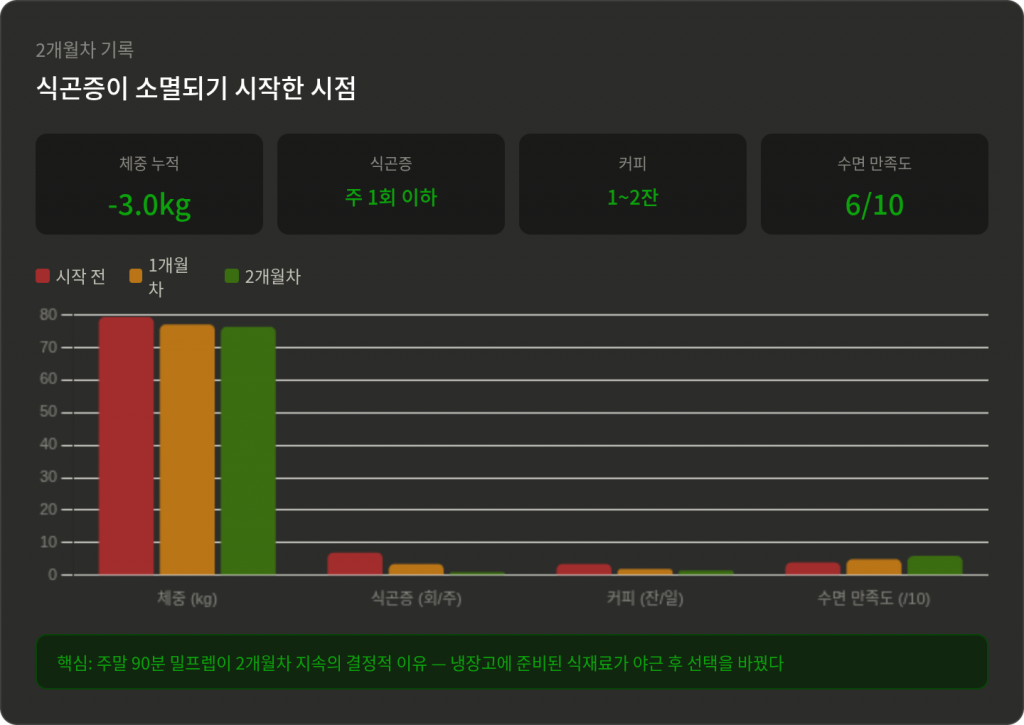
    Month 2 results

    MetricAfter Month 2Change
    Weight76.4kgCumulative -3.0kg
    Post-lunch crashOnce a week or lessNearly gone
    Coffee1–2 cups/dayHabitual dependency broken
    Sleep satisfaction6 out of 10+2 points
    Morning conditionRefreshed 3+ mornings/weekNoticeable improvement
    Slow aging diet month 2, energy crash disappears monthly change record

    Month 3 — Confirmed in Numbers

    Health checkup results at the end of month 3

    When month 3 ended, it was time for the company health checkup. I was nervous. I could feel the changes — but I wasn’t sure how much the numbers had actually moved. Here’s what the results showed:

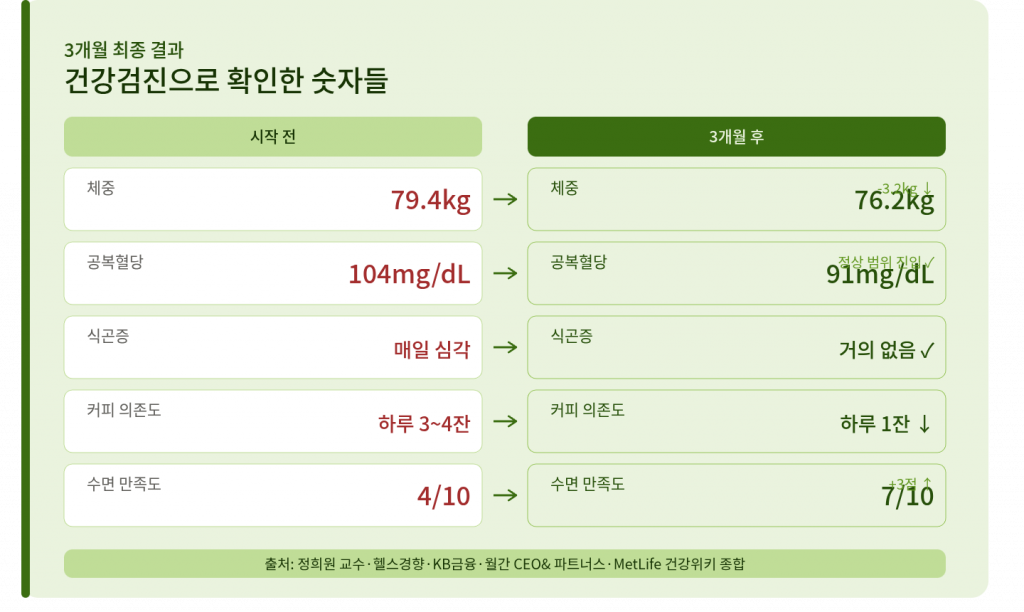
    MetricBeforeAfter 3 MonthsChange
    Weight79.4kg76.2kg-3.2kg
    Fasting blood glucose104mg/dL91mg/dL-13mg/dL (entered normal range)
    Post-lunch crashSevere, dailyVirtually goneEliminated
    Coffee dependency3–4 cups/day1 cup/day-2 to 3 cups
    Sleep satisfaction4/107/10+3 points
    Morning conditionFatigued 5 days/weekFatigued 1–2 days/weekDramatically improved

    Research tracking patients with impaired fasting glucose over three months found that fasting blood glucose in the borderline group decreased from 108.49 to 101.8 mg/dL — a meaningful improvement that aligns with what dietary intervention can realistically achieve. My own drop from 104 to 91mg/dL reflected a similar pattern of dietary change combined with light exercise.

    Beyond the numbers, the most tangible shift was in concentration. In afternoon meetings, I was no longer just surviving — I could actually focus. The slow aging diet is associated with improvements in brain fog, mood, concentration, and memory. (Source: Health Kyunghyang)

    Month 3 honest limitations

    Good stories deserve full disclosure.

    Weeks with lots of dining out were genuinely hard. One week with three consecutive team dinners — I didn’t manage a single bowl of slow aging rice. During one business trip I survived entirely on convenience store food and restaurant meals. That week, the afternoon energy crash came back.

    Maintaining the slow aging diet at 100% as an office worker who does regular overtime isn’t realistic. Dr. Jeong Hee-won says it clearly: “Sustaining 70% consistency over time is far more effective than chasing 100% perfection.” (Source: Dr. Jeong Hee-won, “You Can Age Slowly Too”) I stopped reading that as consolation and started treating it as strategy.


    The 5 Practices That Made the Biggest Difference

    Looking back over 3 months, the biggest changes didn’t come from special superfoods.

    ① Switching to slow aging rice (the single biggest impact)

    The lentil : oat : brown rice : white rice = 4 : 2 : 2 : 2 blend had the most direct effect on post-meal blood sugar and afternoon fatigue of anything I tried.

    ② Replacing all drinks with water and unsweetened tea

    Simply cutting sugary drinks and fruit juice noticeably reduced my daily sugar intake — no calorie counting required.

    ③ Vegetables first at every meal

    Changing the order — vegetables → protein → carbohydrates — made a noticeable difference in how fast I felt the post-meal energy dip.

    ④ 90-minute Sunday meal prep

    Prepared food in the fridge changed the choices I made after late overtime. It’s the most underrated habit of the entire 3 months.

    ⑤ Starting over from the very next meal after a failure

    Not quitting when I slipped was the only reason I made it through all 3 months.
    저속노화 3개월 효과

    Who the Slow Aging Diet Is Right For

    The slow aging diet works well for most healthy adults, but it isn’t one-size-fits-all. Whole oats and brown rice can be difficult to digest — if your digestion is sensitive, soak grains for at least 8 hours before cooking, or begin with white rice and a small amount of lentils, increasing the ratio gradually.

    The diet may not be suitable for people who are frail, have sarcopenia, or have significant digestive issues. (Source: KB Financial Health Information) Anyone managing diabetes, kidney disease, or other chronic conditions should consult their healthcare provider before making significant dietary changes.

    💡 Related Post: Slow Aging Diet Weekly Meal Plan|A Complete 7-Day Menu You Can Simply Follow


    ✅ My 3-Month Slow Aging Practice Checklist

    The checklist that kept me going — sharing it for anyone following along.

    No.Check ItemCheck
    1Ate slow aging rice (lentils + oats + brown rice) today
    2Replaced drinks with water or unsweetened green tea
    3Started the meal with vegetables first
    4Chose nuts or fruit as a snack
    5Didn’t give up after an imperfect meal — started fresh at the next one
    6Had less post-lunch drowsiness than yesterday
    7Did weekend meal prep for the week ahead
    8Cut off caffeine before 2 PM

    Share your score in the comments — I’d genuinely love to hear about your changes too.


    Frequently Asked Questions (FAQ)

    Q1. Can you actually lose weight on the slow aging diet in just 3 months?

    A. Individual results vary significantly, but in my case I lost 3.2kg over 3 months. The slow aging diet isn’t designed for rapid weight loss — but reducing refined carbohydrates and processed foods naturally cuts unnecessary calorie intake. The early weeks often show faster drops as water retention decreases when glycogen is broken down. (Source: CEO & Partners Monthly)

    Q2. I work overtime regularly too — how did you actually stick to this?

    A. I had the exact same concern. The most effective solution by far was weekend meal prep. With frozen slow aging rice and pre-cooked protein waiting in the fridge, the choice after late overtime became much easier. Aim for 70% consistency — not perfection.

    Q3. The smell of lentil rice is really off-putting. How did you get through it?

    A. The first two weeks were the hardest. Soaking lentils for at least 8 hours before cooking significantly reduced the smell for me. Starting at 70% white rice and 30% lentils, then gradually shifting the ratio every 2–3 weeks, helps your palate adapt naturally. It actually happened faster than I expected.

    Q4. Did your blood sugar really improve from diet alone?

    A. My fasting blood glucose dropped from 104mg/dL to 91mg/dL over 3 months. I also added light evening walks (3+ times per week), so the improvement reflects both diet and movement working together. Clinical research has confirmed that dietary changes alone are associated with meaningful reductions in fasting blood glucose in people with borderline readings. If you’ve been diagnosed with diabetes, please manage your diet in consultation with your doctor.

    Q5. Are you still maintaining it now, at month 4?

    A. Yes — currently in month 4 and still going. Honestly, by the time 3 months are up, slow aging rice starts to feel normal. The moment “this actually tastes good” arrives. I still go to work dinners and don’t avoid eating out — but the habit of coming back to slow aging meals the next day is solid now.


    The biggest thing I took from 3 months of slow aging eating wasn’t any single number.

    It was the realization that what you eat changes the quality of your entire day. When you’re not drowsy after lunch, the hours after work actually exist. When mornings feel refreshed, the day starts differently. The slow aging diet is worth starting — even imperfectly.


    📚 References


  • Slow Aging Diet Meal Plan|A Complete 7-Day Menu You Can Simply Follow

    Slow Aging Diet Meal Plan|A Complete 7-Day Menu You Can Simply Follow

    Wondering how to actually follow a slow aging diet meal plan without spending hours in the kitchen every day? You’re not alone. “I know I should eat lentil rice, but what about the side dishes?” and “Cooking from scratch every day feels overwhelming” — these are the most common concerns from people trying to start a slow aging weekly menu.

    The good news is that planning your meals one week at a time makes everything easier. According to nutrition guidelines, structuring your diet on a weekly basis simplifies grocery shopping, reduces food waste, and helps you stay consistent. (Source: Korean Nutrition Society)

    Dr. Jeong Hee-won, Professor of Geriatric Medicine at Asan Medical Center in Seoul, emphasizes that breakfast is the most critical meal of the day for slow aging. He warns that blood sugar spikes caused by cereals and jam-covered toast in the morning raise fatigue levels and trigger hunger before lunch, ultimately undermining your entire day’s energy and focus. (Source: Asan Medical Center, Dr. Jeong Hee-won’s YouTube Channel)

    Today, we’re revealing a complete slow aging 7-day meal plan — breakfast, lunch, and dinner from Monday to Sunday — along with a weekend meal prep guide and convenience store backup options you can follow right away.

    💡 Related Post: Slow Aging Diet Top 7 Ingredients|Only What You Can Buy at Your Local Supermarket


    🛒 Before You Start: Key Foundations

    The Golden Ratio for Slow Aging Rice

    Dr. Jeong Hee-won recommends the following grain ratio for slow aging rice, which can meet the daily recommended protein intake (45–55g) for adults through rice alone. (Source: Health Kyunghyang, Dr. Jeong Hee-won Interview)

    Lentils : Oats : Brown Rice : White Rice = 4 : 2 : 2 : 2

    Beginners: Start with 70% white rice and 30% lentils, then gradually reduce the white rice ratio every two weeks as your palate adjusts.

    💡 What is Slow Aging Rice? A Korean health trend popularized by Dr. Jeong Hee-won, slow aging rice replaces refined white rice with a blend of lentils, oats, and brown rice to lower the glycemic index, boost protein, and slow cellular aging.

    Daily Vegetable Standard

    The Korean Nutrition Society recommends consuming at least two servings of vegetables (excluding kimchi) per meal — approximately 140g per serving. A practical approach is to fill half your plate with vegetables at every meal. (Source: Korean Nutrition Society Dietary Guidelines)


    📅 Slow Aging 7-Day Meal Plan

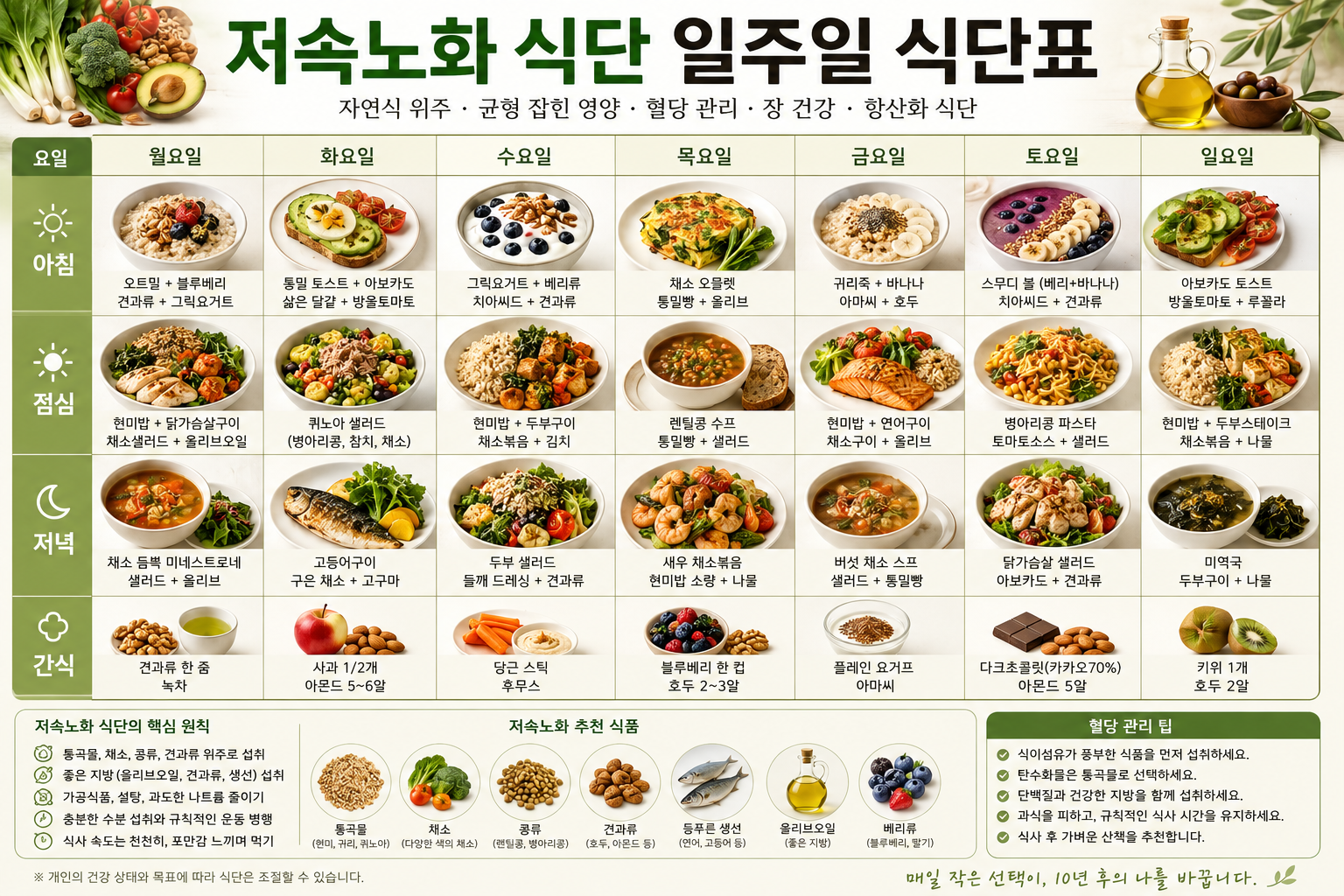
    ✅ Weekly Overview Table

    DayBreakfastLunchDinner
    MonOatmeal + blueberries + nutsSlow aging rice + braised tofu + broccoli salad + kimchiLentil vegetable soup + whole grain bread
    TueGreek yogurt + nuts + frozen berriesSlow aging rice + grilled mackerel + spinach namul + seaweed soupTofu steak + kale salad + olive oil dressing
    Wed2 boiled eggs + whole grain toast + cherry tomatoesSlow aging rice + grilled chicken breast + bean sprout namul + doenjang soupChickpea curry + brown rice + cucumber salad
    ThuOatmeal porridge + half banana + 5 walnutsSlow aging rice + grilled salmon + stir-fried broccoli + cabbage soupNatto + slow aging rice + 2 types of namul
    FriGreek yogurt parfait (berries + chia seeds + nuts)Slow aging rice + tofu kimchi + sigeumchi soup + namulSalad bowl (kale + tomato + avocado + lentils + olive oil)
    SatSlow aging rice + egg roll + doenjang soup + namulQuinoa fried rice + vegetable wraps + chicken breastBraised mackerel + slow aging rice + radish namul
    SunOatmeal + nuts + blueberriesLentil brown rice + braised tofu + stir-fried vegetablesKorean home-cooked meal (slow aging principles maintained)

    💡 Namul is a traditional Korean side dish of seasoned vegetables — typically blanched or stir-fried greens like spinach, bean sprouts, or fernbrake, dressed with sesame oil, garlic, and soy sauce.


    📋 Daily Menus with Key Tips

    🟢 Monday – A Light Start to the Week

    Breakfast: Oatmeal (30g oats) + frozen blueberries (one handful) + mixed nuts (one handful)

    💡 Soak your oats overnight in water or unsweetened soy milk — breakfast is ready the moment you wake up, with zero morning prep time.

    Lunch: Slow aging rice + braised tofu + blanched broccoli salad + kimchi

    💡 Tofu, doenjang (fermented soybean paste), and perilla seed powder are all rich in antioxidants that help prevent cellular damage and slow the overall rate of physical aging. (Source: Samsung Welstory Nutrition Research)

    Dinner: Lentil vegetable soup + 1 slice whole grain bread Simmer lentils with broccoli, carrots, and onions in broth — ready in under 20 minutes and one of the easiest slow aging meals you can make.

    Slow aging diet meal plan, Slow aging Monday meal — oatmeal with blueberries for breakfast, slow aging rice for lunch

    🟢 Tuesday – Omega-3 Day for Cardiovascular Health

    Breakfast: Greek yogurt 150g + one handful mixed nuts + frozen berries

    💡 Greek yogurt contains twice the protein of regular yogurt, making it ideal for a slow aging breakfast. Always choose unsweetened varieties to avoid unnecessary sugar spikes.

    Lunch: Slow aging rice + grilled mackerel + spinach namul + seaweed soup

    💡 Mackerel is rich in omega-3 fatty acids, which are highly effective at reducing chronic inflammation — one of the primary drivers of accelerated aging. Aim to eat oily fish at least twice a week. (Source: EatingWell, Registered Dietitian Panel)

    Dinner: Tofu steak + kale salad + olive oil dressing Pan-fry tofu in olive oil until golden brown and serve with fresh greens for a protein-rich, antioxidant-packed dinner.


    🟢 Wednesday – Mid-Week Protein Boost

    Breakfast: 2 boiled eggs + 1 slice whole grain toast + 10 cherry tomatoes

    💡 Boil 6–10 eggs on the weekend and store them in the fridge — your weekday mornings will be effortlessly sorted.

    Lunch: Slow aging rice + grilled chicken breast + bean sprout namul + doenjang soup

    💡 Pre-grill your chicken breast during weekend meal prep. Lunch is on the table in under five minutes on busy weekdays.

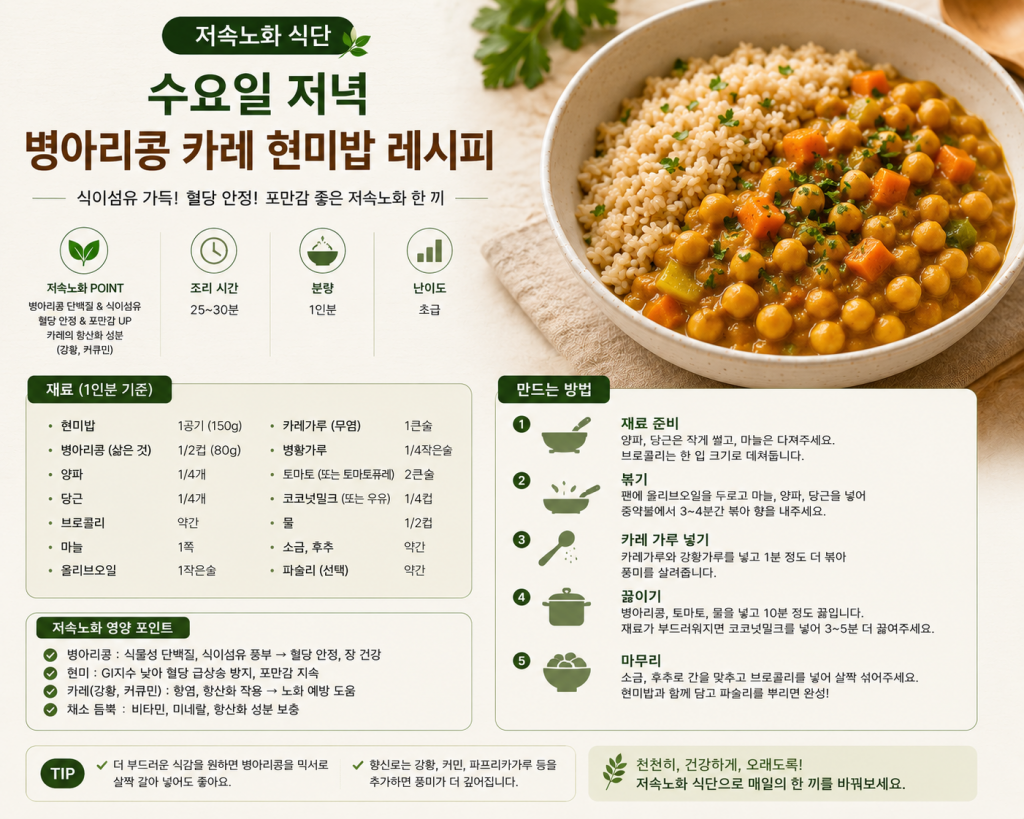
    Dinner: Chickpea curry + brown rice + cucumber salad

    💡 Chickpeas are rich in isoflavones — plant-based estrogens with antioxidant properties that help reduce cellular damage and slow aging. (Source: Samsung Welstory Nutrition Research) Adding them to curry is one of the tastiest ways to enjoy slow aging eating.

    저속노화 수요일 저녁 병아리콩 카레 현미밥 레시피

    🟢 Thursday – Brain Health and Gut Health Together

    Breakfast: Oatmeal porridge + half banana + 5 walnuts

    💡 Walnuts are the richest plant-based source of omega-3 fatty acids, making them particularly beneficial for brain health and cardiovascular function.

    Lunch: Slow aging rice + grilled salmon + stir-fried broccoli + cabbage soup

    💡 Registered dietitians consistently rank salmon among the best lunch choices for healthy aging, citing its role in managing inflammation, supporting brain health, and preserving muscle mass. (Source: EatingWell, Registered Dietitian Panel)

    Dinner: Natto (1 pack) + slow aging rice + 2 types of namul (spinach + bellflower root)

    💡 What is Natto? A traditional Japanese fermented soybean dish with a strong flavor. Rich in probiotics, vitamin K2, and nattokinase, it supports gut health, bone density, and cardiovascular function. Serve over slow aging rice with soy sauce and mustard.


    🟢 Friday – End the Week Light and Clean

    Breakfast: Greek yogurt parfait (berries + chia seeds + nuts + unsweetened Greek yogurt)

    💡 Prepare this the night before — layer ingredients in a jar and it’s ready in five minutes the next morning. Visually appealing enough to share on social media too.

    Lunch: Slow aging rice + tofu kimchi stir-fry + spinach soup + 2 types of namul

    💡 Friday lunch is the perfect opportunity to use up remaining fridge ingredients. A bibimbap-style bowl with leftover vegetables and a fried egg works beautifully as a slow aging meal.

    Dinner: Salad bowl (kale + tomato + avocado + lentils + boiled egg + olive oil dressing)

    💡 Combining lentils and olive oil dressing in a salad bowl brings together multiple core slow aging ingredients in a single, satisfying meal. End the week light, nutrient-dense, and energized. (Source: Wegive Health Magazine)


    🟡 Saturday & Sunday – Meal Prep Days

    Weekends are for enjoying food and preparing for the week ahead.

    Saturday Breakfast: Slow aging rice + egg roll (tamagoyaki) + doenjang soup + namul — relaxed family meal Saturday Lunch: Quinoa fried rice + vegetable wraps + grilled chicken Saturday Dinner: Braised mackerel + slow aging rice + radish namul

    Sunday Breakfast: Oatmeal + nuts + blueberries — keep it simple Sunday Lunch: Lentil brown rice + braised tofu + stir-fried vegetables Sunday Dinner: Korean home-cooked spread (slow aging principles: whole grain rice + 2+ vegetable sides + protein source)


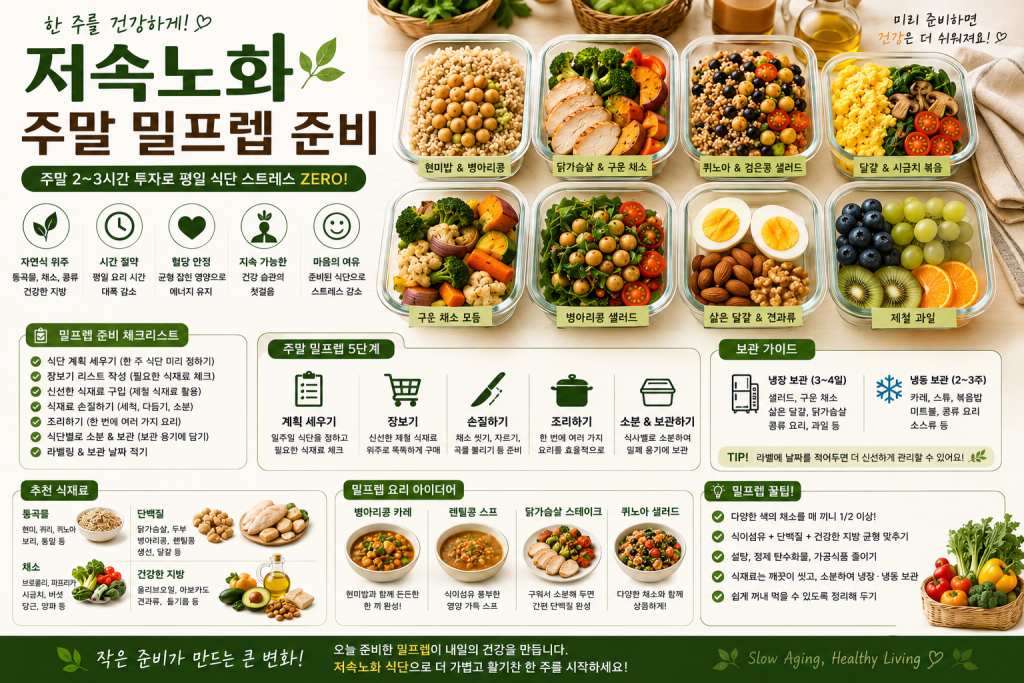
    ⏰ Weekend 90-Minute Meal Prep Guide

    Investing 90 minutes on the weekend makes the entire weekday effortless. Follow this sequence and your slow aging week is fully prepared.

    STEP 1. Weekly Shopping List (Sunday Morning)

    CategoryIngredients
    GrainsLentils, rolled oats, brown rice, quinoa
    ProteinChicken breast, firm tofu (2 blocks), 10 eggs, mackerel/salmon
    VegetablesBroccoli, spinach, kale, cherry tomatoes, onion, carrots
    Fruits & NutsFrozen blueberries, bananas, mixed nuts (unsalted)
    Dairy & FermentedUnsweetened Greek yogurt, natto, kimchi
    Oils & CondimentsExtra virgin olive oil, doenjang, soy sauce

    STEP 2. 90-Minute Meal Prep Sequence (Sunday Afternoon)

    0–10 min: Wash and chop broccoli, spinach, and carrots + start slow aging rice in the rice cooker

    10–30 min: Season chicken breast (soy sauce, garlic, black pepper) → air fryer or oven

    30–50 min: Blanch vegetables (broccoli 2 min, spinach 1 min), stir-fry bean sprout and bellflower root namul

    50–70 min: Boil 6 eggs + drain tofu and pan-fry until golden

    70–85 min: Prep lentil soup ingredients + portion berries and nuts into individual servings

    85–90 min: Label containers (menu + date) + separate into refrigerator (2–3 days) and freezer (day 4+) storage (Source: Seoul Metropolitan Food and Nutrition Support Center)

    low aging weekend meal prep — ingredient preparation and refrigerator storage

    🏪 Convenience Store Backup Options

    On days when cooking isn’t an option, slow aging doesn’t have to stop. Several major Korean convenience store chains now offer slow aging meal options developed in collaboration with Dr. Jeong Hee-won, including lentil grain rice lunch boxes, chicken breast grain rice onigiri (rice balls), and chickpea salad sandwiches. (Source: Hana1QM Magazine, Slow Aging Convenience Food Report)

    If you’re outside Korea, here are universally available backup options:

    SituationConvenience Store / Quick Backup
    Rushed morning2 boiled eggs + Greek yogurt + nut pack
    Unavoidable lunch outGrain/lentil-based salad bowl or grain rice box
    Late night at workChicken breast sandwich + cherry tomatoes

    Expert Principles for Weekly Meal Planning

    A perfect week of slow aging eating isn’t required — consistency at 70% is far more effective than perfection that leads to burnout. (Source: Dr. Jeong Hee-won, Slow Aging Diet Book)

    People who have tried it report: “Just switching from white rice to grain rice and cutting out sugary drinks made my afternoon energy crash disappear completely.” Small, sustainable changes compound over time.

    However, if you have underlying conditions such as kidney disease, diabetes, or digestive sensitivities, the high fiber content of lentils and oats may need to be adjusted. Always consult your healthcare provider before making significant dietary changes.

    💡 Related Post: How to Control Blood Sugar Spikes|7 Tips for Post-Meal Blood Sugar Management


    ✅ This Week’s Slow Aging Practice Checklist

    Check off what you practiced this week. 10 or more means your slow aging week is a success!

    No.Check ItemCheck
    1Ate slow aging rice (lentils + oats + brown rice) 5+ times this week
    2Had 2+ vegetable sides at every meal
    3Ate oily fish (mackerel or salmon) at least twice
    4Had oatmeal or Greek yogurt for breakfast 3+ times
    5Had a handful of nuts every day
    6Replaced sugary drinks with water or unsweetened tea
    7Kept processed/instant food to 3 times or fewer
    8Completed weekend meal prep for the week ahead
    9Took a light 10-minute walk after meals
    10Ate slowly and started with vegetables first
    11Had tofu, natto, or doenjang (fermented soy foods) daily
    12Got 7+ hours of regular sleep each night

    Share your score in the comments — we’d love to know how many you’re already doing!


    Frequently Asked Questions (FAQ)

    Q1. Do I have to follow the meal plan exactly to see results?

    A. Not at all. The meal plan is a flexible guide, not a strict rulebook. Substitute similar ingredients based on what’s available to you. The core structure to maintain is: whole grain rice + 2 or more vegetable sides + a protein source at every meal.

    Q2. Do I have to give up eating out entirely on a slow aging diet?

    A. No. When eating out is unavoidable, choose the least processed option on the menu — ideally something with plenty of vegetables and a lean protein. Salad-based meals or grain bowls are widely available in most restaurants. (Source: Hana1QM Magazine)

    Q3. My meal-prepped food loses its taste after a day or two — any storage tips?

    A. Refrigerate for up to 2–3 days, and freeze portions intended for day 4 and beyond. Store sauces and dressings separately from proteins. When reheating, use the microwave for 2–3 minutes then finish in a pan for 1 minute to restore texture. (Source: Seoul Metropolitan Food and Nutrition Support Center)

    Q4. Is breakfast really necessary on a slow aging diet?

    A. Dr. Jeong Hee-won emphasizes breakfast as the most important meal of the day for managing blood sugar. (Source: Allure Korea, Dr. Jeong Hee-won Interview) If cooking in the morning feels impossible, overnight oats or a 5-minute Greek yogurt parfait are excellent options that require virtually no morning effort.

    Q5. The food tastes bland and I’m struggling to stay motivated — should I give up?

    A. The first 2–3 weeks of transitioning to a slow aging diet can feel unfamiliar. Lean into Korean condiments like doenjang (fermented soybean paste), sesame oil, and perilla oil to add depth and flavor while staying within slow aging principles. Progress, not perfection, is the goal.


    Your slow aging weekly meal plan is now ready.

    All it takes is one grocery run and 90 minutes of weekend meal prep to set your entire week in motion. Start slowly, stay consistent, and let the small daily choices compound into lasting change.


    📚 References