Have you ever searched for slow aging diet reviews, found nothing but flawless success stories, and quietly closed the tab thinking “there’s no way I could do that”? This post is written for you.
I’m a 37-year-old office worker based in Seoul. Overtime at least three nights a week is just the baseline, and after-work dinners are a regular part of the job. At my last health checkup, my fasting blood glucose was flagging at 104mg/dL — right at the borderline.
Every afternoon around 2 PM, I’d hit a wall of post-lunch drowsiness so severe that I couldn’t get through the afternoon without coffee. My weight had crept up 8kg since I first joined the workforce. Every morning in front of the mirror, I’d think: “When did this happen?”
The reason I started a slow aging diet as a 30-something office worker wasn’t dramatic. It was one sentence from Dr. Jeong Hee-won, Professor of Geriatric Medicine at Asan Medical Center, that stuck with me: “Today’s people in their 30s and 40s may age faster than their parents’ generation.” (Source: KB Financial Health Information, Dr. Jeong Hee-won Seminar)
That landed. So I made a decision: just 3 months, done properly.
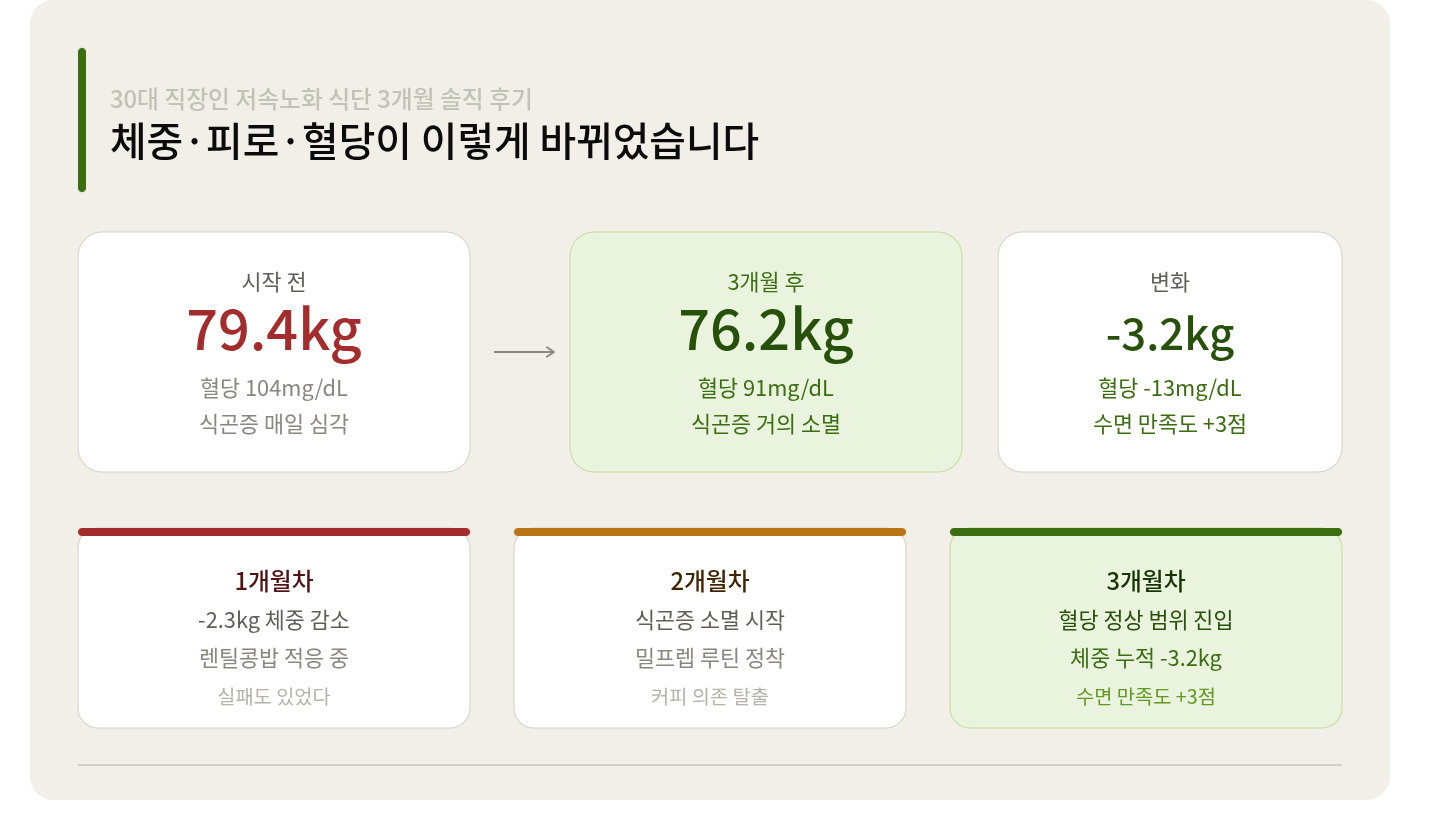
Today I’m sharing an honest slow aging diet 3-month review — including the moments I failed. Here are the real numbers showing how my weight, fatigue, and blood sugar actually changed.
💡 Related Post: What Is the Slow Aging Diet?|From Concept to Practical Implementation
My Starting Point — An Honest Record
| Metric | Before (Month 0) |
|---|---|
| Weight | 79.4kg (BMI 25.9 at 175cm) |
| Fasting blood glucose | 104mg/dL (above normal range) |
| Post-lunch energy crash | Severe drowsiness daily, 2–3 PM |
| Fatigue on waking | Unrefreshed most mornings (5+ days/week) |
| Coffee dependency | 3–4 cups per day |
| Sleep satisfaction | 4 out of 10 |
My doctor had looked at my checkup results and told me my eating habits needed to change. But I had no idea where to actually start. The reason I chose the slow aging diet came down to one thing: I didn’t have to starve. Rather than counting calories or completely cutting out specific foods, the approach was about swapping intelligently — and that felt realistic for my life.
Month 1 — Excitement and Frustration at the Same Time
What I changed
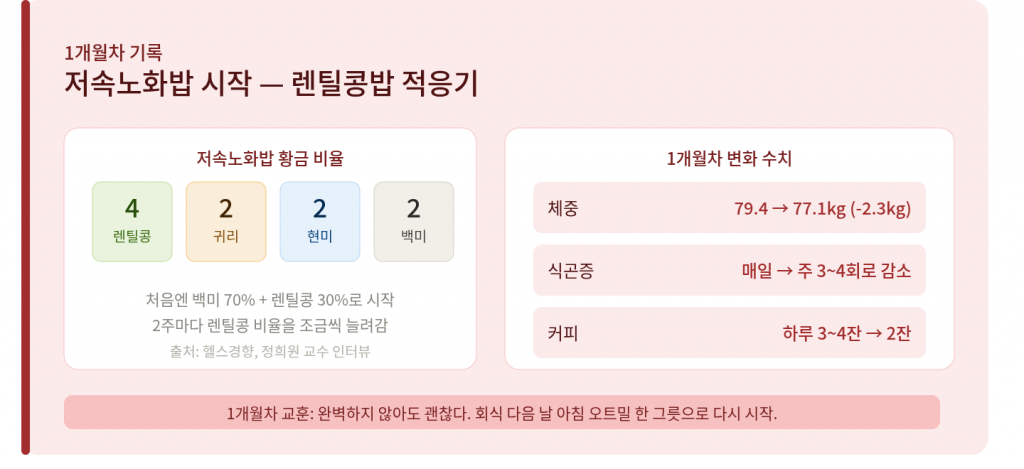
The first shift in the slow aging diet was changing the rice itself. I started cooking rice using Dr. Jeong Hee-won’s recommended grain ratio: lentils : oats : brown rice : white rice = 4 : 2 : 2 : 2. (Source: Health Kyunghyang, Dr. Jeong Hee-won Interview) In the first two weeks, I genuinely struggled with the smell and the denser texture of lentil rice. Honestly? I wanted to quit at least three times.
I also cut out sugary drinks and fruit juice, replacing them with water and unsweetened green tea. Carbonated drinks, fruit juices, cereals, white bread, and white rice all spike blood sugar sharply, triggering insulin secretion and sending energy toward fat storage and the liver rather than muscle — one of the main drivers of accelerated aging. (Source: KB Financial Health Information)
Month 1 failure log
Two after-work dinners. One late-night fried chicken after overtime. Three cups of instant noodles from the convenience store. It was far from perfect.
At one dinner, sitting across from colleagues eating pork belly and soju, I felt the familiar thought: “This week is ruined.” And looking back, that feeling of defeat did more damage than the actual food. Once I “broke,” I’d slip into “well, today’s gone anyway” thinking and abandon the next meal too.
Month 1 lesson: Imperfection is fine. Coming back to an oatmeal breakfast the morning after a dinner out is more than enough to get back on track.
Month 1 results
| Metric | After Month 1 | Change |
|---|---|---|
| Weight | 77.1kg | -2.3kg |
| Post-lunch crash | Down to 3–4 times/week | Improving |
| Coffee | Average 2 cups/day | -1 cup |
A word of caution on that early weight drop: cutting simple carbohydrates causes glycogen to break down within 1–2 weeks, which reduces water retention and often shows a 3–4kg drop on the scale.
Research comparing different dietary patterns at the 3-month mark found that participants who most consistently cut refined grains achieved and maintained the greatest reductions in added sugars and refined carbohydrates. Some of that initial drop was water weight — I knew that going in.
Month 2 — When Things Actually Started to Change
The first real shift — the energy crash disappeared
Quietly, at the start of week 4 of month 2, something changed. I was in a 2 PM meeting and suddenly realized: “Wait. I’m not falling asleep.” I assumed it was a coincidence. But the next day was the same. And the day after that.
When blood sugar spikes are reduced through the slow aging diet, insulin doesn’t need to surge as dramatically — and without that sharp post-meal blood sugar drop, the afternoon energy crash naturally fades. Whole grain rice takes longer to digest and absorb, which raises blood sugar gradually and provides sustained energy. (Source: Medisola Slow Aging Diet Research)
A clinical study tracking fatigue levels over three months found that dietary changes were associated with significant decreases in both mental and physical fatigue scores — mental fatigue dropped from 10.3 to 8.4 on the Fatigue Assessment Scale, and fatigue severity dropped from 3.5 to 2.9 on the FSS. I wasn’t part of a clinical trial, but my experience tracked remarkably closely with findings like these.
The habit that made month 2 sustainable — weekend meal prep
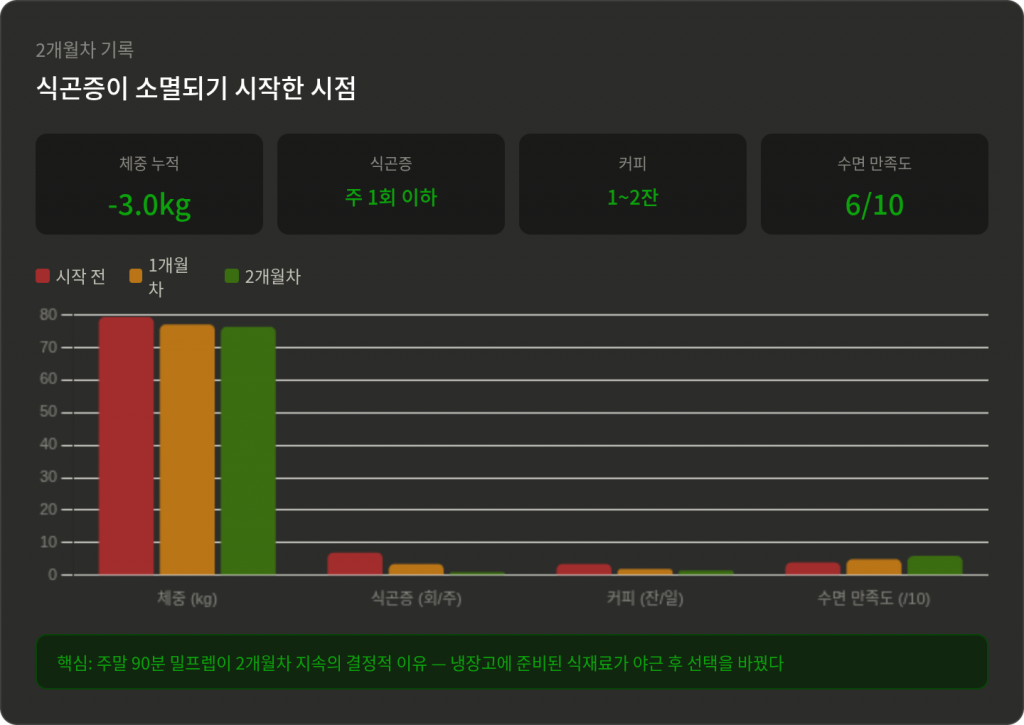
Starting weekend meal prep was the single most important change in month 2. I invested 90 minutes every Sunday to freeze slow aging rice in single-serve portions, boil 6 eggs, and pre-grill chicken breast. Knowing prepared food was waiting in the fridge meant that after late overtime, I could reach for a real meal instead of defaulting to convenience store food.
Month 2 results
| Metric | After Month 2 | Change |
|---|---|---|
| Weight | 76.4kg | Cumulative -3.0kg |
| Post-lunch crash | Once a week or less | Nearly gone |
| Coffee | 1–2 cups/day | Habitual dependency broken |
| Sleep satisfaction | 6 out of 10 | +2 points |
| Morning condition | Refreshed 3+ mornings/week | Noticeable improvement |
Month 3 — Confirmed in Numbers
Health checkup results at the end of month 3
When month 3 ended, it was time for the company health checkup. I was nervous. I could feel the changes — but I wasn’t sure how much the numbers had actually moved. Here’s what the results showed:
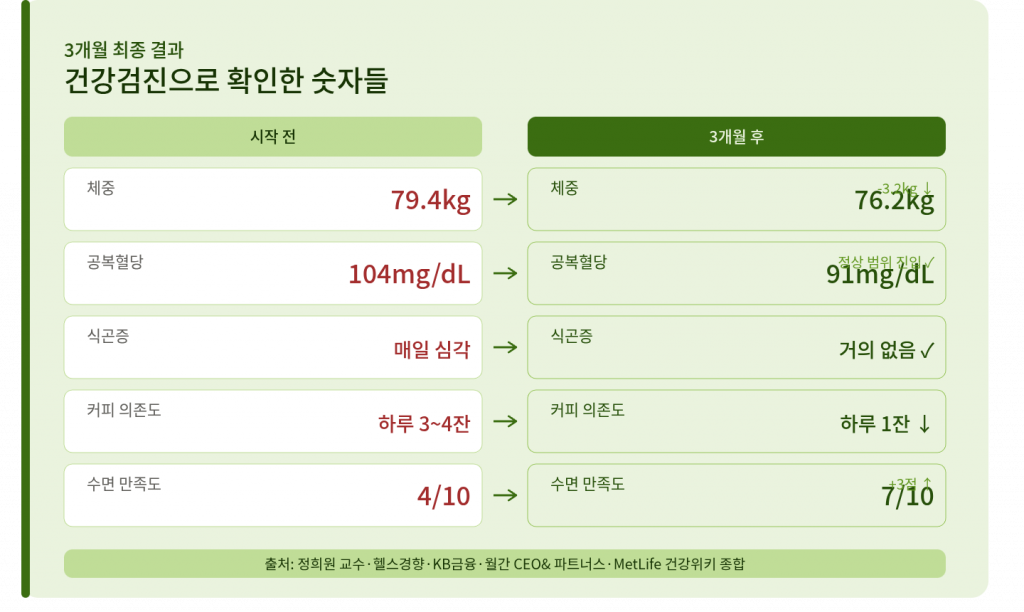
| Metric | Before | After 3 Months | Change |
|---|---|---|---|
| Weight | 79.4kg | 76.2kg | -3.2kg |
| Fasting blood glucose | 104mg/dL | 91mg/dL | -13mg/dL (entered normal range) |
| Post-lunch crash | Severe, daily | Virtually gone | Eliminated |
| Coffee dependency | 3–4 cups/day | 1 cup/day | -2 to 3 cups |
| Sleep satisfaction | 4/10 | 7/10 | +3 points |
| Morning condition | Fatigued 5 days/week | Fatigued 1–2 days/week | Dramatically improved |
Research tracking patients with impaired fasting glucose over three months found that fasting blood glucose in the borderline group decreased from 108.49 to 101.8 mg/dL — a meaningful improvement that aligns with what dietary intervention can realistically achieve. My own drop from 104 to 91mg/dL reflected a similar pattern of dietary change combined with light exercise.
Beyond the numbers, the most tangible shift was in concentration. In afternoon meetings, I was no longer just surviving — I could actually focus. The slow aging diet is associated with improvements in brain fog, mood, concentration, and memory. (Source: Health Kyunghyang)
Month 3 honest limitations
Good stories deserve full disclosure.
Weeks with lots of dining out were genuinely hard. One week with three consecutive team dinners — I didn’t manage a single bowl of slow aging rice. During one business trip I survived entirely on convenience store food and restaurant meals. That week, the afternoon energy crash came back.
Maintaining the slow aging diet at 100% as an office worker who does regular overtime isn’t realistic. Dr. Jeong Hee-won says it clearly: “Sustaining 70% consistency over time is far more effective than chasing 100% perfection.” (Source: Dr. Jeong Hee-won, “You Can Age Slowly Too”) I stopped reading that as consolation and started treating it as strategy.
The 5 Practices That Made the Biggest Difference
Looking back over 3 months, the biggest changes didn’t come from special superfoods.
① Switching to slow aging rice (the single biggest impact)
The lentil : oat : brown rice : white rice = 4 : 2 : 2 : 2 blend had the most direct effect on post-meal blood sugar and afternoon fatigue of anything I tried.
② Replacing all drinks with water and unsweetened tea
Simply cutting sugary drinks and fruit juice noticeably reduced my daily sugar intake — no calorie counting required.
③ Vegetables first at every meal
Changing the order — vegetables → protein → carbohydrates — made a noticeable difference in how fast I felt the post-meal energy dip.
④ 90-minute Sunday meal prep
Prepared food in the fridge changed the choices I made after late overtime. It’s the most underrated habit of the entire 3 months.
⑤ Starting over from the very next meal after a failure
Not quitting when I slipped was the only reason I made it through all 3 months.
Who the Slow Aging Diet Is Right For
The slow aging diet works well for most healthy adults, but it isn’t one-size-fits-all. Whole oats and brown rice can be difficult to digest — if your digestion is sensitive, soak grains for at least 8 hours before cooking, or begin with white rice and a small amount of lentils, increasing the ratio gradually.
The diet may not be suitable for people who are frail, have sarcopenia, or have significant digestive issues. (Source: KB Financial Health Information) Anyone managing diabetes, kidney disease, or other chronic conditions should consult their healthcare provider before making significant dietary changes.
💡 Related Post: Slow Aging Diet Weekly Meal Plan|A Complete 7-Day Menu You Can Simply Follow
✅ My 3-Month Slow Aging Practice Checklist
The checklist that kept me going — sharing it for anyone following along.
| No. | Check Item | Check |
|---|---|---|
| 1 | Ate slow aging rice (lentils + oats + brown rice) today | ☐ |
| 2 | Replaced drinks with water or unsweetened green tea | ☐ |
| 3 | Started the meal with vegetables first | ☐ |
| 4 | Chose nuts or fruit as a snack | ☐ |
| 5 | Didn’t give up after an imperfect meal — started fresh at the next one | ☐ |
| 6 | Had less post-lunch drowsiness than yesterday | ☐ |
| 7 | Did weekend meal prep for the week ahead | ☐ |
| 8 | Cut off caffeine before 2 PM | ☐ |
Share your score in the comments — I’d genuinely love to hear about your changes too.
Frequently Asked Questions (FAQ)
Q1. Can you actually lose weight on the slow aging diet in just 3 months?
A. Individual results vary significantly, but in my case I lost 3.2kg over 3 months. The slow aging diet isn’t designed for rapid weight loss — but reducing refined carbohydrates and processed foods naturally cuts unnecessary calorie intake. The early weeks often show faster drops as water retention decreases when glycogen is broken down. (Source: CEO & Partners Monthly)
Q2. I work overtime regularly too — how did you actually stick to this?
A. I had the exact same concern. The most effective solution by far was weekend meal prep. With frozen slow aging rice and pre-cooked protein waiting in the fridge, the choice after late overtime became much easier. Aim for 70% consistency — not perfection.
Q3. The smell of lentil rice is really off-putting. How did you get through it?
A. The first two weeks were the hardest. Soaking lentils for at least 8 hours before cooking significantly reduced the smell for me. Starting at 70% white rice and 30% lentils, then gradually shifting the ratio every 2–3 weeks, helps your palate adapt naturally. It actually happened faster than I expected.
Q4. Did your blood sugar really improve from diet alone?
A. My fasting blood glucose dropped from 104mg/dL to 91mg/dL over 3 months. I also added light evening walks (3+ times per week), so the improvement reflects both diet and movement working together. Clinical research has confirmed that dietary changes alone are associated with meaningful reductions in fasting blood glucose in people with borderline readings. If you’ve been diagnosed with diabetes, please manage your diet in consultation with your doctor.
Q5. Are you still maintaining it now, at month 4?
A. Yes — currently in month 4 and still going. Honestly, by the time 3 months are up, slow aging rice starts to feel normal. The moment “this actually tastes good” arrives. I still go to work dinners and don’t avoid eating out — but the habit of coming back to slow aging meals the next day is solid now.
The biggest thing I took from 3 months of slow aging eating wasn’t any single number.
It was the realization that what you eat changes the quality of your entire day. When you’re not drowsy after lunch, the hours after work actually exist. When mornings feel refreshed, the day starts differently. The slow aging diet is worth starting — even imperfectly.
📚 References
- Dr. Jeong Hee-won, Asan Medical Center | Slow Aging Diet Book and YouTube Channel
- Health Kyunghyang | Slow Down Aging with the Slow Aging Diet
- KB Financial Health Information | The Secret to Aging Slowly — Slow Aging Diet
- CEO & Partners Monthly | The Slow Aging Diet Craze — Diet and Anti-Aging Together
- Medisola | Slow Aging Diet Research
- Wegive Health Magazine | Slow Aging Diet Recommendations and Sample Meal Plans
- MetLife Health Wiki | What Is Slow Aging? Diet Guide and Practical Tips
- Dr. Jeong Hee-won | “You Can Age Slowly Too” (Book)
- Science Translational Medicine | Fasting-Mimicking Diet Results in Humans: Weight, Blood Glucose and Metabolic Markers
- PMC | Intermittent Fasting and Fatigue: 3-Month Quality of Life Clinical Trial
- PMC | Impaired Fasting Glucose Reversal Through a 3-Month Weight Management Program