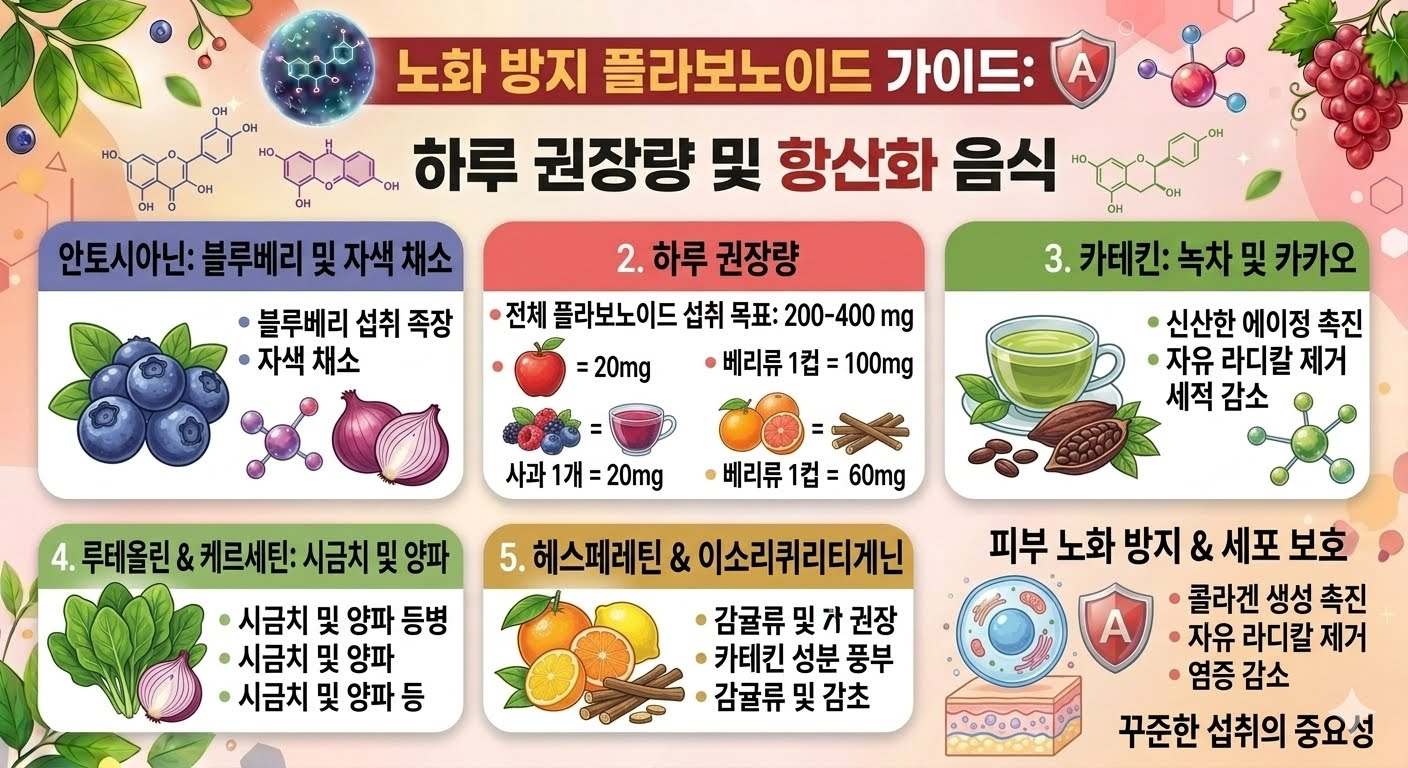
By now, many people know that flavonoids support anti-aging. But when it comes to the follow-up question — “So how much should I actually eat per day?” — most people draw a blank. Unlike vitamins or minerals, flavonoids are a nutrient category where clear intake guidelines aren’t widely known.
Flavonoids are antioxidants that, while not as well-known as vitamins and minerals by name, have the power to fight disease, prevent aging, and reduce inflammation — and once you know where to find them, they can create a dramatic shift in your health. (Source: Mercola Health Magazine)
The key issue is this: to see real anti-aging flavonoid results, you need to know the precise intake target. Eating too little limits the benefit, while vaguely assuming “more is better” can be an inefficient approach without a clear number to work toward.
Today, we break down the exact daily flavonoid intake — from the official Korean Ministry of Food and Drug Safety (MFDS) standard to international research findings — along with the anti-aging benefits and food-by-food intake strategies you need to hit your target.
💡 Related Post: What Is the Slow Aging Diet?|From Concept to Practical Implementation
How Flavonoids Slow the Aging Process
Flavonoids are natural pigment compounds found in plants, classified as phytochemicals. The term doesn’t refer to a single specific compound — it’s an umbrella term covering hesperidin, rutin, quercetin, and many other related compounds.
Their high antioxidant activity helps eliminate the free radicals responsible for aging, and because they support capillary health by regulating vascular permeability, flavonoids were historically referred to as “Vitamin P.” (Source: Pillyze Pharmacist & Dietitian Guide)
Aging isn’t simply a function of time passing — it’s a cumulative process in which free radicals continuously attack cells and DNA, building up damage over years.
Flavonoids directly neutralize these free radicals, slowing the rate at which that damage accumulates. This is precisely why anti-aging flavonoids are considered a cornerstone of antioxidant nutrition.
📊 What Is the Actual Daily Flavonoid Intake You Need?
Official MFDS Standard – 16–17mg
The most authoritative reference point is the daily intake standard set by Korea’s Ministry of Food and Drug Safety (MFDS) for certifying health functional foods.
The officially recognized daily intake for antioxidant functionality is 16–17mg of total flavonoids. Health functional foods certified by the MFDS are standardized to deliver approximately 16–17mg of flavonoids per day. (Source: Pillyze Pharmacist & Dietitian Guide)
This 16–17mg figure represents the minimum legal threshold required to label a product as having “antioxidant function” — think of it as a baseline for general health maintenance, not a target for active anti-aging results.
For Active Anti-Aging and Disease Prevention – 500mg to 1,000mg
If your goal is meaningful anti-aging benefit or active disease prevention, you’ll need an intake well above the MFDS baseline.
A Danish study found that 500mg of daily flavonoid intake had a positive impact on cardiovascular disease risk, while for cancer-related mortality, a daily intake of 1,000mg was shown to lower the “hazard ratio” for cancer-related conditions. (Source: Mercola Health Magazine, Danish cohort study)
Notably, these threshold amounts are achievable through a normal, well-rounded diet within a single day — meaning you don’t need supplements to hit these effective intake levels. (Source: Mercola Health Magazine)
For Cognitive Protection – Approximately 600mg
If brain health and cognitive protection are your priority, there’s a separate benchmark to know. One study found that people who consumed approximately 600mg of flavonoids daily had a 20% lower risk of cognitive decline compared to those who consumed only 150mg. (Source: Kormedi Health Media)
📋 Daily Flavonoid Intake by Goal — At a Glance
| Goal | Recommended Daily Intake | Source |
|---|---|---|
| Basic antioxidant function maintenance | 16–17mg | MFDS health functional food certification standard |
| Cardiovascular disease prevention | 500mg | Danish cohort study |
| Cognitive decline prevention | ~600mg | International academic research |
| Reduced cancer-related disease risk | 1,000mg | Danish cohort study |
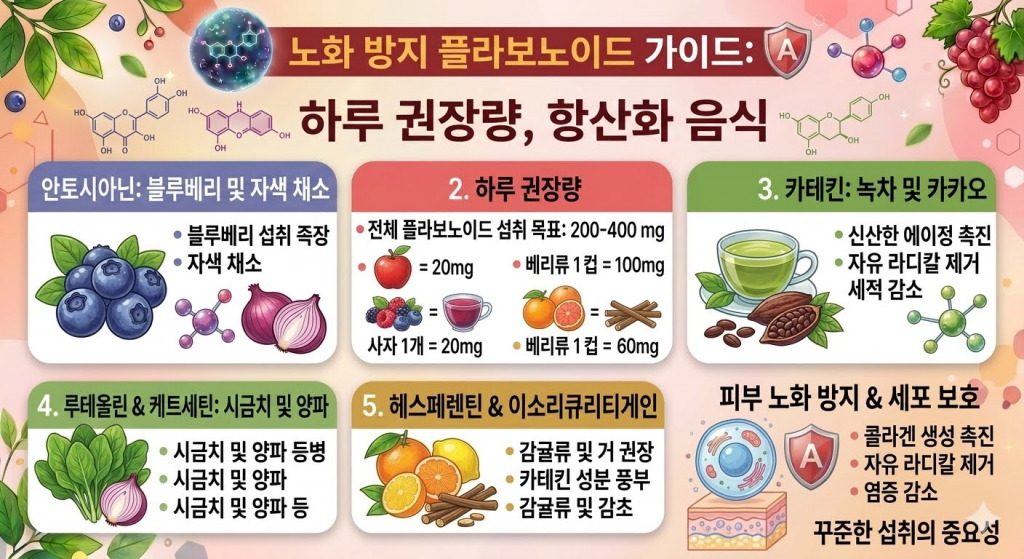
3 Core Anti-Aging Benefits of Flavonoids
① Free Radical Elimination – Blocking the Root Cause of Cellular Aging
The most central function of anti-aging flavonoids is free radical elimination. Free radicals attack cell membranes and DNA, acting as the primary accelerant of aging — and flavonoids directly neutralize these free radicals, preventing cellular damage before it accumulates.
② Capillary Health – Protecting Skin and Blood Vessels from Aging Simultaneously
Flavonoids help maintain healthy capillaries by regulating vascular permeability at an appropriate level. (Source: Pillyze Pharmacist & Dietitian Guide) Healthier blood vessels mean nutrients and oxygen reach skin cells more efficiently, contributing positively to slowing the visible signs of skin aging as well.
③ Cancer Prevention – Inhibiting the Growth of Specific Cancer Cells
Green tea is effective in preventing various cancers including leukemia, lung cancer, breast cancer, and prostate cancer. In particular, the compound epigallocatechin gallate found in green tea has shown the ability to inhibit the growth of breast, skin, and gastrointestinal cancers. (Source: Samsung Medical Center Health Information) This benefit is closely tied to the prevention of chronic diseases that are themselves deeply connected to the aging process.
How Much Food Do You Actually Need to Eat to Hit Your Daily Flavonoid Intake?
Raw numbers can feel abstract, so let’s translate them into real food.
| Food | Flavonoid Content per Serving |
|---|---|
| Strawberries | ~180mg per 100g |
| Apple | ~113mg per apple |
| Green tea | ~50–100mg per cup |
| Onion | ~20–30mg per medium onion |
| Dark chocolate | ~30–50mg per 30g |
(Source: Kormedi Health Media, compiled)
Based on this breakdown, the 500mg cardiovascular prevention target is naturally achievable with a cup of strawberries (about 150g, ~270mg), an apple (113mg), and a cup of green tea (50–100mg). This means a meaningful anti-aging target is realistically reachable through normal daily meals — no special supplements required.
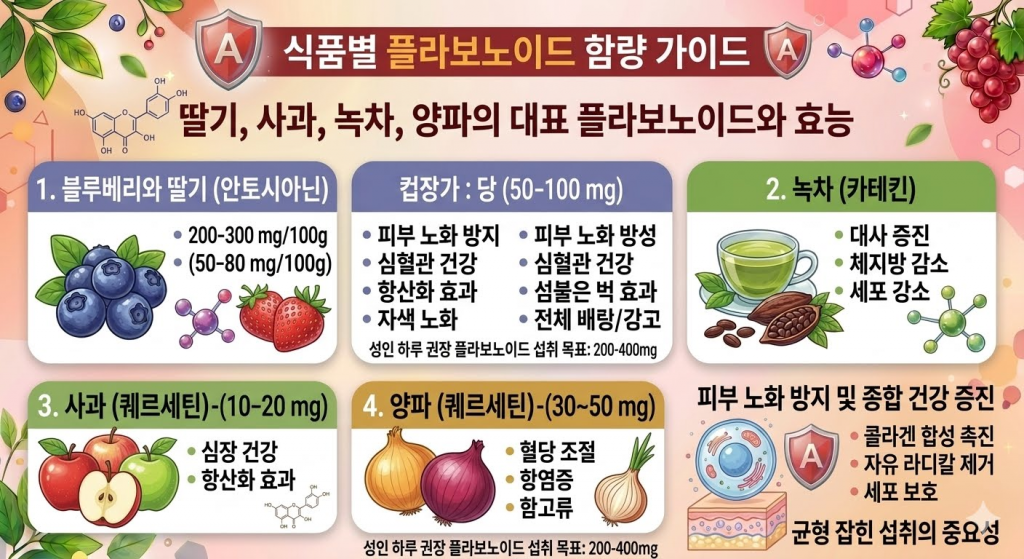
Why Flavonoids Matter Even More for Smokers and Heavy Drinkers
Anti-aging flavonoids aren’t equally important for everyone — for people with certain lifestyle factors, they matter significantly more.
The inverse relationship between total flavonoid intake and mortality rate was found to be more pronounced and stronger in smokers than in non-smokers, and stronger in heavy drinkers than in moderate drinkers. (Source: Mercola Health Magazine, compiled cohort research)
In other words, people with habits that generate higher levels of oxidative stress — such as smoking or heavy alcohol consumption — tend to experience a more pronounced benefit from flavonoid intake’s antioxidant action. To be clear, this is not a justification for smoking or heavy drinking — rather, it’s a signal that flavonoid intake becomes especially important for people with these habits, alongside efforts to reduce them.
Expert Cautions on Flavonoid Intake
Flavonoids obtained through food are very safe, but caution is warranted when choosing high-dose supplements. To see real results from a supplement, you need to take the dose supported by research findings — not just the minimum recommended intake. That said, when scientific evidence exists showing that excessive intake of a nutrient can cause harm, an upper safe limit is established to prevent overdose, so extra caution is needed when taking high-dose products or combining multiple supplements at once. (Source: Pillyze Pharmacist & Dietitian Guide)
Pregnant women in particular should consult a healthcare professional before taking high-dose flavonoid supplements, as research on this population remains limited. (Source: Pillyze Pharmacist & Dietitian Guide) Food-based intake remains the safest and most reliable way to reach these targets without that risk.
💡 Related Post: 5 Proven Flavonoid Benefits and Why You Should Eat Them Every Day|Foods & Guide
✅ Daily Flavonoid Intake Checklist
Check off what you ate today and roughly tally the milligrams. 500mg or more means you’ve hit the cardiovascular prevention target!
| No. | Check Item | Approx. mg | Check |
|---|---|---|---|
| 1 | 1 cup (150g) of strawberries | ~270mg | ☐ |
| 2 | 1 apple (skin on) | ~113mg | ☐ |
| 3 | 1 cup of green tea or matcha | ~50–100mg | ☐ |
| 4 | A handful (half) of onion | ~20–30mg | ☐ |
| 5 | 30g of dark chocolate | ~30–50mg | ☐ |
| 6 | 1 piece of citrus fruit (orange/grapefruit) | ~30–50mg | ☐ |
| 7 | If I drank or smoked today, I made a conscious effort to add extra flavonoid-rich foods | – | ☐ |
Share your estimated total in the comments today — did you cross the 500mg mark?
Frequently Asked Questions (FAQ)
Q1. Why is there such a big gap between the MFDS standard of 16–17mg and the 500mg anti-aging target?
A. The 16–17mg figure is the minimum legal threshold required for a health functional food to be labeled as having “antioxidant function.” The 500–1,000mg range, on the other hand, reflects research-based intake levels associated with active health outcomes like cardiovascular and cancer prevention. The MFDS standard is useful as a baseline reference, but if your goal is meaningful anti-aging benefit, aiming for the higher intake range is recommended.
Q2. Wouldn’t it be more efficient to just take a supplement to hit 500mg at once?
A. Food-based intake is safer and more effective overall. Because different flavonoids act on different cellular targets, eating a variety of foods — strawberries, apples, green tea, onions — produces a synergistic effect that a single high-dose supplement can’t replicate. Whole food intake also carries virtually no risk of overconsumption.
Q3. Calculating 500mg every day feels like too much effort. What’s the bare minimum I should aim for?
A. If precise daily calculation feels overwhelming, set a simpler goal: include at least one fruit or vegetable of a different color at every meal. Strawberries or apple in the morning, onions or leafy greens at lunch and dinner, plus one daily cup of green tea — consistently doing just this can get you comfortably into the recommended range.
Q4. If I quit drinking and smoking, do I still need to worry about flavonoid intake?
A. Quitting smoking and drinking is one of the most effective choices for your health, but it doesn’t eliminate the need for flavonoids. Free radicals are also generated continuously by everyday factors like stress, UV exposure, and environmental pollution — so consistent flavonoid intake remains beneficial regardless of your drinking or smoking habits.
Q5. How long do I need to maintain this intake to see anti-aging results?
A. There’s no universally fixed timeframe, but antioxidant benefits tend to accumulate through long-term, consistent dietary habits rather than short bursts of high intake. Eating a moderate, steady amount every day is far more effective for anti-aging than eating large quantities occasionally.
Anti-aging flavonoids are no longer just a vague “they’re good for you” concept — now that you know the precise numbers, putting them into practice should feel much more achievable.
Start today with a cup of strawberries, an apple, and a cup of green tea, and work toward that 500mg daily intake target. It may look like a small number, but consistency adds up to a meaningful difference over time.
📚 References
- Korea Ministry of Food and Drug Safety (MFDS) | Health Functional Food Ingredient and Daily Intake Standards
- Pillyze Pharmacist & Dietitian Guide | Flavonoid Benefits, Side Effects & Top Supplements
- Pillyze Pharmacist & Dietitian Guide | Bioflavonoid Benefits & Side Effects
- Mercola Health Magazine | Eat Flavonoids Daily and You May Never Need to Visit a Doctor
- Samsung Medical Center | Goodbye Free Radicals! Flavonoids Health Information
- Kormedi Health Media | Eat Strawberries and Chili Peppers to Prevent Cognitive Decline
- Bestyoyang | Antioxidant and Immune-Boosting Effects of Propolis